If you have watched a bee carrying yellow bundles on its legs, you may have wondered: what do bees do with pollen? Those bundles are food headed home, not honey in the making. Pollen supplies nutrients that help bees grow and raise their young, while nectar mainly supplies energy.
Following pollen from a flower to a nest reveals an important distinction: bees collect food for themselves, and their flower visits can also help plants reproduce. Here is how that journey works, with honey bees as the main example and a look at how other bees differ.
What Do Bees Do With Pollen?
Bees collect pollen as a nutrient-rich food, especially for raising young bees. Honey bees carry it to their hive, pack it into honeycomb cells, and use it to nourish workers that produce food for developing larvae. As bees visit flowers, some loose pollen also moves between flowers, enabling pollination.
Pollen is the powdery material produced by the male reproductive structures of flowering plants. According to University of Florida IFAS Extension, pollen provides honey bees with protein, fats, vitamins, and minerals, while nectar provides carbohydrates. Both belong in a healthy honey bee diet, but they serve different purposes.
That means pollen is much more than something bees accidentally pick up. A worker collecting pollen is gathering a resource the colony needs to maintain its population. Flowers provide the raw ingredients; workers collect, store, and use them within the colony.
How Do Bees Collect and Carry Pollen?
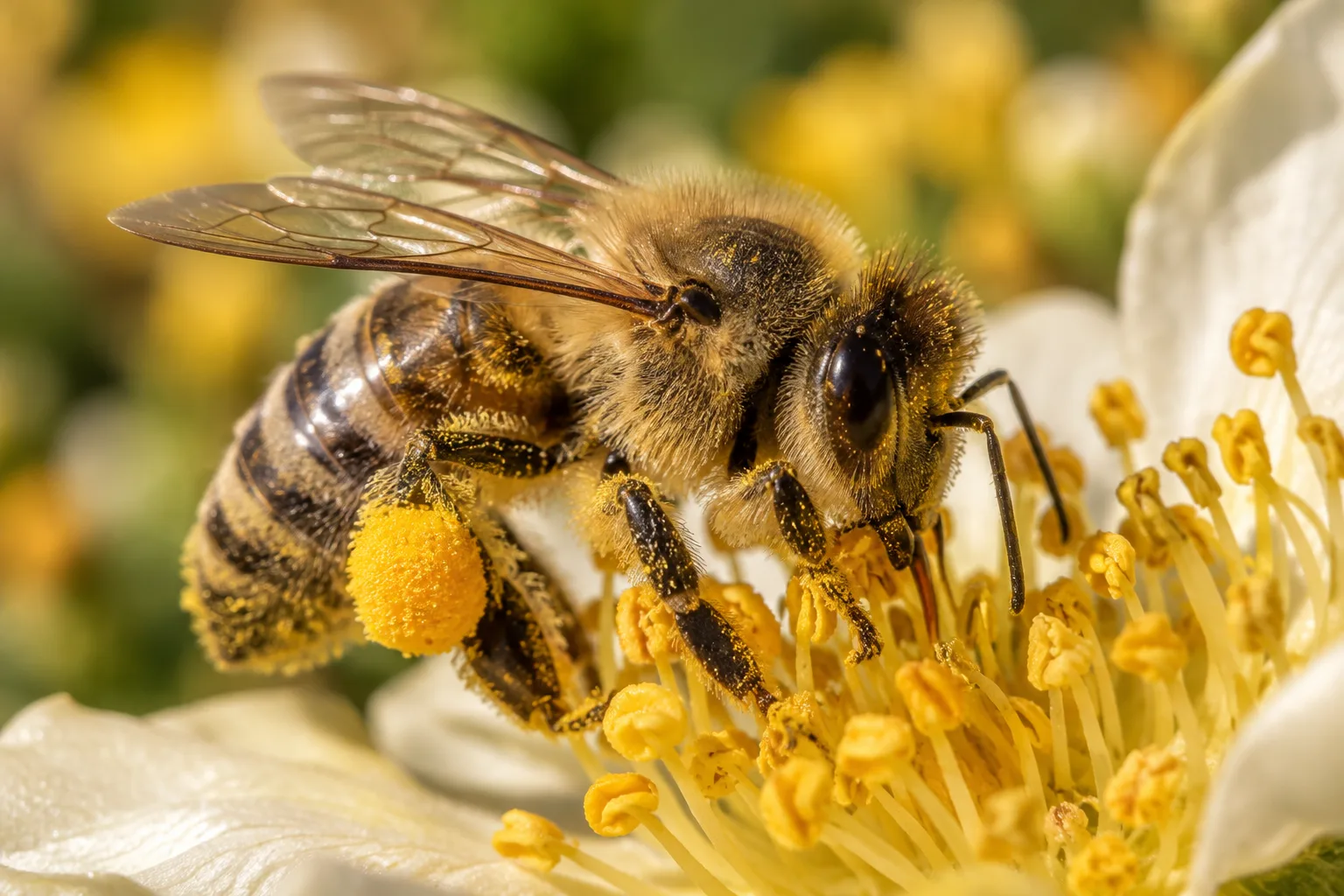
Bees collect pollen on their bodies and, depending on the species, carry it using specialized hairs or pollen-carrying structures.
When a honey bee visits a flower, pollen grains catch on its branched body hairs. The bee uses its legs to groom pollen toward its hind legs, moistening and packing it into compact loads. The smooth areas surrounded by hairs on those legs are called pollen baskets, or corbiculae.
The bundles can look yellow, orange, cream, or other colors depending on the flowers visited. Color alone is not a dependable way to identify a plant: different plants can produce similar-looking pollen, and lighting changes what you see.
- On the flower: Pollen catches on the bee as it gathers food.
- During grooming: The bee moves much of that pollen toward its carrying structures.
- On the trip home: Packed pollen travels with the bee back to its nest.
- Between flower visits: Some loose pollen can reach another flower's receptive surface.
Not every bee carries pollen like a honey bee. Many solitary bees use dense collecting hairs called a scopa, sometimes on their legs and sometimes beneath their abdomen. A bee without obvious hind-leg bundles may still be transporting plenty of pollen.
What Do Bees Do With Pollen Inside the Hive?
Inside a honey bee hive, workers store pollen in honeycomb cells and use it as a source of nutrition for the colony.
Returning foragers unload pollen into cells, often near the brood, where developing bees live. Workers pack it down, and the stored material includes nectar or honey and bee secretions. This stored pollen food is commonly called bee bread.
Bee bread is not a little loaf, and it is not another name for honey. It is a practical way for the colony to keep pollen available rather than relying entirely on whatever flowers are accessible at that moment. Storage matters when rain, cool conditions, or a gap in flowering limits collection.
University of Florida IFAS Extension describes young adult workers as important pollen consumers. These workers include nurse bees, whose food-producing glands support brood care. Pollen therefore helps feed the next generation both through its role in worker nutrition and through the food those workers provide.
How does pollen help feed baby bees?
In honey bees, pollen for baby bees often takes an indirect route: nurse bees eat pollen and produce glandular food for developing larvae.
A honey bee larva does not leave the hive to visit flowers. Adult workers feed it, with the food changing according to its developmental stage and whether it is being raised as a worker, drone, or queen bee. It is more accurate to describe pollen as supporting the brood-feeding system than to say every larva simply eats a pellet from a flower.
What Is the Difference Between Bee Pollen and Honey?
The main difference in bee pollen vs honey is nutritional: pollen supplies protein and other nutrients, while honey is primarily a carbohydrate-rich energy reserve.
Honey bees make honey mainly from nectar collected from flowers. They process that sugary liquid and reduce its water content before storing it. Pollen is a separate food resource, even though small amounts of pollen can be present in honey.
- Nectar: A sugar-containing liquid gathered from flowers for energy and honey production.
- Pollen: Flower-produced grains collected for protein, fats, and other nutrients.
- Bee bread: Pollen stored and packed into honeycomb with added nectar or honey and bee secretions.
- Honey: A concentrated, sugar-rich food stored by honey bees.
These foods complement one another rather than replace one another. A colony needs energy to support its activities, but raising young bees also requires nutrients that sugar alone cannot provide. This is why a flowering landscape matters for more than nectar production.
Do All Bees Store Pollen Like Honey Bees?
No: many bees collect pollen, but their nesting habits and ways of feeding young differ from those of honey bees.
Bumble bees live in colonies and keep pollen in their nests, but their nest organization differs from a honey bee's wax-comb system. Many native bees are solitary, meaning each female prepares her own nest rather than sharing brood care with a large worker population. Which species are native depends on the region.
According to the USDA Forest Service, many solitary bees provision individual nest cells with pollen and nectar. A female lays an egg with the food supply and closes the cell, leaving the developing offspring to consume its provisions. There are no nurse bees making repeated feeding visits in that arrangement.
These differences are why honey bees should not stand in for every bee species in a science explanation. They offer a useful example of colony life, but other bees have their own food-storage strategies, nesting needs, and relationships with flowers.
How Can You Watch Bees Collect Pollen Safely?
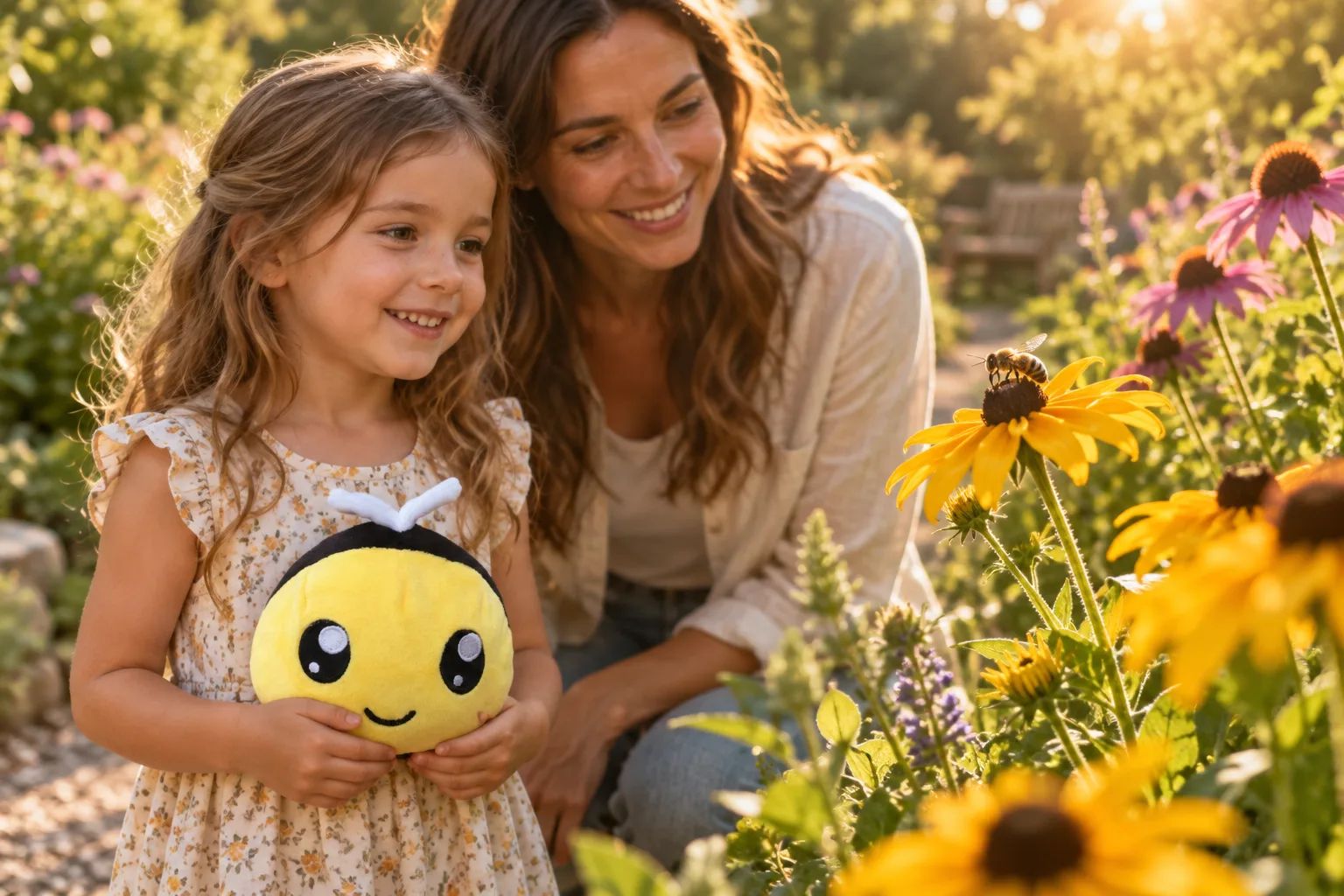
You can observe pollen collection by watching bees on flowers from a comfortable distance without handling them or disturbing their nests.
Choose a flowering patch with regular bee visitors and stand to one side rather than blocking their approach. Look for grooming movements, loaded hind legs, and visits between flowers. A phone camera's zoom can help you examine the details without moving closer.
- Watch the legs: Look for compact loads on honey bees and bumble bees.
- Look beneath the body: Some solitary bees carry pollen under the abdomen.
- Notice the flower: Observe where the bee contacts the pollen-bearing structures.
- Leave bees undisturbed: Do not catch bees, touch them, or open a hive for a closer look.
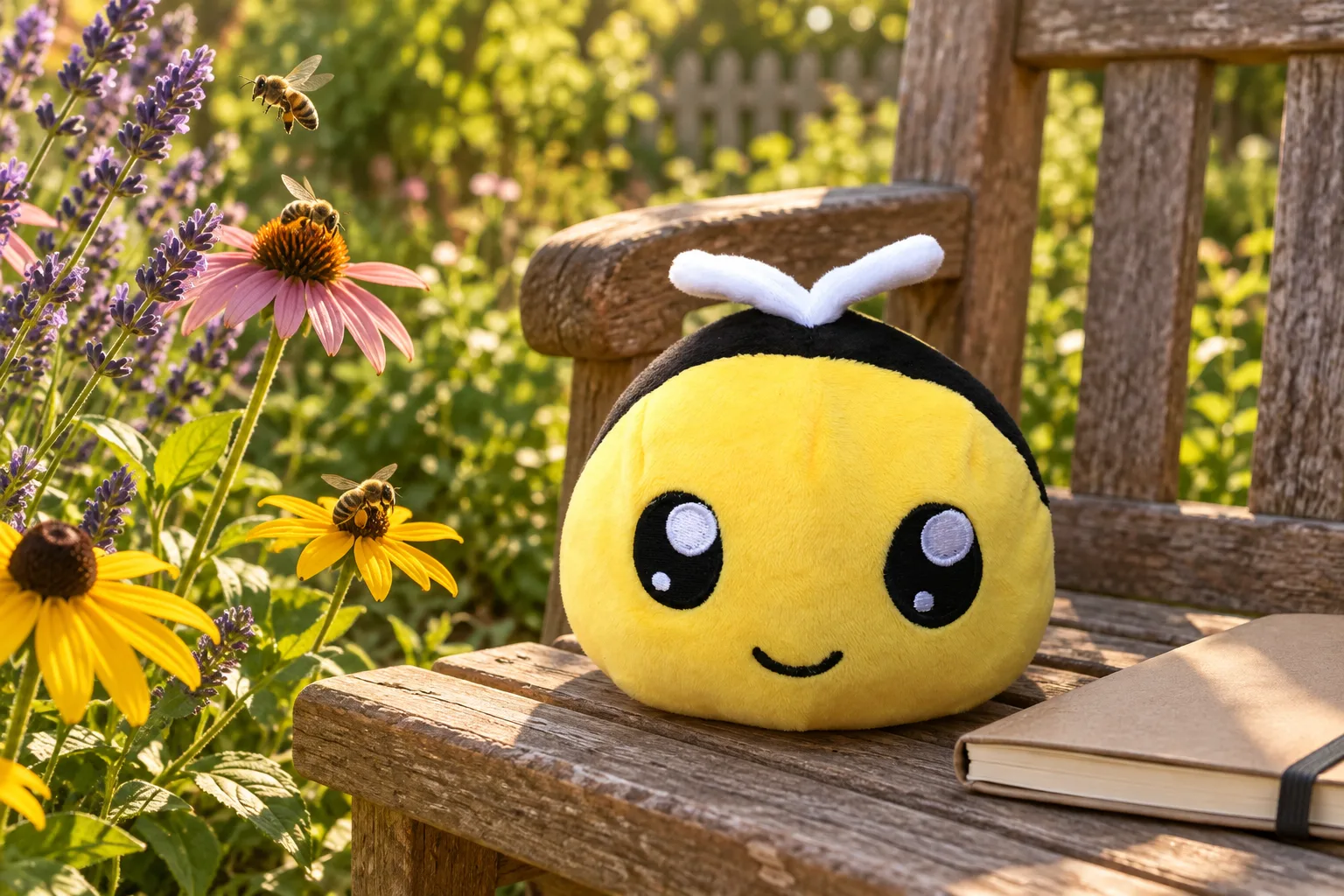
For a family learning activity, the Original Adopt a Bee® Plush Toy from Project Honey Bees can be a playful companion for discussing what you observed afterward. Keep the science distinction clear: the toy represents a bee, while real species vary in appearance and behavior.
How Does Collecting Pollen Help Flowers?
Collecting pollen can help flowers because bees move some pollen onto receptive flower parts during their visits.
According to the USDA Forest Service, pollination involves moving pollen from an anther to a stigma. When compatible pollen reaches a receptive stigma, it can enable fertilization and subsequent seed development. Bee visits contribute to that process in many flowering plants.
The pollen packed tightly for transport is primarily the bee's food supply; loose pollen on its body is particularly important for transfer. Not every visit produces successful pollination, and different flowers interact differently with their visitors. Still, the connection is straightforward: bees seek nourishment, and many plants benefit along the way.
If you want to support that relationship at home, locally appropriate flowering plants with overlapping bloom times are a practical starting point. Regional university extension guidance can help you choose plants suited to your location and the pollinators that live there.
What Are Some Frequently Asked Questions About Bees and Pollen?
Bees use pollen for nutrition, honey bees use honey for energy, and their flower visits can help plants reproduce. These answers explain those roles and how they differ.
What do bees do with honey?
Honey bees store honey as an energy reserve and eat it to fuel their activities. Stored honey is especially important when nectar is unavailable or weather prevents foraging.
What do bees do to flowers?
Bees visit flowers to gather nectar, pollen, or both. During those visits, they can move pollen onto receptive flower parts and help accomplish pollination.
Why are bees important to plants?
Bees help many flowering plants reproduce by transferring pollen between compatible flower parts. Not all plants depend on bees; some rely on wind, other animals, or other pollination mechanisms.
What do bees do with pollen?
Bees use pollen as food that supplies protein, fats, and other nutrients, especially for developing young. Honey bees store it in their hive, while many solitary bees place pollen provisions in individual nest cells for their offspring.
Want to Turn Your Bee Curiosity Into a Meaningful Gift?
A bee-themed gift from Project Honey Bees can celebrate someone's interest in pollinators and spark conversations about their lives.
A wearable option such as the Original Adopt a Bee® Necklace can serve as a reminder of the small flower visits behind a much bigger ecological relationship. Check the linked product and adoption pages for current program details before purchasing.
Ready to explore? Shop all bee gifts, or learn how adoption works before choosing a gift for yourself or a fellow bee enthusiast.