
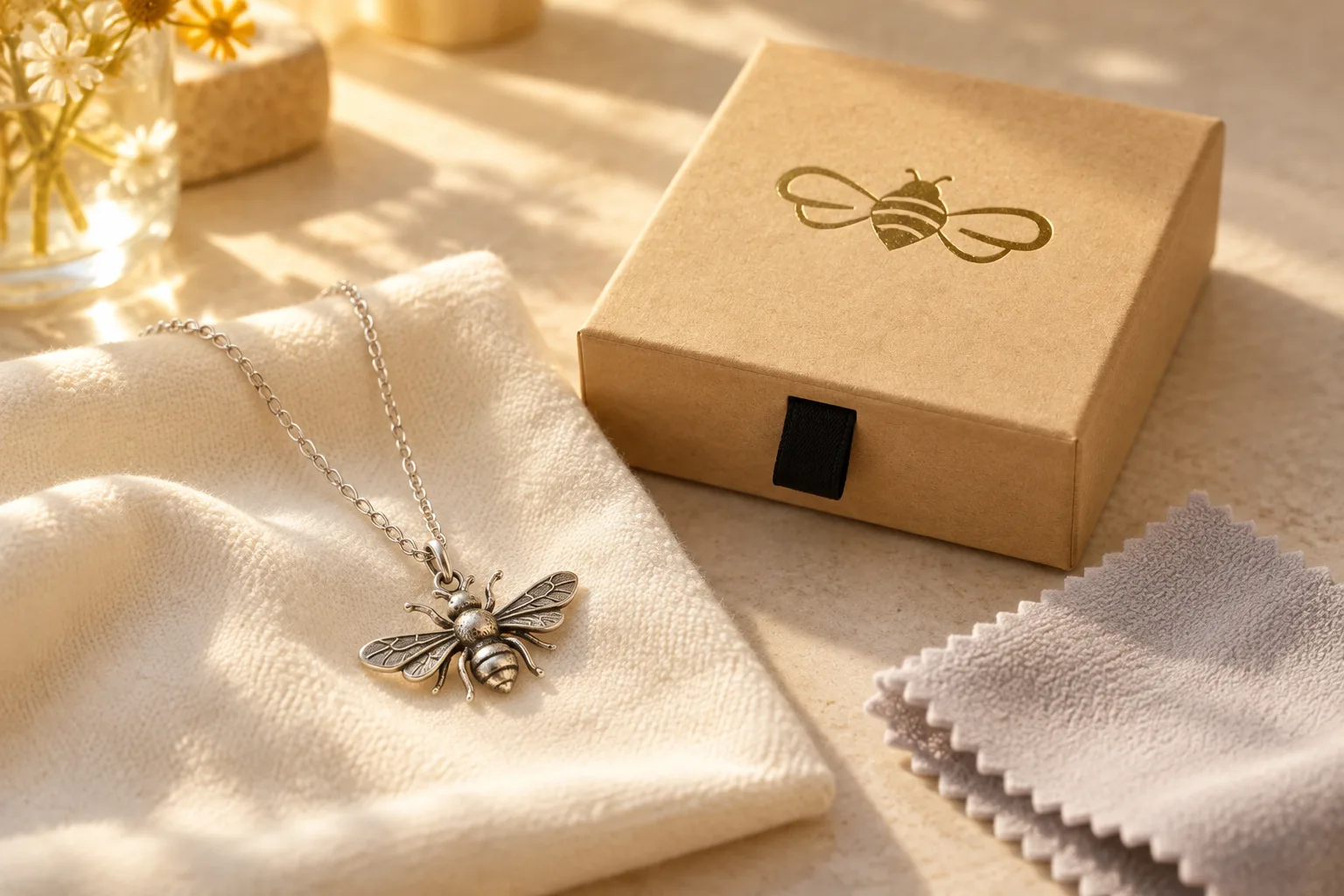
Silver bee jewelry can have delicate wings, recessed details, tiny stones, and finishes that need different kinds of care. The safest cleaning method depends on what the piece is actually made from—not simply its silver color. Before polishing a favorite bee necklace or refreshing a secondhand find, identify its materials and start with the gentlest appropriate treatment.
This guide focuses on cleaning and storage rather than choosing a metal. It also explains what to check before buying a piece whose care instructions are unclear.
How do you clean silver bee jewelry safely?
Clean silver bee jewelry by checking its metal and embellishments first, then gently wiping it with a clean, soft cloth. For confirmed plain sterling silver, follow the maker’s washing or polishing instructions. Avoid soaking unknown materials, plated finishes, glued stones, or deliberately darkened details, and ask a jeweler when identification is uncertain.
A bright silver-colored surface does not tell you whether a bee pendant is solid silver alloy, plated, or made from another metal. A treatment that works for an undecorated sterling chain may damage a plated wing or loosen a glued accent.
Start by inspecting the clasp, chain, and pendant in good light. If a stone moves, a wing is bent, or the chain has a damaged link, set cleaning aside until a jeweler assesses the repair.
What should you check before cleaning a silver-colored bee?
Check the seller’s material description, any markings, and the care instructions before choosing a cleaner.
These common descriptions are not interchangeable. If you are shopping for sterling silver bee jewelry, look for a clear statement about the metal throughout the piece, not just its appearance.
- Sterling silver: A silver alloy containing 92.5 percent silver. A 925 mark is a useful clue, but a stamp alone does not authenticate a piece.
- Silver-plated bee jewelry: Another material covered with a layer of silver. Repeated abrasive polishing can wear through that layer.
- Silver-tone bee jewelry: A description of color rather than a promise of silver content. Follow the manufacturer’s care directions.
- Coated or intentionally darkened silver: A surface treatment may change which cleaning methods are appropriate. Dark recesses can be part of the design.
The pendant, chain, clasp, and decorative accents may have different compositions. Check the whole item rather than assuming that one marking describes every component.
For an unidentified piece, a gentle dry wipe is a more cautious starting point than a liquid cleaner. Ask the seller or a jeweler to clarify anything the product description leaves unresolved.
Why does silver bee jewelry turn dark?
Silver tarnish develops when silver reacts with substances in its surroundings, especially sulfur-containing compounds.
The Canadian Conservation Institute explains that silver tarnishes through reactions with sulfur-containing gases and that polishing removes some surface material. This is why frequent, aggressive polishing is not a harmless maintenance routine, particularly for plated objects.
On bee jewelry, dark areas around the legs or between the wings may be tarnish, accumulated residue, or an intentional finish. Compare the piece with its original product photographs before trying to make every recess bright.
Tarnish alone does not prove that jewelry is counterfeit. Conversely, a bright surface does not prove that it is sterling silver; another metal, a protective coating, or recent cleaning could explain the appearance.
What is a gentle cleaning routine for a bee necklace?
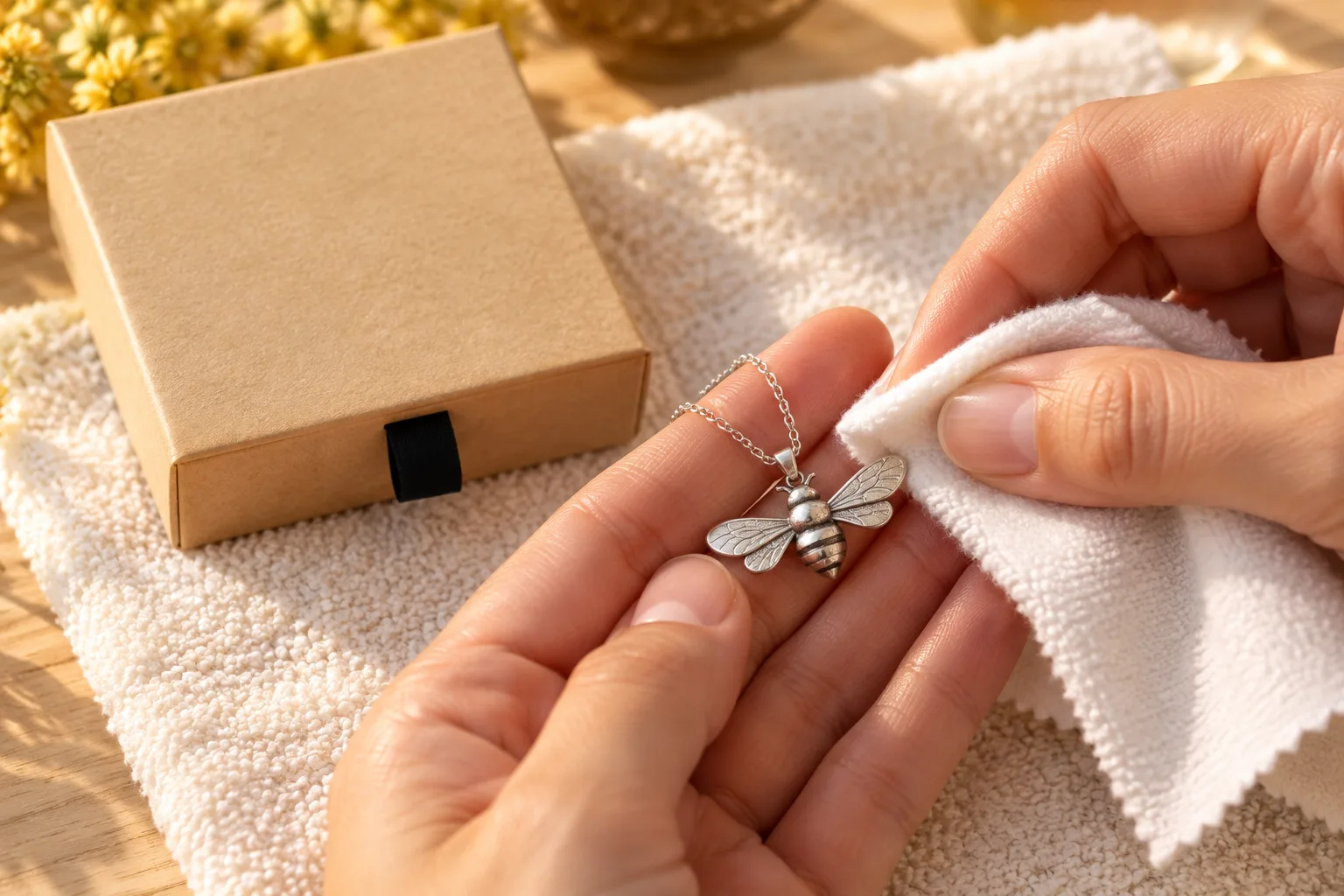
A gentle bee necklace care routine starts with a dry wipe and moves to washing or polishing only when the materials and maker’s instructions allow it.
How should you prepare the jewelry?
Place the necklace on a clean, soft towel and inspect it before applying any moisture or polish.
Work away from an open drain, and keep the chain from tangling around the pendant. Use a clean cloth without grit, because particles caught in fabric can scratch a polished surface.
When is a damp cloth appropriate?
A lightly dampened cloth can help remove surface residue from confirmed water-safe jewelry when the maker permits it.
For plain, uncoated sterling silver without stones, adhesive, or other sensitive details, the maker may recommend mild soap and lukewarm water. Use a separate bowl rather than working over a drain, rinse as directed, and dry thoroughly before storage.
Do not extend that advice to every bee necklace. Pearls, enamel, glued decorations, mixed materials, and surface coatings can require different handling, so avoid soaking whenever the construction is uncertain.
When should you use a silver-polishing cloth?
Use a treated silver-polishing cloth only when it is suitable for the confirmed metal and finish.
Apply light pressure to accessible surfaces rather than scrubbing tiny legs or forcing fabric through delicate openings. Stop if a surface color changes unexpectedly or a coating appears to wear away; polishing cannot replace missing plating.
Which silver-cleaning shortcuts should you avoid?
Avoid abrasive or chemically aggressive shortcuts when you do not know every material in the jewelry.
Online advice about how to clean silver jewelry often assumes a plain silver object. A bee pendant can include several materials, so a method used on undecorated silverware is not automatically appropriate.
- Toothpaste and gritty pastes: Abrasive particles can scratch surfaces and accelerate wear on plating.
- Aluminum foil and baking soda baths: These treatments can remove intentional darkening and may be unsuitable for mixed-material pieces.
- Strong chemical dips: Compatibility depends on the metal, finish, stones, and construction. Do not use them without specific guidance.
- Ultrasonic cleaners: Vibration is not suitable for every stone, setting, or glued component. Ask a jeweler first.
- Hard brushes or needles: These can scratch surfaces or bend delicate details when used to dig out residue.
For a valuable, sentimental, antique, or badly tarnished piece, professional assessment is often the better next step. Tell the jeweler whether you want any original darkened detailing preserved.
How should you store silver bee jewelry between wears?
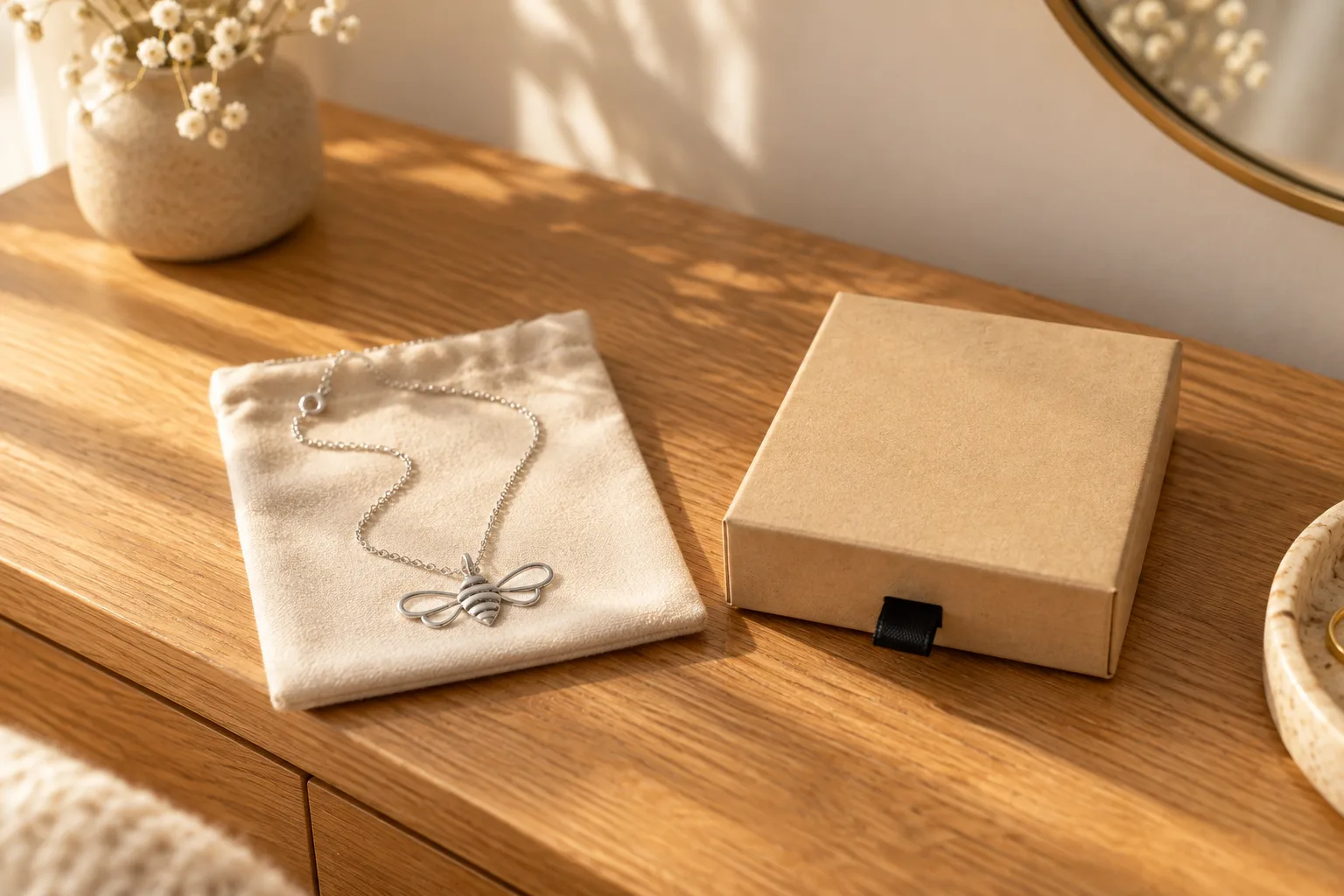
Store silver bee jewelry clean, completely dry, and separated from other pieces in a suitable, low-moisture environment.
The Canadian Conservation Institute recommends limiting silver’s exposure to tarnishing pollutants and using appropriate storage materials. For everyday jewelry storage, keeping pieces away from bathroom humidity and preventing them from rubbing against harder objects are practical starting points.
- Separate necklaces: Give each chain its own compartment or suitable pouch so it cannot knot around another pendant.
- Choose materials carefully: Use storage products intended for silver rather than assuming every decorative box or lining is tarnish-resistant.
- Consider anti-tarnish products: Use strips or pouches designed for silver according to their instructions, including replacement guidance.
- Keep jewelry dry: Remove it before swimming, bathing, or household cleaning, and let lotions or perfume dry before putting it on.
- Avoid overcrowding: Leave space around projecting wings, antennae, and stone settings.
If you are presenting a bee necklace as a gift, Project Honey Bees offers a Luxury Gift Box as a finishing touch. Treat gift packaging as presentation unless its specifications explicitly confirm anti-tarnish protection; suitable storage can be provided separately.
What should you ask before buying a silver-colored bee necklace?
Ask for the exact materials, care requirements, and repair options before buying a silver-colored bee necklace.
A useful product description should distinguish sterling silver from silver plating and silver-tone finishes. It should also identify decorative materials and explain whether water, polishing cloths, or liquid cleaners are appropriate.
For a gift, consider how much maintenance the recipient wants. A short care note and an appropriate storage pouch can be more useful than including a cleaner whose compatibility is unknown.
Also separate the material claim from the conservation claim. An adoption offer or conservation-related promise does not establish any particular product’s metal composition. Check the individual listing for materials and care, and review the brand’s current program details for what a purchase includes and how any conservation support is provided.
What are frequently asked questions about bee jewelry?
Common questions about bee jewelry cover its symbolism, where to buy it, and how to choose a brand with clear material descriptions and documented conservation promises.
What does bee jewelry mean?
Bee jewelry meaning varies with the wearer, but common associations include cooperation, persistence, and appreciation for nature. According to the USDA, pollinators help many flowering plants reproduce, making a bee motif a natural reminder of that ecological role.
Where can I find bee jewelry near me?
Local jewelers, independent gift shops, and artisan markets are places to look for bee jewelry near you. Call ahead to ask about silver options, material documentation, and whether the shop can assess or clean an existing piece.
How do I choose a bee jewelry brand?
Choose a bee jewelry brand that clearly explains materials, care, returns, and any conservation-related promises. If supporting pollinators matters to you, look for a named partner and a concrete explanation of what a purchase includes rather than relying on a bee-themed design alone.
Ready to choose a bee gift with a purpose?
Start with a design the recipient will enjoy, then confirm its materials and care needs before ordering.
Explore the Original Adopt a Bee® Necklace or Original Adopt a Bee® Earrings as bee-themed options, checking each listing for its specific finish and composition rather than assuming either is sterling silver.
Shop all bee gifts to find your favorite, or learn how adoption works before choosing. Review the current adoption terms and any documented conservation commitments to understand what your purchase includes.