
A queen bee does not inherit a crown from her mother. She develops from a fertilized egg, just as a worker bee does, but her care and nutrition as a young larva put her on a different developmental path. The result is the colony’s main egg-laying female.
Understanding that process makes a honey bee colony even more remarkable: worker bees help raise the individual whose eggs will sustain its future. Here is how queen bee development works, why colonies raise new queens, and what adopting a queen means outside the hive.
How does a queen bee become a queen?
A queen bee develops from a fertilized egg when worker bees raise the young female larva with a queen-rearing diet in a special queen cell. This feeding supports the development of her reproductive system. After emerging, a virgin queen usually mates outside the hive before beginning to lay fertilized eggs.
Honey bee queens and workers are both female, while drones are male. Under normal colony conditions, fertilized eggs develop into females and unfertilized eggs develop into drones. The distinction between a queen and a worker depends strongly on how the female larva develops.
That means a queen does not ordinarily lay a separate, special category of “queen egg.” Worker bees provide the conditions that allow a suitable young female larva to become a reproductive queen rather than a worker.
What makes queen bee development different?
Queen bee development differs from worker development primarily through larval nutrition and the rearing environment provided by nurse bees.
Nurse bees are worker bees that care for developing brood. They produce glandular secretions used to feed larvae, including the rich food commonly called royal jelly. Queen-destined larvae receive an abundant diet suited to queen development throughout their feeding stage.
Does royal jelly turn any bee into a queen?
Royal jelly helps support queen development in a young female larva, but it cannot transform an adult worker into a queen. The relevant changes happen during immature development, before the bee emerges as an adult.
The process is more complex than one ingredient acting like a switch. Food quantity, composition, timing, and the larva’s developmental stage all matter. Male drone larvae cannot become queens through feeding.
What are queen cells?
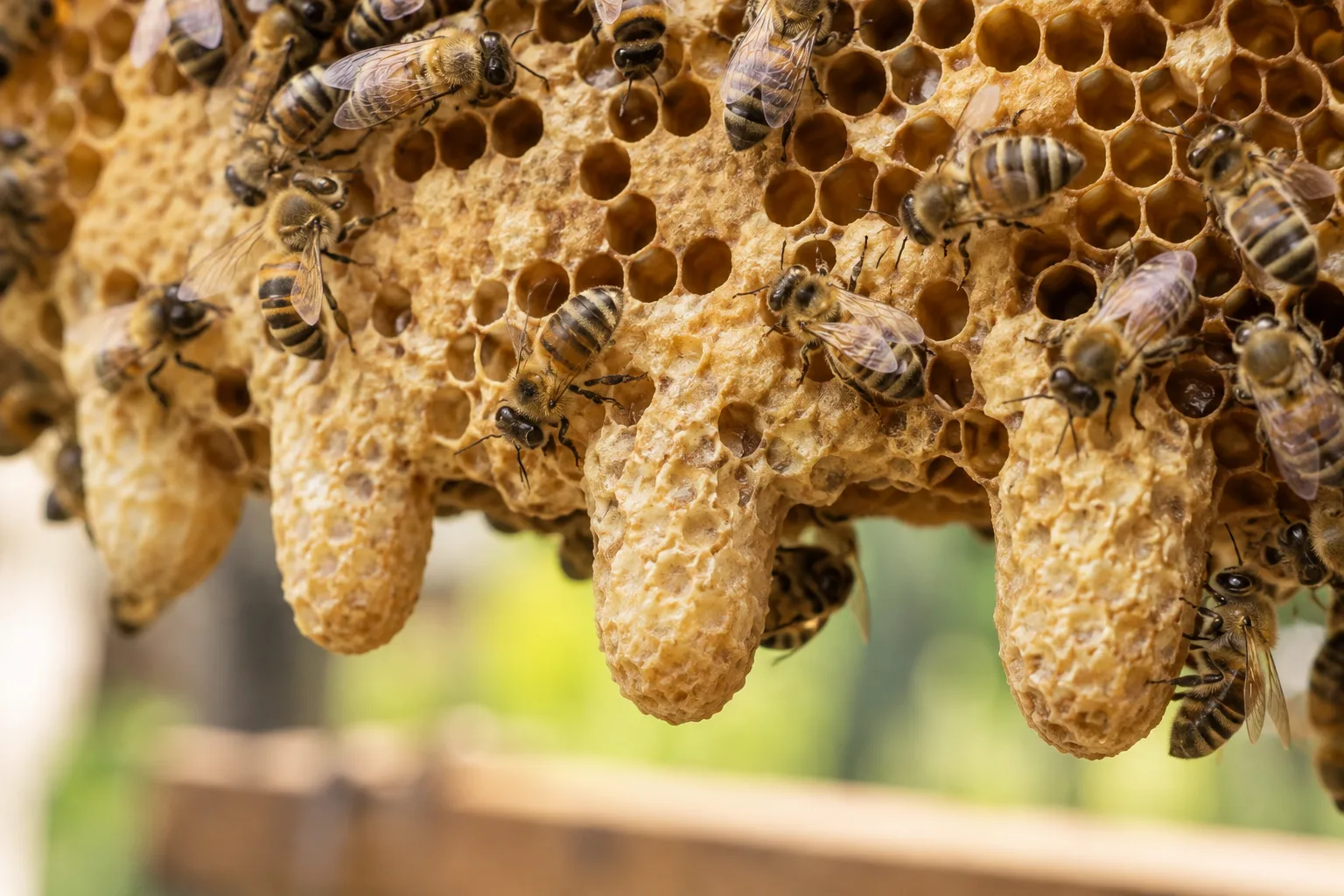
Queen cells are enlarged brood cells in which new queens develop. Unlike the smaller cells used for worker brood, mature queen cells typically project from the comb and hang downward.
Beekeepers often describe capped queen cells as having a peanut-like appearance. Their location and the colony’s condition can offer clues about why the bees are raising queens, but position alone does not prove what is happening inside a colony.
Why do worker bees raise a new queen?
Worker bees raise a new queen when a colony is preparing to reproduce by swarming, replacing an existing queen, or responding to queen loss.
These situations serve different purposes. A colony raising queen cells is not automatically queenless, and a queen cell does not necessarily mean that the old queen has already died.
- Swarming: A colony prepares to divide. The established queen typically leaves with part of the worker population, while new queens are raised in the original nest.
- Supersedure: Workers raise a replacement queen while the existing queen may still be present. This can occur when her performance or condition is declining.
- Emergency replacement: After losing a queen, workers may rear a replacement from suitable young female brood already in the nest.
The age and availability of that brood matter. A queenless colony without fertilized eggs or suitably young female larvae cannot rear a replacement queen from its existing brood. It cannot turn an adult worker into a queen.
For gardeners watching bees on flowers, none of this requires intervention. Queen replacement is a process inside the colony, and opening or manipulating a hive is a job for someone with appropriate beekeeping knowledge and equipment.
What happens after a virgin queen emerges?
A virgin queen generally needs to mature and mate before she can lay the fertilized eggs that become workers or future queens.
She emerges from her cell as an adult, but she is not yet performing the full reproductive role of an established, mated queen. When multiple queens develop, competition between queens can occur; the outcome depends partly on the colony’s circumstances, including whether further swarming occurs.
Where does a queen mate?
A honey bee queen normally mates in flight outside the hive, rather than with drones inside the nest. During her early adult life, she may make mating flights and mate with multiple drones.
A queen stores sperm for later use in fertilizing eggs. Weather and other flight conditions can affect mating opportunities, so a newly emerged queen does not immediately begin producing worker brood.
Once successfully mated and established, the queen spends most of her time inside the colony laying eggs. Her ability to lay fertilized eggs is essential to replacing the workers that forage, nurse brood, build comb, and maintain the nest.
Does the queen bee control the whole hive?
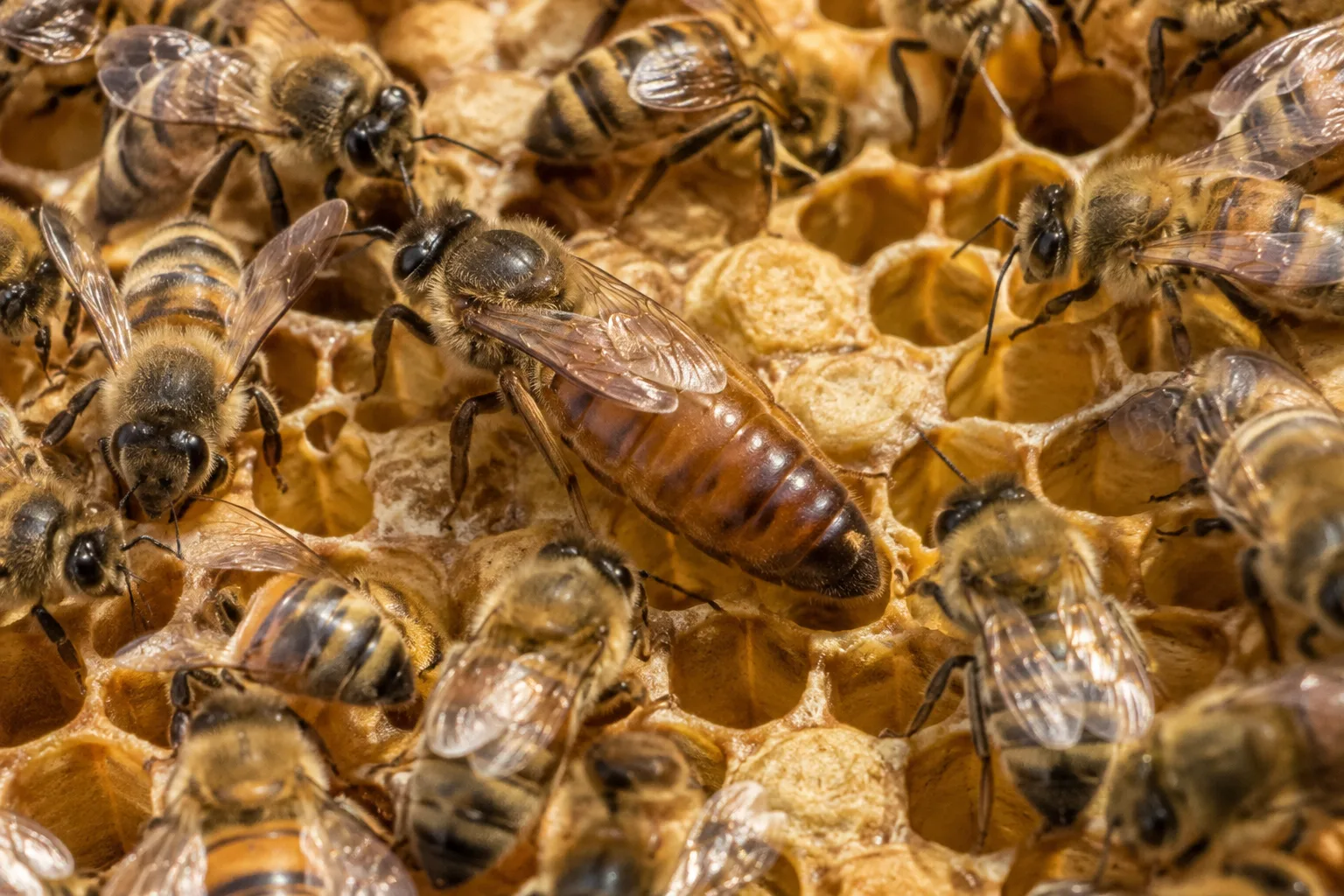
The queen bee is the colony’s principal reproductive female, not a commander issuing instructions to every worker.
Honey bee colonies coordinate activity through chemical signals, contact, and responses to local conditions. Queen pheromones contribute to colony organization and help workers recognize the queen’s presence, but workers also respond to brood, food stores, temperature, and available flowers.
Worker bees perform most of the colony’s daily labor. Their responsibilities include tending larvae, processing nectar, guarding the entrance, and foraging. The queen’s central contribution is reproduction, rather than directing every trip to a flower.
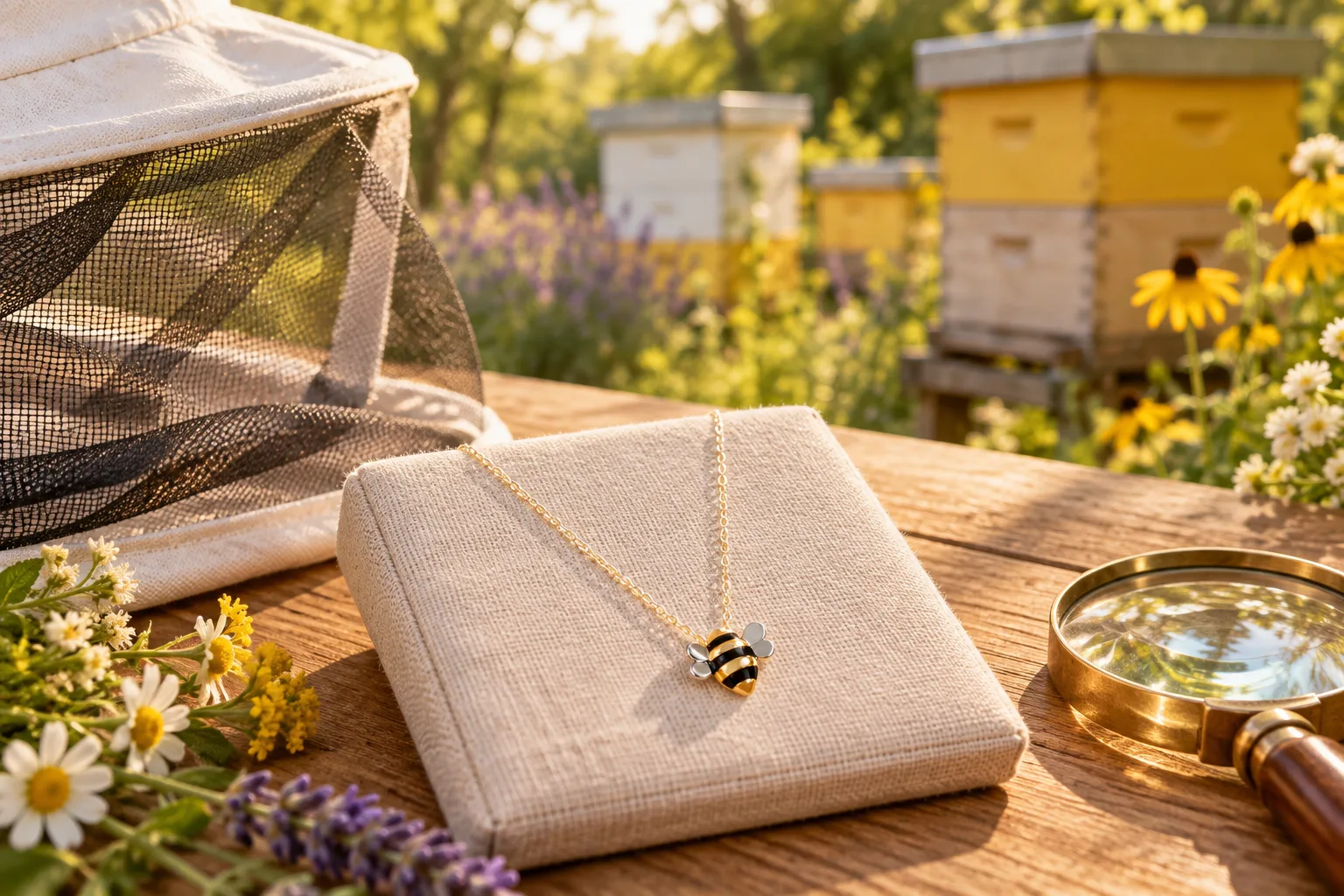
This distinction also makes queen-inspired gifts more meaningful: the queen represents one important part of an interdependent community. For someone fascinated by that connection, Project Honey Bees’ Original Adopt a Bee® Necklace offers a wearable reminder of honey bees. Check the current listing for any included adoption experience and its terms.
Is every bee colony organized around a queen?
No: honey bees live in colonies with queens, but many other bee species are solitary and have no queen-worker system.
Many wild bee species nest as individual females rather than as large social colonies. A solitary female builds or selects a nest, provisions it, and lays her own eggs. She is not a queen overseeing worker bees.
Bumble bees do have queens and workers, but their colony life cycle differs from that of honey bees. Learning how a honey bee queen develops should not lead us to assume that all pollinators live the same way.
That distinction matters for conservation. Supporting honey bees and protecting diverse wild pollinators are not interchangeable goals: healthy managed hives alone do not meet wild bee species’ habitat needs.
What does queen bee adoption mean for a gift?
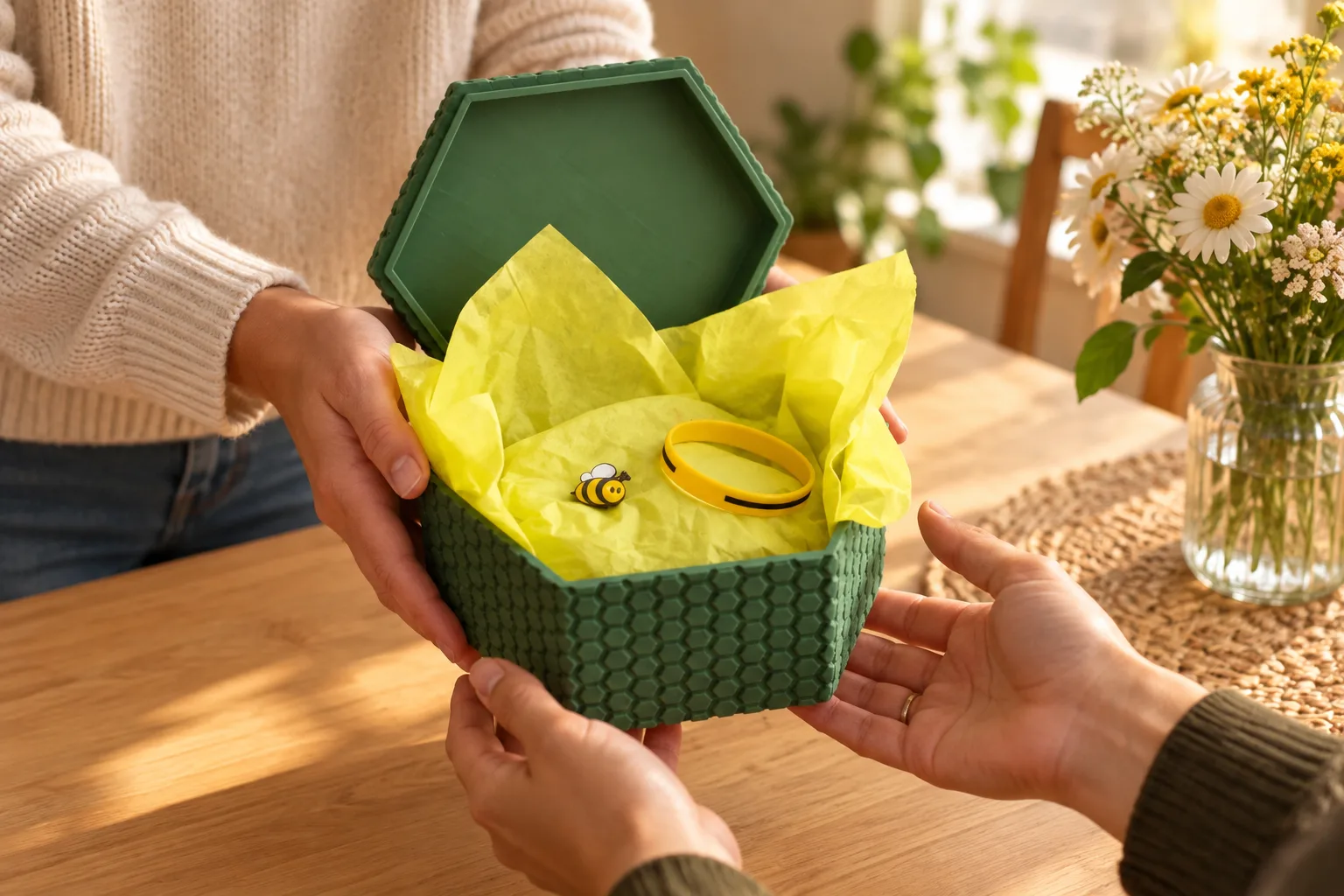
Queen bee adoption offered with a gift should be understood as a symbolic experience, not as taking responsibility for a live queen or colony.
Before buying, check Project Honey Bees’ current adoption terms for what is included, whether naming a queen is offered, and whether any conservation contribution is specified. An adoption label alone does not establish how a purchase benefits pollinators.
For a gift centered on that theme, consider the Adopt a Bee® Gift Set. Explain any included adoption experience alongside the gift, and check the current product listing for its contents rather than assuming it includes honey or a live bee.
Keep the distinction clear: symbolic adoption is different from caring for a colony. It also does not replace practical actions such as providing flowers and protecting nesting habitat for local pollinators.
What are frequently asked questions about queen bees and helping pollinators?
A queen bee is a honey bee colony’s main egg-layer, while practical help for bees includes suitable flowers, protected nesting habitat, and reduced pesticide exposure. These common questions cover those basics.
What is a queen bee?
A queen bee is the main reproductive female in a honey bee colony. She normally lays the colony’s eggs, while worker bees carry out tasks such as foraging, brood care, and nest maintenance.
How can you help protect honey bees?
Help honey bees by providing suitable flowering plants and reducing unnecessary pesticide use around those plants. Always follow pesticide label directions, including restrictions intended to protect bees. Colony health problems themselves require informed beekeeping management.
How can you help the bees in your garden?
Grow locally appropriate flowers that bloom across different parts of the growing season, and protect nesting habitat for wild bees. Include native plants suited to your region rather than planning only for honey bees.
Ready to choose a gift that celebrates the queen bee?
Start with a bee-inspired gift that matches the recipient’s everyday interests, whether that means jewelry, a keepsake, or a gift set.
Check the current product and adoption details before purchasing. Shop all bee gifts, or learn how adoption works before choosing your gift.