
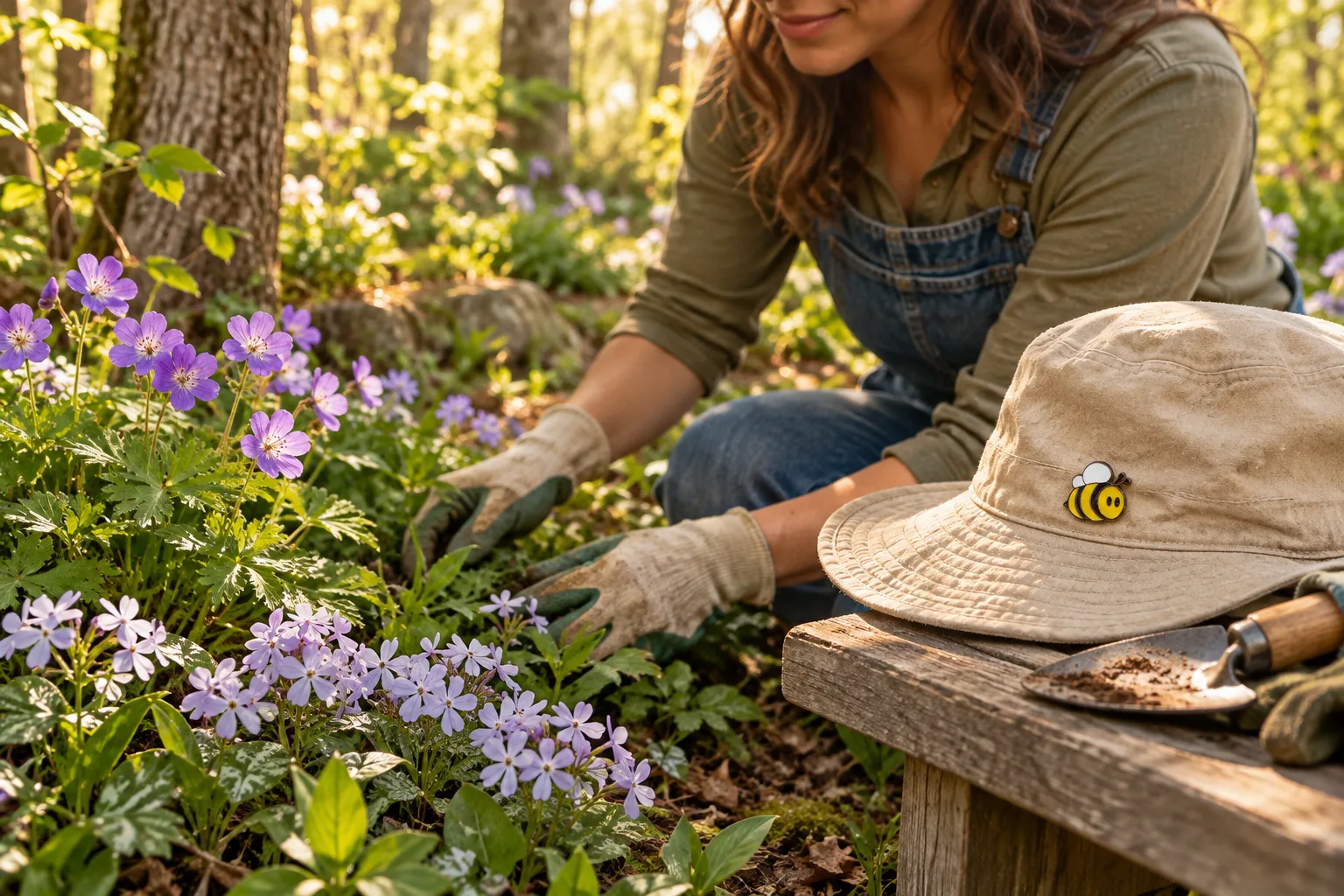
A shady yard can still offer food for pollinators—you just need a different planting list from the one recommended for a sunny meadow. The best pollinator garden plants for shade match your region, soil moisture, and available light, rather than simply carrying a “bee-friendly” label.
This guide focuses on woodland flowers, including several native to the eastern United States, and explains how to choose suitable alternatives elsewhere. You do not need to remove healthy trees or turn your entire yard into a flower bed to get started.
Which pollinator garden plants grow in shade?
Pollinator garden plants that can grow in shade include wild geranium, Virginia bluebells, woodland phlox, eastern red columbine, zigzag goldenrod, and white wood aster. Choose species native to your area and suited to your soil moisture. Light or dappled shade usually offers more flowering options than deep, continuous shade.
These plants are not interchangeable, and none is native everywhere in the United States. Many are eastern woodland species; gardeners in western, desert, or subtropical regions should use local university Extension recommendations to find appropriate native plants for shade.
According to the USDA Forest Service’s pollinator gardening guidance, using suitable native plants and providing flowers across the growing season can support pollinators. In a shaded garden, that often means combining early woodland blooms with summer flowers and shade-tolerant fall bloomers.
How do you choose pollinator garden plants for your site?
Choose plants by matching three conditions first: regional suitability, seasonal sunlight, and soil moisture.
Watch your planting area at different times of day, and remember that sunlight changes when deciduous trees leaf out. A bed that looks sunny in early spring may become deeply shaded in summer. That seasonal window is especially useful for spring ephemerals—woodland plants that grow and flower early before their foliage dies back.
How much shade is too much for flowers?
Deep, continuous shade limits flowering more than bright, filtered shade does.
Light beneath an open tree canopy is different from darkness between a building and a dense evergreen hedge. Many part-shade flowers can work in the first setting but struggle in the second. Follow the light requirements for the particular species rather than assuming all woodland wildflowers tolerate the same conditions.
If your darkest corner produces very few flowers, use it for suitable foliage plants and habitat structure. Place your main nectar-and-pollen planting along a brighter edge instead of repeatedly replacing plants that cannot thrive.
Does dry shade need different plants from moist shade?
Yes—shade does not tell you how much water is available to plant roots.
Large trees can compete strongly for moisture, while low woodland areas may stay damp. Check the soil after both rainfall and dry weather. Choose plants for the conditions you actually have rather than trying to maintain a permanently moist bed beneath thirsty established trees.
Which native flowers should you consider for a shady bed?
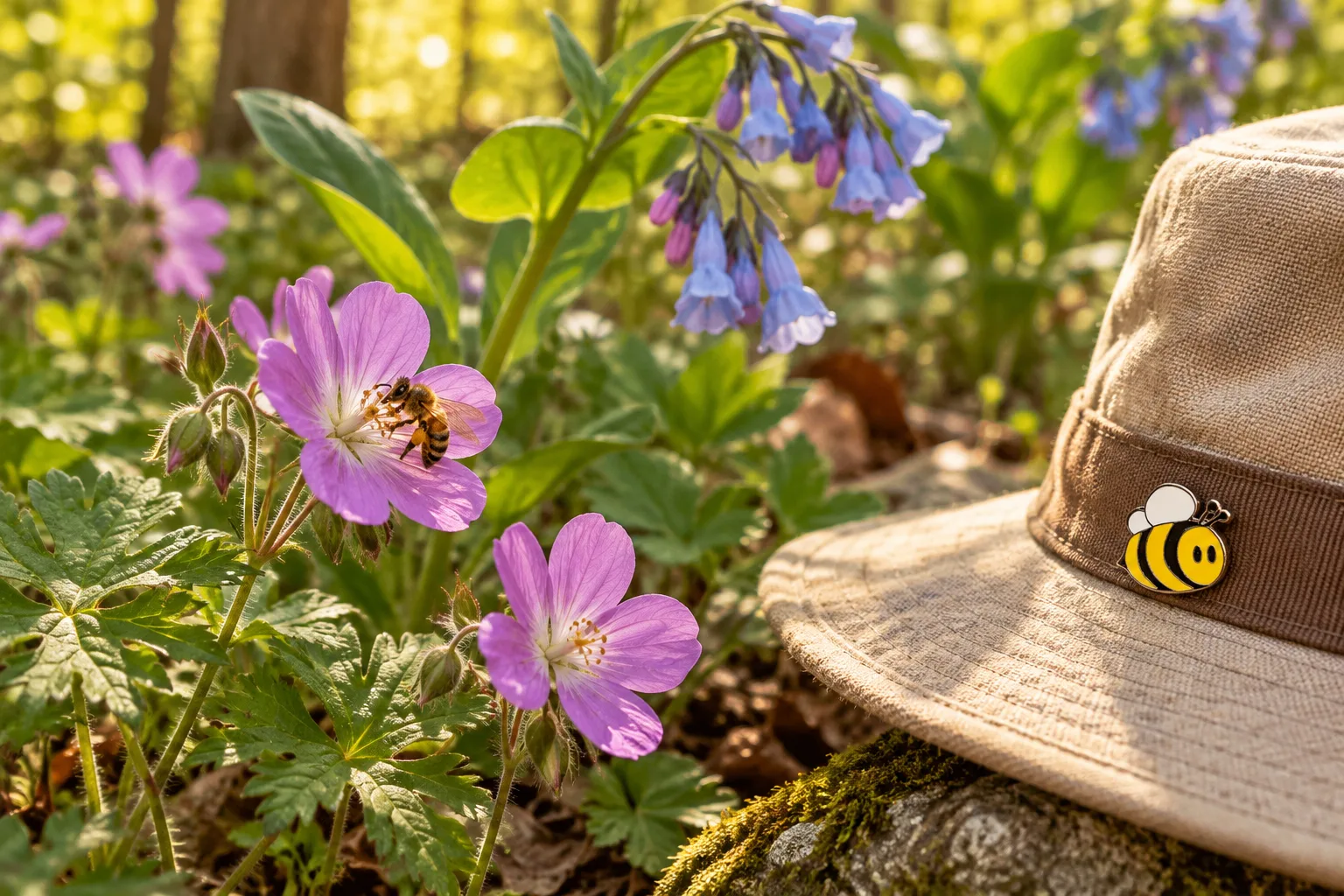
Start with a small selection of locally native woodland flowers that cover different bloom periods and fit your site.
The following examples are starting points for many eastern US gardens, not a nationwide shopping list. Confirm each species’ native range, hardiness, and growing requirements with your state university Extension office or a knowledgeable regional native-plant nursery.
What can flower in spring beneath deciduous trees?
Virginia bluebells, wild geranium, and woodland phlox can provide spring flowers in suitable woodland conditions.
- Virginia bluebells, Mertensia virginica: A spring ephemeral for moist, well-drained woodland soil. Its foliage dies back after its spring growth, so leave room for neighboring plants to fill the visual gap.
- Wild geranium, Geranium maculatum: A woodland perennial with open flowers visited by bees. It suits partial shade and generally performs best where soil is not persistently parched.
- Woodland phlox, Phlox divaricata: A spring-flowering option for partial shade and moist, well-drained soil. Its tubular flowers serve visitors able to reach the nectar, including butterflies and some bees.
Spring bloom timing varies with latitude, elevation, and weather. Buy by scientific name when possible, since a common name such as “bluebells” can refer to unrelated plants with different growing habits.
What adds flowers beyond the earliest spring display?
Eastern red columbine, zigzag goldenrod, and white wood aster can broaden the flowering season where they are locally appropriate.
- Eastern red columbine, Aquilegia canadensis: A spring-to-early-summer flower that can tolerate partial shade and well-drained conditions. Its flowers attract hummingbirds and some bees, making it useful for a broader pollinator planting.
- Zigzag goldenrod, Solidago flexicaulis: A woodland goldenrod that brings late-season flowers to suitable shaded sites. It can spread through rhizomes, so give it space rather than placing it beside delicate, slow-growing plants.
- White wood aster, Eurybia divaricata: A late-season woodland flower that tolerates shade and, once established, comparatively dry conditions. Its small flower heads offer feeding opportunities for visiting insects.
Not every visitor will be a honey bee. Native bees, flies, butterflies, and other insects may use a shade pollinator garden, depending on the flowers and surrounding habitat.
How can you turn a plant list into a workable garden?
Build a manageable bed by repeating compatible plants and planning for their mature size.
A useful pollinator garden design does not require a complicated pattern. Repeated groups make plants easier to observe and maintain, while a mix of bloom periods helps prevent the entire bed from flowering at once and then going quiet.
- Map the light: Note the brighter edge, darkest corner, and spring sunlight beneath deciduous trees.
- Check the moisture: Separate dry root-filled ground from areas that remain moist after rain.
- Choose a few species: Begin with compatible early and late bloomers rather than buying one of everything.
- Allow mature spacing: Use nursery guidance and account for plants that spread.
- Plant carefully near trees: Use small plants where practical, avoid cutting substantial roots, and do not raise soil levels over established tree roots.
- Observe and adjust: Record flowering, insect visits, and watering needs before expanding.
A notebook is more useful than a promise that a plant is universally “best for bees.” Your own observations can reveal whether a particular flower gets enough light and which visitors actually use it.
What else helps pollinators in a shaded yard?
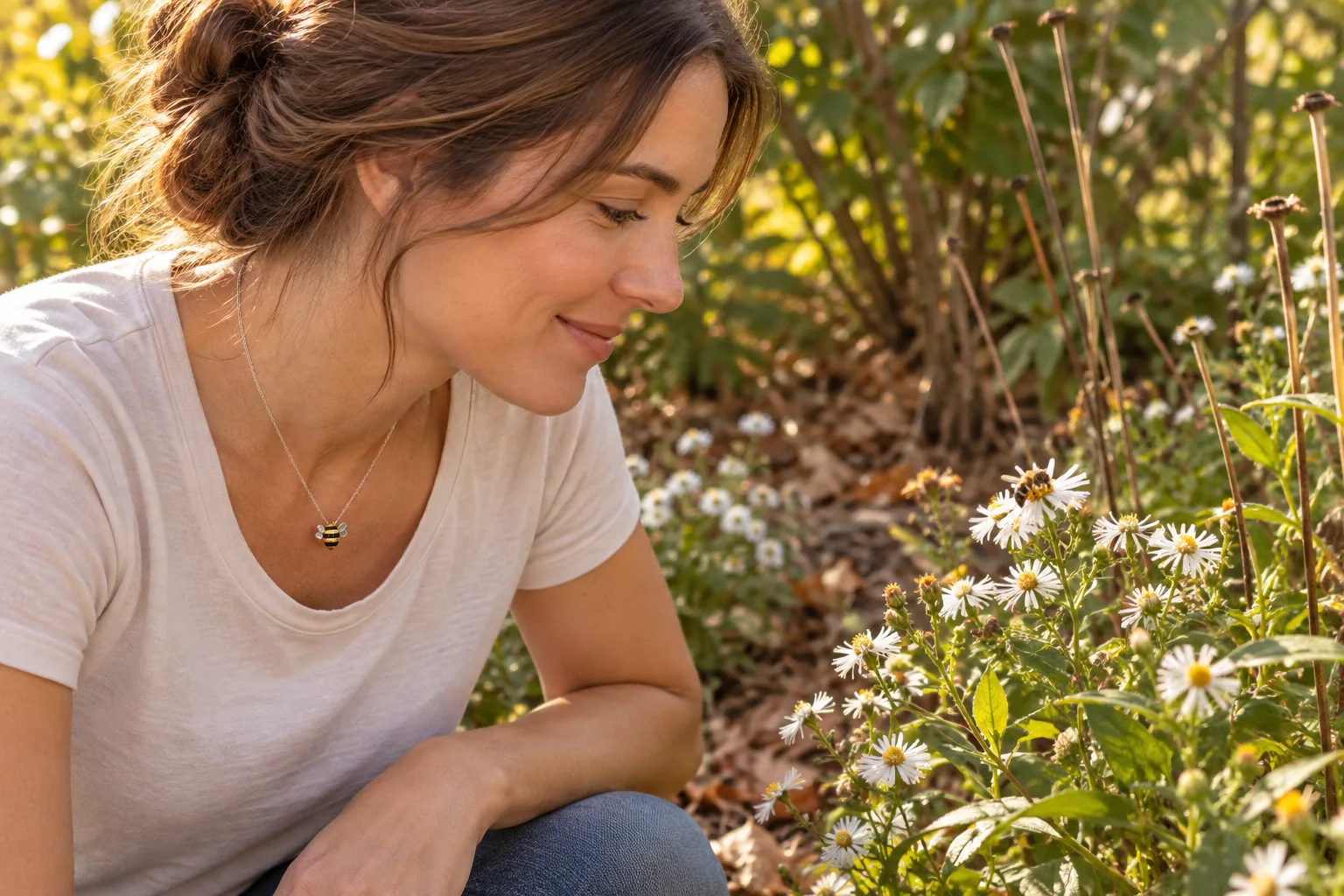
Flowers work best alongside nesting habitat, thoughtful maintenance, and reduced pesticide exposure.
The USDA Forest Service explains that pollinators need more than floral food: suitable nesting and overwintering places also matter. Different species use different resources, so a tidy flower bed alone cannot provide everything.
Keep some fallen leaves beneath shrubs where practical, retain suitable standing stems, and avoid covering every patch of ground with thick mulch. Many native bees nest in soil, while others use cavities or plant stems. Honey bees live in colonies and do not share all of those nesting requirements.
According to the EPA’s pollinator protection guidance, pesticide exposure can pose risks to bees and other pollinators. Identify a problem before treating it, consider nonchemical approaches, and follow every pesticide label direction, including pollinator precautions.
If you enjoy sharing your gardening goals, the Project Honey Bees Save The Bees® Pin offers a wearable conversation starter for a garden-club visit or nursery trip. It complements hands-on habitat work rather than replacing it.
What mistakes should you avoid when buying shade plants?
Avoid choosing by flower color alone, overlooking regional suitability, or expecting shade-tolerant plants to bloom without enough light.
A plant labeled “native” may be native to a distant part of the country rather than your local ecosystem. Ask where the species naturally occurs and whether it suits your soil. University Extension offices and regional native-plant organizations can help narrow the choices.
Buy nursery-propagated woodland wildflowers instead of digging them from natural areas. Also ask how plants were grown and whether they received insecticide treatments; “pollinator-friendly” packaging does not explain a nursery’s production practices.
Finally, avoid judging success only by honey bee numbers. A bee-friendly garden can be valuable even when its most frequent visitors are small native bees or pollinating flies that are easy to overlook.
What are frequently asked questions about bees and pollinator garden plants?
Common questions concern how bees use flowers, how pollination helps plants reproduce, and how gardeners can provide food and nesting habitat. The answers below explain these relationships and practical ways to help.
What do bees do to flowers?
Bees visit flowers to collect nectar, pollen, or both. As they move between compatible flowers, they can transfer pollen to receptive flower parts, helping plants reproduce.
Why are bees important to plants?
Bees help many flowering plants produce seeds and fruits by transferring pollen. Not all plants depend on bees; some rely on wind, other animals, or self-pollination.
What do bees do with pollen?
Bees collect pollen as a source of protein and other nutrients, especially for developing young. Honey bees store pollen in comb, while many solitary bees provision individual nests with pollen and nectar.
How can you help bees in your garden?
Grow regionally appropriate flowers across the growing season, protect nesting habitat, and reduce pesticide risks. In shade, focus on suitable woodland species and brighter garden edges rather than trying to grow sun-loving meadow plants.
Want to share your love of pollinators with a gift?
Choose a meaningful bee-themed gift to pair with your practical commitment to pollinator habitat.
The Project Honey Bees Adopt a Bee® Gift Set is an option for celebrating a gardener, while the Original Adopt a Bee® Necklace offers an everyday reminder of their interest in bees. Review the current product and adoption details before purchasing to understand what is included.
Ready to find a thoughtful gift? Shop all bee gifts or explore how adoption works before choosing.