
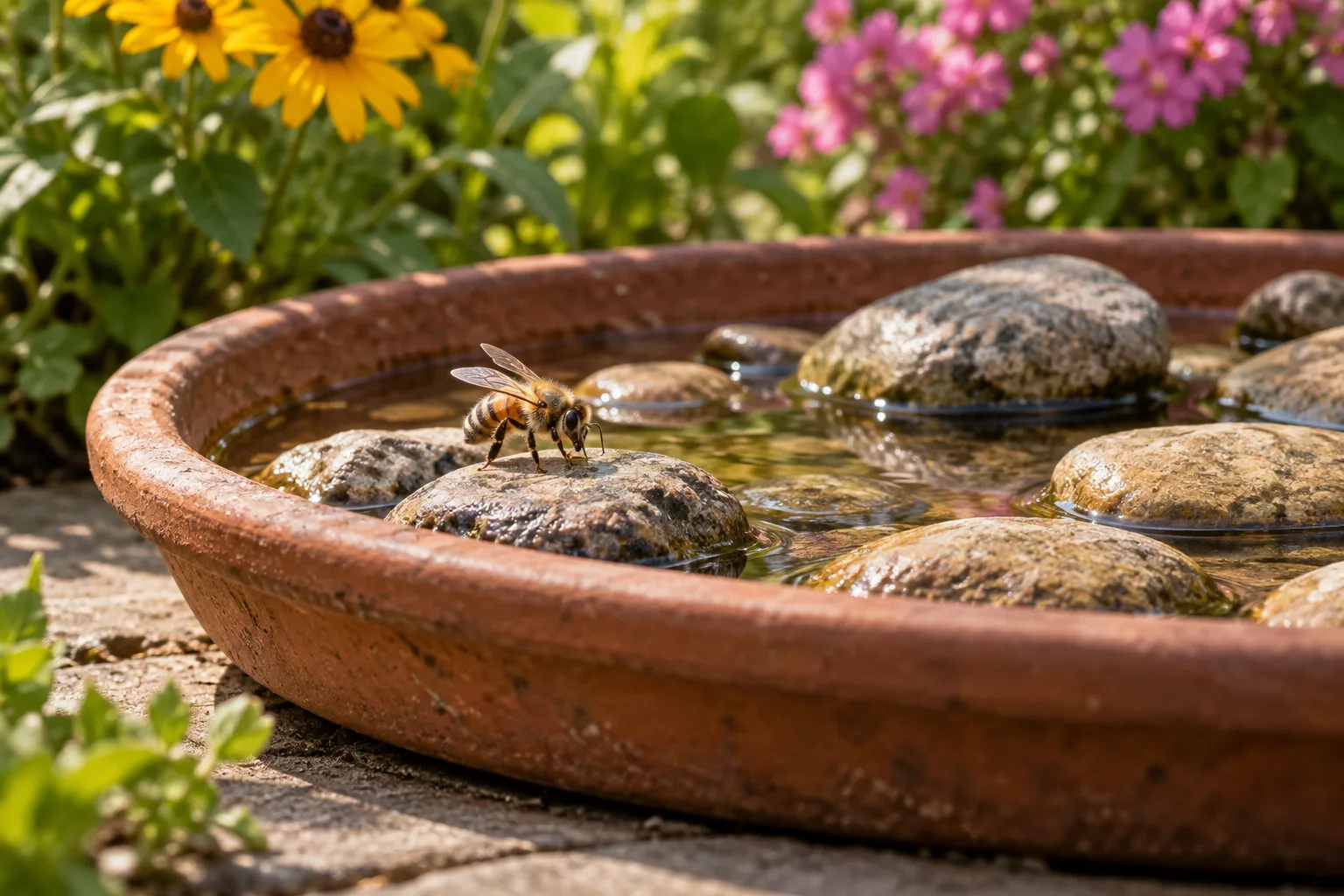
Wondering how to help bees drink water without creating a drowning hazard? Set out a shallow water dish with clean stones that rise above the waterline. Add plain, fresh water, leaving plenty of dry landing space, and check it every day. Bees should be able to reach moisture from a secure foothold rather than land on open water.
This simple setup can supplement natural water sources, especially during dry weather. It does not need sugar, honey, bright colors, or an expensive garden accessory. Here is how to make a practical bee watering station, keep it clean, and fit it into a genuinely pollinator-friendly yard.
Why Bees Visit Water Sources
Honey bees collect water for colony needs, including helping regulate conditions inside their hive. During hot weather, workers can use water and air movement from fanning to support evaporative cooling. They also use water when processing stored food and feeding developing bees.
However, not every bee visiting your garden lives in a honey bee colony. Many native bees are solitary, and different species meet their moisture needs in different ways. Nectar supplies moisture as well as energy, and some bees also use damp soil or mud when building nests.
A water dish is therefore a supplement, not a complete bee conservation plan. Flowering plants, suitable nesting habitat, and reduced pesticide exposure remain important. The USDA Forest Service’s guide to bees explains their diversity and role as pollinators.
How to Help Bees Drink Water: Build a Simple Station
You can create a useful water source with items already in your home or garden. Prioritize stable footing, easy cleaning, and a container that will not tip over.
1. Choose a shallow, sturdy container
A clean plant saucer or shallow ceramic dish works well. Select something easy to lift, empty, and scrub. Avoid containers that previously held pesticides, cleaning products, or other potentially harmful substances.
A deep bucket is not a good substitute. Its steep sides and broad stretch of open water make it harder for insects to find a safe landing or climb out after falling in.
2. Add stable landing surfaces
Place clean stones of different sizes in the dish. Arrange them so they cannot roll easily and so several tops remain exposed after you add water. Rough surfaces provide more useful footholds than slippery, unstable objects.
Think of the dish as a group of small islands connected by very shallow water. Bees should be able to stand on a stone and reach the water at its edge. If most of the container is an open pool, add more landing surfaces.
3. Pour in plain water
Add water slowly, keeping it below the tops of the stones. Plain water from your household supply is a practical choice. Avoid water contaminated with fertilizer, pesticides, household cleaners, or other garden chemicals.
Do not add sugar, honey, essential oils, or scented products. This is a water source, not a feeding station. There is no need to turn it into a homemade mineral or nectar mixture.
4. Find a quiet, accessible location
Set the dish on a stable surface near flowering plants, away from doors, busy walkways, children’s play areas, and pet bowls. Choose a spot where you can inspect it without disturbing insects that are drinking.
In hot climates, some afternoon shade can help slow evaporation and keep the container from heating as much as it would in full sun. Do not place the dish beneath plants being treated with pesticides or where chemical runoff could enter it.
5. Check the finished setup
Look at the station from an insect’s perspective. Are there exposed footholds close to the water? Could a small insect climb out? Will rain flood the landing stones? Adjust the arrangement before leaving it in place.
Check it again after rain, strong wind, or an especially hot afternoon. A suitable setup in the morning can become an empty dish or an overly deep pool later in the day.
How to Help Bees Drink Water Safely Every Day
The most important part of a bee watering station is maintenance. A carefully arranged dish is only helpful while its water and landing surfaces remain suitable.
- Check daily: Confirm that water is available and that the stones still rise above it.
- Replace rather than endlessly top up: When no insects are using the dish, empty it and add fresh water.
- Remove debris: Clear away fallen leaves, dead insects, and windblown litter.
- Scrub regularly: Brush the container and stones to remove slime and buildup, then rinse thoroughly.
- Inspect after rain: Pour off excess water if the landing surfaces become submerged.
Standing water can also become mosquito habitat. The EPA’s explanation of the mosquito life cycle describes the aquatic stages that make water management important. Emptying and cleaning the station interrupts the opportunity for mosquitoes to develop there; simply adding more water does not.
If you will be away and cannot maintain the dish, empty it and store it upside down. An unattended container of stagnant water is not the goal.
How to Help Bees in Hot Weather
If you are researching how to help bees in hot weather, focus on reliable access rather than elaborate equipment. A small dish can dry out quickly, so inspect it more often during heat and dry spells. Keep the footing exposed when refilling.
Consistency matters for honey bees that have learned where to collect water. Once a suitable location is working, avoid moving the station repeatedly. If it attracts more insects than you are comfortable having near people, relocate it to a quieter area and reassess the placement.
Wondering how to help bees cool off directly? Do not spray bees, put ice on them, or open a hive. Offer accessible water and leave colony management to the beekeeper. Water collectors bring what their colony needs; a backyard visitor does not need a forced cooling treatment.
For anyone learning how to help bees in summer, flowering plants matter too. Keep appropriate garden plants watered according to their needs so the yard offers more than a dish of water.
Common Watering Mistakes to Avoid
Putting out sugar water or honey
Sugar water is not necessary in a routine backyard water station. Open sweet food sources may attract ants, wasps, and large numbers of bees, potentially encouraging competition or robbing behavior. Honey from an unknown source can also carry pathogens that affect bees.
Managed-colony feeding is a separate beekeeping task. For a garden station, keep water for bees plain and provide flowering plants as the appropriate food resource.
Expecting immediate visitors
Bees may already have suitable sources nearby. Weather, local bee populations, and available flowers all influence whether they visit. An unused dish does not mean you need to add sweeteners or move it every few hours.
Observe from a distance and give the setup time. Avoid capturing or handling bees to introduce them to the water.
Using absorbent materials without maintaining them
Sponges and other absorbent materials can hold moisture, but they also require careful cleaning and replacement. A shallow water dish with washable stones is often easier to inspect and maintain. Simple equipment is useful when it encourages a consistent routine.
Make Water Part of a Bee-Friendly Backyard
Learning how to help bees get water is one manageable step. For a more useful habitat, combine it with flowering plants that bloom at different times and nesting opportunities appropriate to local native bees.
If you are exploring how to help bees in your backyard, choose plants suited to your region and growing conditions. Your local university extension service can help identify native options. Follow pesticide labels carefully, and avoid exposing visiting pollinators to sprays.
You can also make pollinator care a conversation starter. The Save The Bees® Pin offers a wearable reminder, while the Original Adopt a Bee® Necklace makes a bee-themed gift. Pair either with practical habitat care rather than treating a purchase as a substitute for it.
Frequently Asked Questions
How to help bees drink water?
Provide a shallow container with stable stones extending above the waterline. Use plain, fresh water, leave dry landing surfaces, and inspect the setup daily. Bees should reach the water from a foothold without having to float or swim.
How to help bees get water?
Keep a maintained water source in a quiet, consistent location near your garden. Check for evaporation, debris, and submerged landing stones. You do not need to lure bees with honey or sugar; let them discover it naturally.
How to help bees cool off?
Provide accessible water and avoid disturbing bees or their nests. Honey bees can collect water to support hive cooling. Do not spray individual bees or attempt to cool a managed hive yourself; contact its beekeeper if you have concerns.
How to help bees in summer?
Maintain fresh water, grow regionally appropriate flowers, and avoid pesticide exposure. Inspect water dishes more often in hot, dry weather. A mix of seasonal blooms and suitable habitat supports pollinators more broadly than water alone.
Shop Bee Gifts With a Purpose
A clean water station is a small, practical way to make your garden more welcoming. You can carry that interest into a meaningful gift for someone who loves bees, gardening, or nature.
Start with Shop all bee gifts, then explore how adoption works to learn about the adoption included with your purchase.