
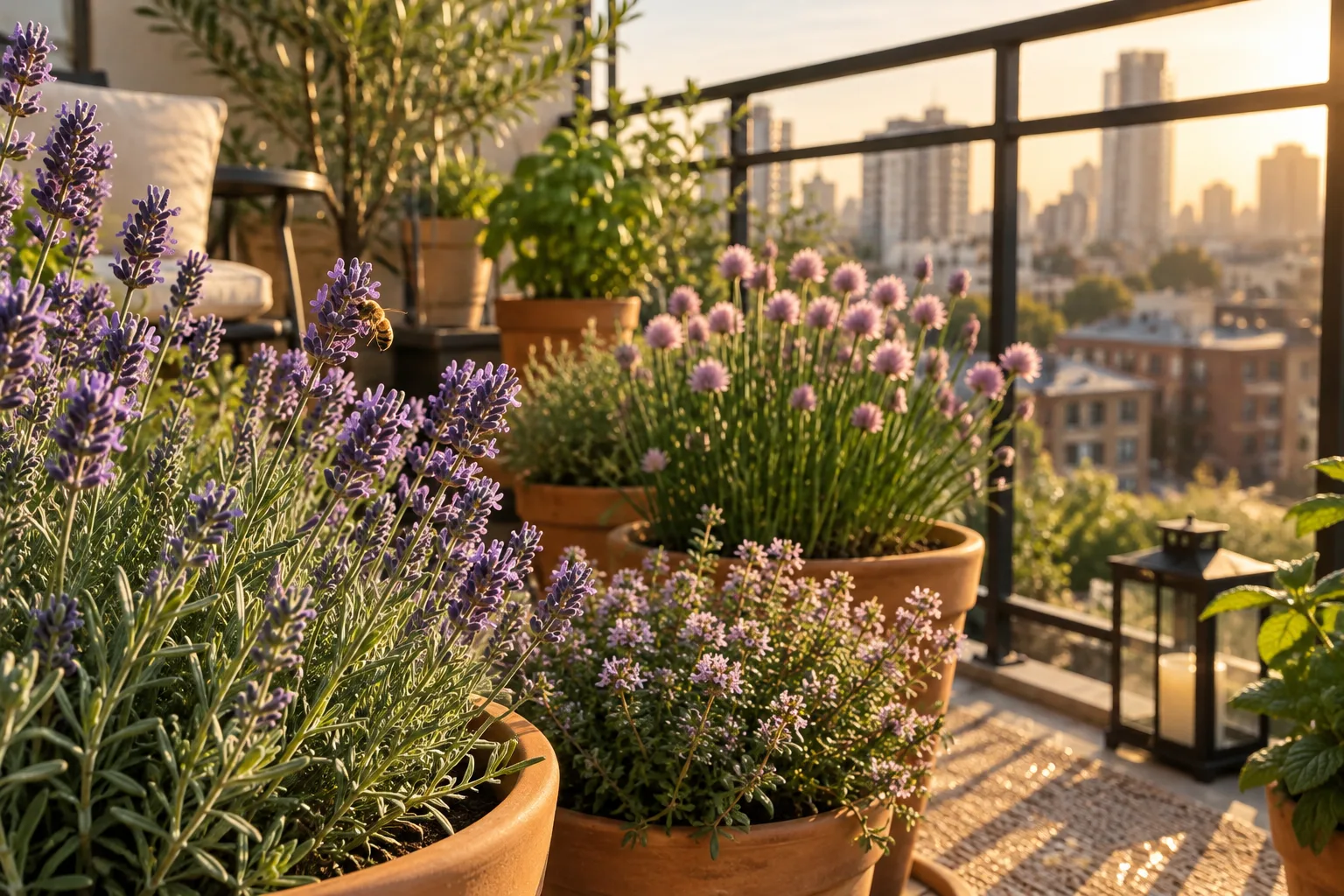
How to attract bees to a balcony?
To attract bees to a balcony, grow nectar- and pollen-producing flowers suited to your sunlight and climate, group containers together, and choose plants that bloom at different times. Let flowering herbs blossom, avoid spraying flowers with insecticides, and keep pots watered so plants can continue providing food for visiting pollinators.
You do not need a backyard or a beehive to offer bees something useful. A few well-chosen containers can provide a small feeding stop, although visits depend on your balcony’s exposure, height, surrounding habitat, and local bee populations. Start with healthy flowering plants rather than trying to lure bees with sugar water or honey.
Can a balcony really help honey bees and other pollinators?
A balcony can provide flowers for visiting pollinators, but it supplements rather than replaces larger areas of suitable habitat.
Honey bees are only one group of flower visitors you might see. Bumble bees and smaller solitary bees may also use container flowers, depending on where you live. These bees have different nesting needs, so a balcony garden is primarily a place to offer food—not necessarily a place for bees to live.
The USDA Forest Service’s pollinator gardening guidance recommends providing varied flowers, planting in groups, and maintaining blooms through the growing season. Those principles apply to small-space gardening, too: a compact collection of productive flowers is more useful than pots selected only for foliage.
Keep expectations realistic on upper floors or exposed balconies. Bees may discover your plants, but there is no dependable floor-height cutoff or guaranteed visitor count. Choose plants that thrive in your actual conditions, then observe which flowers local pollinators use.
How to attract bees to a balcony with the right flowers?
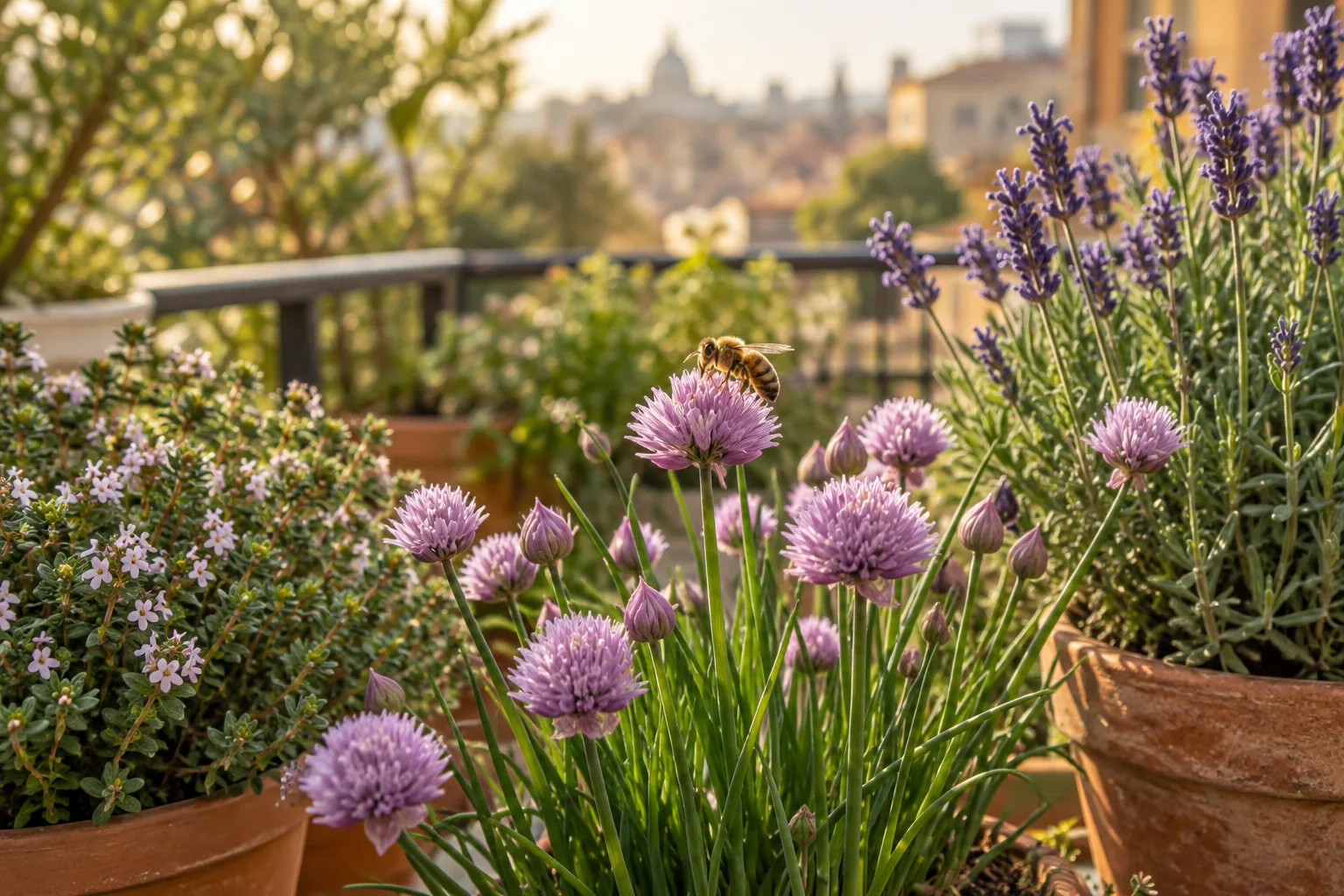
Choose bee-friendly flowers that match your balcony’s light, fit their containers at maturity, and provide accessible pollen or nectar.
Before shopping, record how much direct sunlight reaches the planting area. Many familiar flowering herbs for bees prefer full sun, while a shaded balcony needs a different plant palette. Your state’s university extension service can help identify locally suitable choices, especially native species adapted to your region.
Which container plants for bees should you try?
Flowering herbs and compact flowering perennials are practical starting points when their growing requirements match your space.
- Thyme: A relatively compact herb for sunny, well-drained containers. Leave some stems unharvested so they can flower.
- Chives: Their flower heads offer a seasonal food source, and the plants work well in appropriately sized pots.
- Lavender: A sunny-site option that needs good drainage. Choose a variety suited to your climate and its eventual container size.
- Catmint: Many varieties produce flowers visited by bees. Check mature dimensions because some become too sprawling for a narrow balcony.
- Native flowering perennials: Regionally appropriate asters, goldenrods, or other local species may work in larger pots. Select by species and mature size rather than assuming every plant will stay compact.
Look for a sequence of flowering periods rather than buying everything in bloom on the same day. Include spring, summer, and late-season flowers where your climate permits. Native plants for pollinators are valuable choices, but a plant being native does not automatically make it suitable for a shallow pot or a shaded site.
Favor flowers with readily accessible centers. Heavily doubled flowers can make floral resources harder to reach, and some ornamental varieties provide little pollen or nectar. Ask the nursery about pollinator value instead of relying only on flower color or a bee illustration on the label.
How should you arrange a small balcony pollinator garden?
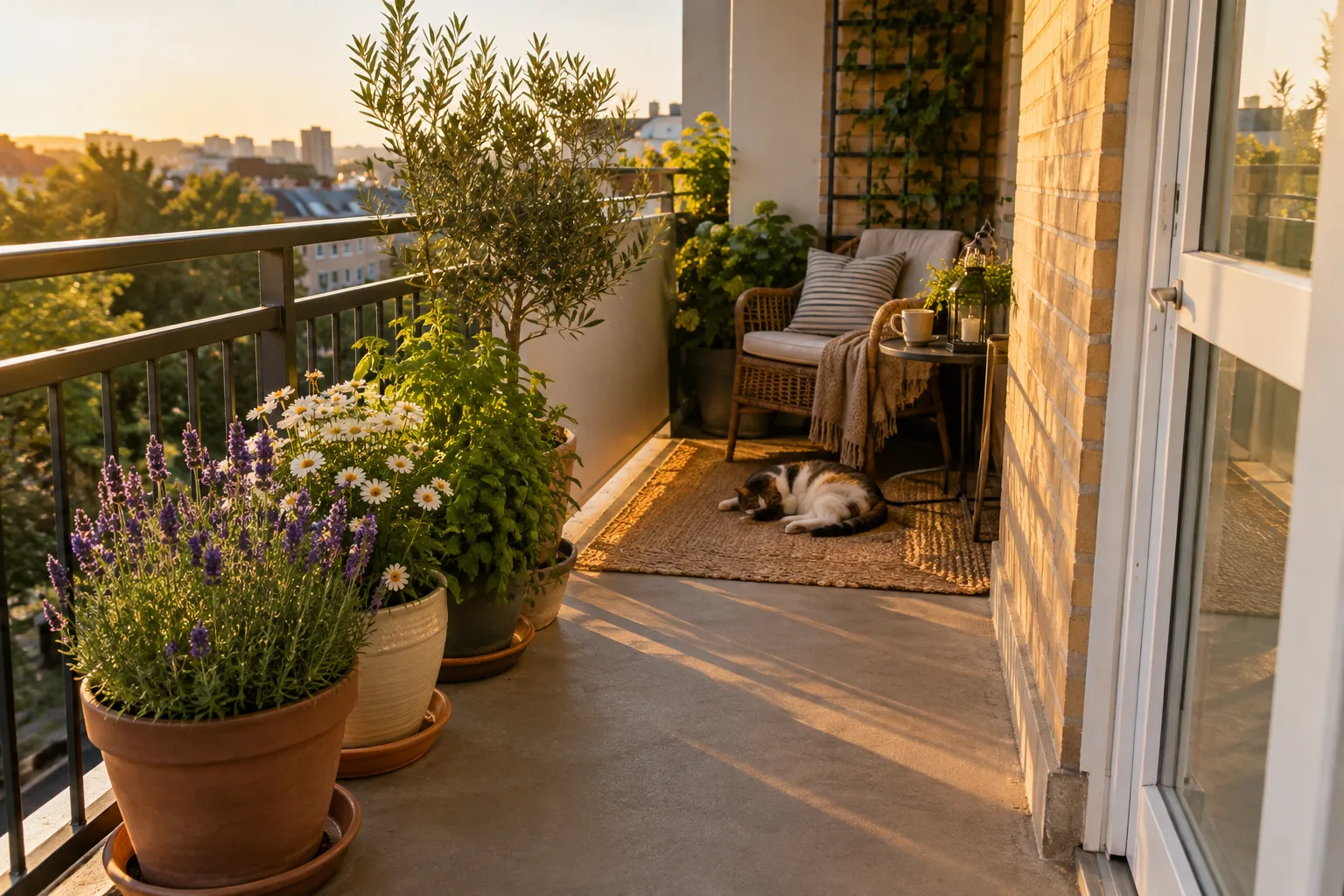
Group flowering containers where plants receive suitable light while keeping drainage, safe access, and balcony load limits in mind.
A balcony pollinator garden should work for both plants and people. Before adding large planters, check your lease or building rules and ask about permitted loads. Wet potting mix, containers, and retained water can be heavy; never assume a railing or shelf can support them.
- Measure the usable space: Leave a clear route to doors and avoid creating a trip hazard.
- Choose containers with drainage: Use potting mix intended for containers, and manage runoff so it does not drip onto neighbors.
- Match pot size to the plant: Allow room for mature roots rather than choosing the smallest pot that fits the nursery plant.
- Cluster compatible flowers: Place several pots together to form a noticeable flowering patch, without crowding foliage excessively.
- Plan for wind: Use stable containers and keep tall, top-heavy plants away from exposed edges.
- Keep flowers away from the doorway: Give visiting bees a feeding area separate from your main walking route.
A sunny balcony may also reflect heat from walls or paving. Check plants after hot or windy weather, since container soil can dry out quickly. If flowers repeatedly wilt despite appropriate watering, reconsider the location, container size, or plant choice rather than adding more of the same struggling plants.
How do you keep balcony flowers blooming for bees?
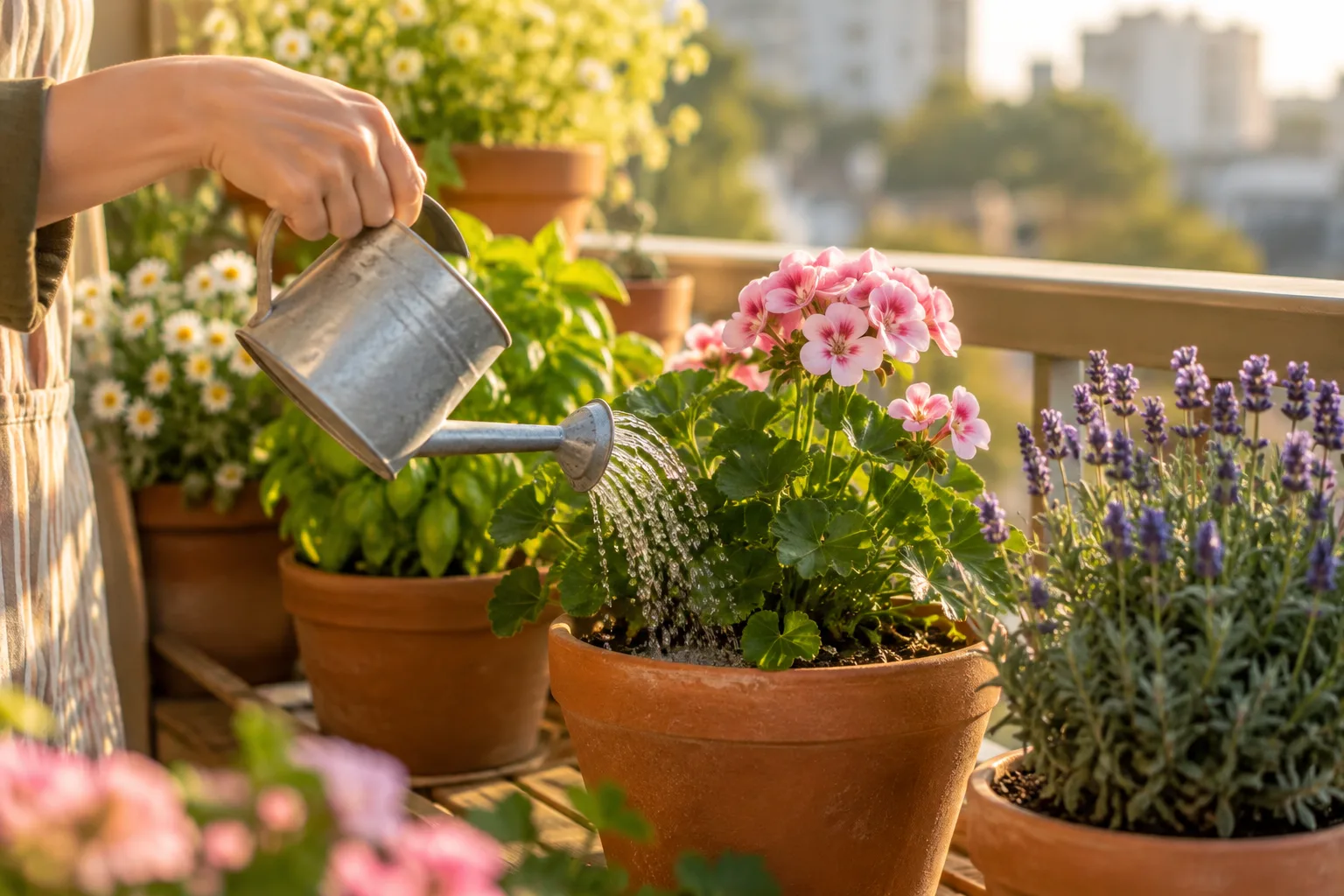
Maintain healthy plants with appropriate watering, species-specific pruning, and careful pest management so your balcony continues offering flowers.
Check moisture in the potting mix rather than watering strictly by the calendar. Water according to each plant’s needs and let excess water drain. Lavender and other drought-adapted herbs should not be managed exactly like plants that prefer consistently moist soil.
Deadheading can encourage additional flowers on some plants, but it is not necessary or useful for every species. Follow the plant’s care guidance, and leave suitable seed heads when they offer another wildlife benefit. With edible herbs, reserve part of the plant for blossoms instead of harvesting every stem before flowering.
For a pesticide-free balcony garden, begin with observation: identify the pest and decide whether the damage actually needs treatment. Removing affected leaves or using another appropriate nonchemical method may be enough. Do not assume homemade sprays or products labeled “natural” are harmless to bees.
According to the U.S. Environmental Protection Agency’s pollinator protection guidance, pesticide labels include important directions for reducing risks to pollinators. If you use a pesticide, follow its label and restrictions; spraying after dark does not automatically make a product safe because residues may remain.
For someone who enjoys tending flowers, Project Honey Bees’ Save The Bees® Pin is a small garden-themed gift that does not require another planter. It offers a wearable reminder of their interest in pollinators.
Can you welcome bees without bringing them indoors?
You can reduce close encounters by keeping flowers away from open doors, using screens, and giving feeding bees space.
Bees visiting flowers are collecting food, not looking to interact with people. Nevertheless, any stinging insect deserves respect. Avoid grabbing flowers while bees are on them, do not swat at visitors, and supervise children and pets around flowering containers.
Do not put out honey, syrup, or sugar water as a routine attraction method. Flowers provide appropriate natural forage, while exposed sweet foods can draw unwanted insects and create congregation points. A balcony also does not need a managed honey bee colony to be useful to pollinators.
If someone in your household has a known sting allergy, prioritize their safety when deciding whether to attract bees near a frequently used seating area. Where attracting bees is unsuitable, supporting pollinator habitat elsewhere is still worthwhile. Conservation should fit your household and building, not create an avoidable conflict.
What are the most common questions about attracting bees to a balcony?
Frequently asked questions concern which flowers to grow, how much sunlight is needed, and whether wasps will visit too. The answers depend partly on your local conditions and the insects in your area.
What flowers attract bees the most?
There is no single flower that attracts the most bees everywhere; results depend on local bee species, climate, season, and available alternatives. Start with locally recommended flowers that supply accessible pollen or nectar, then observe which plants receive visits on your balcony.
Does lavender attract bees?
Yes, flowering lavender is visited by honey bees, bumble bees, and other bees where conditions are suitable. On a balcony, it needs adequate sunlight, good drainage, and a variety matched to your climate.
Do bees like shade or sun?
Many bees forage actively in sunny, warm conditions, and many common bee-friendly plants flower best in sun. However, bees also visit suitable flowers in partial shade, so a partly shaded balcony is not automatically unsuitable.
Can you attract bees without attracting wasps?
You cannot guarantee that a flowering balcony will attract bees but no wasps, because some wasps also visit flowers for nectar. Keeping food, sugary drinks, and garbage covered can reduce additional attractions, but it will not exclude every wasp.
Ready to celebrate your love of bees with a meaningful gift?
Choose a bee-inspired gift to complement your gardening efforts and share your interest in pollinators.
Project Honey Bees offers jewelry and gifts for people who care about bees, including the Original Adopt a Bee® Necklace, a wearable way to keep that interest close.
Your flowers can provide a practical local contribution, while a thoughtful gift can help share your enthusiasm with someone else. Shop all bee gifts to find a favorite, or explore how adoption works before choosing.