
What should you check before buying a bee necklace charm?
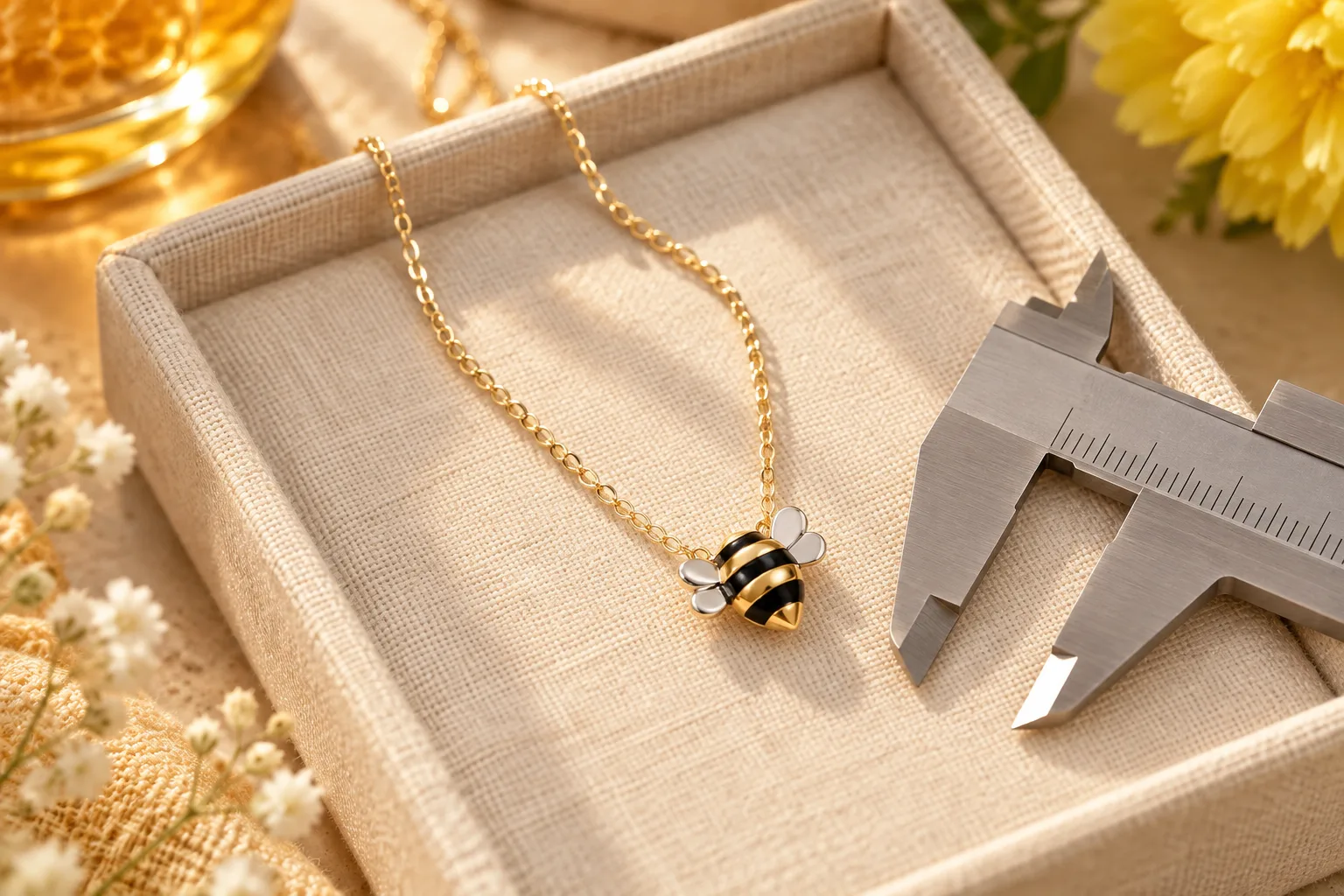
A bee necklace charm should fit both your chain and the way you plan to wear it. Before buying, check whether the listing includes a chain, how the charm attaches, its dimensions, and the stated metal. If you cannot confirm compatibility, choose a complete necklace rather than assuming a separate charm will fit.
The word “charm” does not tell you everything about a piece of jewelry. It may describe a small hanging ornament, a bracelet accessory, or the bee centerpiece of a finished necklace. The practical question is whether you are buying something ready to wear or something that needs another component.
This guide focuses on those buying details, so you can choose bee jewelry without guessing about attachments, proportions, or what arrives in the package.
How is a bee necklace charm different from a pendant?
A charm is often a smaller decorative component, while a pendant is designed to hang from a necklace, but retailers may use the terms interchangeably.
A bee necklace pendant might be sold by itself or with a chain. Likewise, a product called a charm necklace may arrive as a complete piece with its bee already attached. Read the description and included-items list rather than relying on the product name alone.
- Charm only: Usually requires a compatible chain, connector, or other jewelry component.
- Pendant only: Intended for a necklace, but the chain may be sold separately.
- Complete necklace: Includes the decorative centerpiece and chain or cord described in the listing.
- Bracelet charm: May use a bead opening, clip, or connector that does not work as expected on a necklace.
Also check whether the centerpiece is removable. A bee attached directly to both sides of a chain is not necessarily interchangeable with a loose pendant. Product photographs can suggest the construction, but a clear seller confirmation is more useful than an assumption.
How do you check a bee necklace charm for chain compatibility?
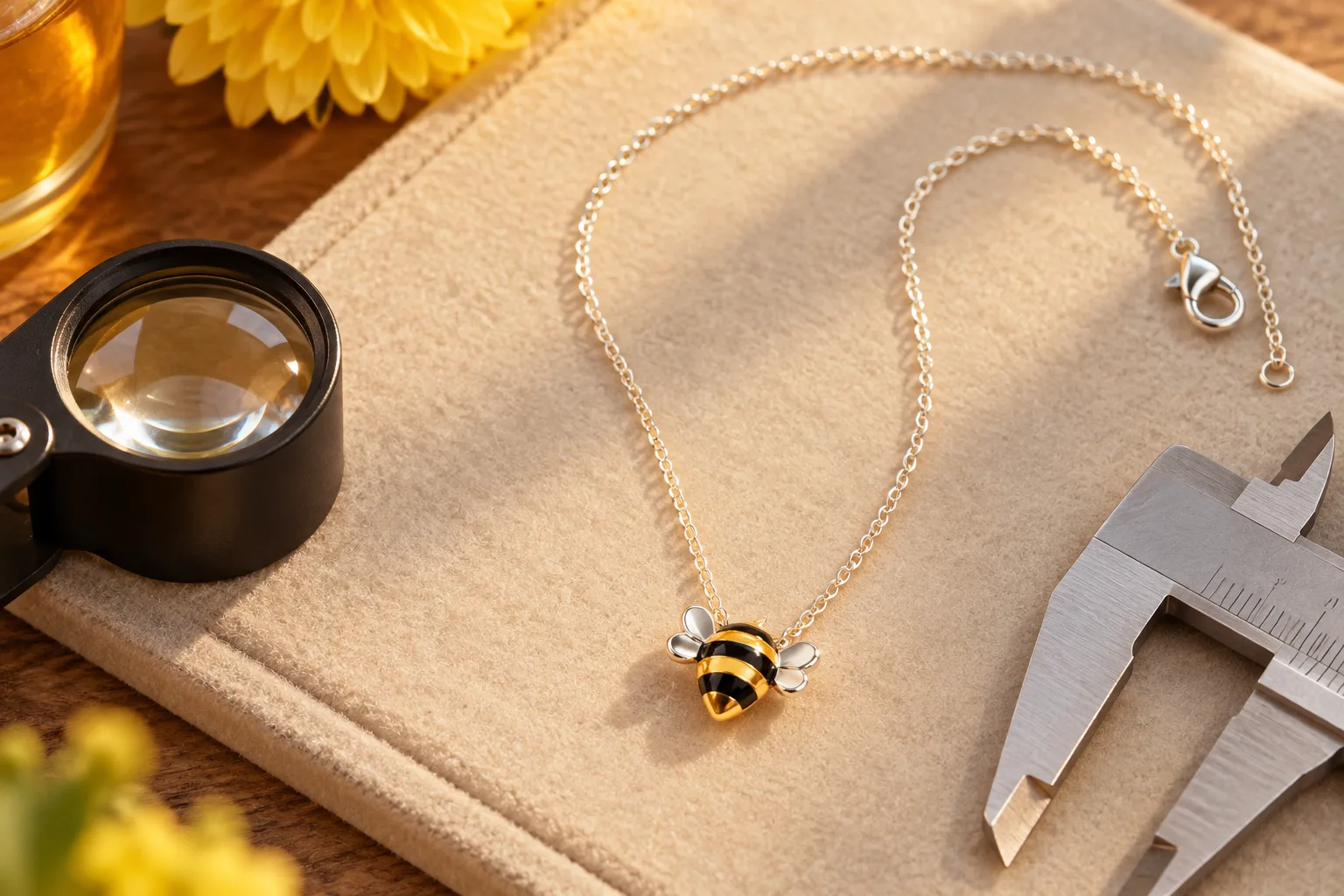
Check the charm’s attachment opening against the largest part of the chain that must pass through it, not just the chain’s width.
The pendant bail is the loop that connects many pendants to a necklace chain. Its internal opening determines what can pass through it. A thin chain may still have an end ring or clasp that is too large for a small bail.
Which measurements should you request?
Request the internal opening dimensions and the dimensions of the chain’s end hardware before buying separate pieces.
Measurements should describe the usable opening, not the outside of the decorative loop. Ask for millimeters so you can compare the pieces directly; a photograph beside a ruler can help, but it may not show the opening clearly.
- Check the attachment: Is it a fixed bail, opening clasp, jump ring, or integrated chain connection?
- Measure the opening: Compare both its height and width with the hardware that must pass through it.
- Consider shape: A narrow oval opening may not accommodate a wider round end ring.
- Confirm removability: Ask whether changing chains requires tools or a jeweler.
- Check the return policy: Know your options if the pieces do not work together.
Avoid forcing hardware through an opening or bending a connection just to make it fit. If a component needs alteration, a jeweler can assess whether an appropriate connector is possible without damaging the piece.
What size and design will feel right when worn?
Choose the bee’s dimensions and chain length together, because both affect how the finished necklace looks and moves.
A close-up product photo can make a tiny charm look substantial. Look for the bee’s width, height, and weight when available, and check whether the listed height includes its hanging loop. A simple paper cutout at the stated size can help you picture its proportions.
For necklace length, measure a necklace you already enjoy wearing from end to end, including its clasp. This is more dependable than assuming a model’s necklace will sit in the same place on you. Neck size, clothing, and the pendant’s construction all influence where it rests.
Consider the shape as well as the size. Raised wings, crystals, or projecting details may catch on delicate knits, while a flatter design may be easier to pair with everyday clothing. If comfort matters most, request photographs showing the back and edges, not only the decorative front.
Should you buy a separate charm or a complete bee necklace?
A separate charm makes sense when you have a compatible chain; a complete bee necklace removes the need to match two separately purchased components.
Buying a charm alone can be appealing when you want to reuse a favorite necklace or customize an existing collection. However, compare the total cost after adding a chain, any connector, and possible jeweler assistance. A lower charm price does not necessarily mean a lower finished cost.
For a straightforward starting point, consider the Original Adopt a Bee® Necklace from Project Honey Bees. Choosing a necklace rather than sourcing a loose charm and chain separately simplifies the shopping decision; check the current listing for its dimensions, materials, and included components.
A finished necklace can also be easier to give as a gift because the recipient does not need to supply another piece. If you are buying for someone who already collects charms, find out which attachment system they use before choosing an addition.
How do you compare metal descriptions without guessing?
Read the stated composition and finish, because a jewelry color or photograph does not establish what metal a piece contains.
A gold-tone bee necklace describes an appearance, not proof of solid gold. Similarly, a silver-tone bee necklace should not be assumed to be sterling silver. Look for an explicit material description and ask the seller when information is missing.
If a piece has a plated finish, follow its specific care instructions rather than treating it like uncoated metal. Abrasive polishing methods can damage some finishes. Before buying, check whether the seller provides guidance about water, storage, and cleaning.
For a gift, matching the recipient’s usual jewelry color is a practical starting point. If they avoid particular metals, seek a clear composition statement rather than relying on vague wording such as “premium metal.” You do not need to know every jewelry term, but you should know what the seller is promising.
What makes a bee necklace a thoughtful gift?
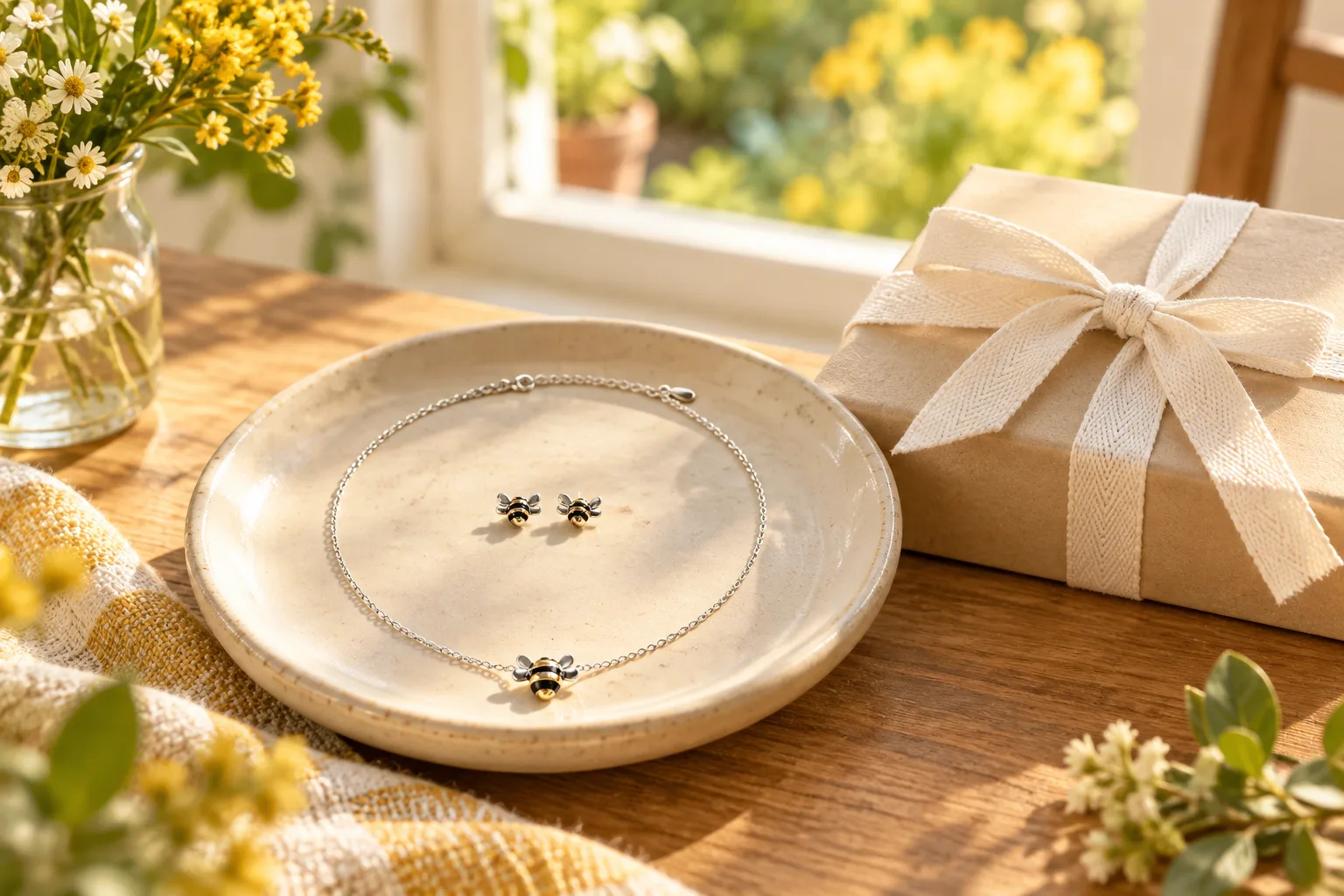
A bee necklace can feel personal when its design connects with the recipient’s interests and its purchase has a clearly explained purpose.
A gardener, beekeeper, or nature enthusiast may appreciate the bee motif without needing an elaborate symbolic story. According to the USDA Forest Service, bees are important pollinators that visit flowers for food. Honey bees are one part of a much wider community of bees and other pollinators.
Keep that distinction clear when discussing conservation: supporting honey bees and protecting all pollinators are related, but not identical, goals. A jewelry purchase is not a substitute for habitat or responsible pesticide practices. Its conservation connection should be described through the seller’s actual program rather than an unsupported promise that one item “saves a hive.”
For a conservation-themed gift, check the seller’s current adoption terms and any documented conservation contributions before describing the purchase’s impact. For a coordinated present rather than a loose component, the Necklace & Earrings Set is another option to explore.
What are frequently asked questions about bee necklace charms?
Common questions concern the difference between charms and pendants, what bee jewelry can symbolize, and where to shop locally.
What is a bee necklace charm?
A bee necklace charm is a bee-shaped decorative component intended or described for necklace wear. It may be sold separately or as part of a finished necklace, so check whether a chain is included and how the bee attaches.
What is a bee necklace pendant?
A bee necklace pendant is a bee-themed ornament that hangs from a necklace. The word “pendant” does not guarantee that a chain comes with it, and a separate pendant still needs compatible attachment hardware.
What is the meaning of a bee necklace?
A bee necklace can express an interest in nature, gardening, or pollinators, and some people associate bees with cooperation or industriousness. These are personal and cultural interpretations, not a single official meaning.
Where can I find a bee necklace near me?
Check local jewelers, independent gift shops, and artisan markets, and call ahead to ask whether they stock bee designs. If you want a charm for an existing chain, bring the chain so the seller can assess the fit.
Ready to shop for a bee necklace with a purpose?
Start with a design you like, then confirm its materials, dimensions, and included components before ordering.
Review Project Honey Bees’ current program details to see what adoption includes and whether any conservation contribution is specified. You can Shop all bee gifts to find a necklace or another thoughtful option, and read how adoption works before choosing your gift.