The right bee jewelry brand should make two things easy to understand: what you are buying and what its conservation promise means. A beautiful bee necklace can be a thoughtful present, but a bee-shaped pendant alone does not establish an environmental benefit. This guide explains how to compare product details, adoption programs, and conservation claims before choosing a gift.
How do you choose a bee jewelry brand that gives back?
Choose a bee jewelry brand that clearly describes its jewelry materials, identifies its conservation partner, and explains what your purchase supports. Check sizing, care instructions, returns, and adoption details before ordering. Treat broad environmental promises cautiously: a meaningful purchase combines a piece you will wear with a support model you understand.
Separate the shopping decision into two questions: “Will this jewelry suit the wearer?” and “Can I understand the brand’s conservation connection?” Neither should substitute for the other. An appealing mission cannot tell you whether a necklace fits, and an attractive design cannot verify a conservation claim.
If you are considering Project Honey Bees, review its current adoption information to confirm which purchases qualify, whether queen bee naming is included, and what conservation support is documented. For any brand, review the current program explanation alongside the product description rather than relying on a slogan.
What should a bee jewelry brand explain about conservation?
A brand should explain who it works with, what kind of support it provides, and which claims apply to your purchase.
“Supports bees” can describe different arrangements, including donations, sponsorships, adoption programs, or educational work. Those arrangements are not interchangeable. Look for an explanation specific enough that you could describe it accurately to the person receiving your gift.
- Named partner: Is a conservation partner identified, and can you learn about its work?
- Support mechanism: Does the brand describe an adoption, a donation, a sponsorship, or another arrangement?
- Purchase connection: Does the promise apply to every order, selected products, or a limited campaign?
- Financial details: If an amount or percentage is advertised, does the brand explain what it is calculated from?
- Scope: Does the claim concern managed honey bees, wild pollinators, habitat, or a combination?
A missing detail is a reason to ask a question, not automatic proof of wrongdoing. However, do not translate a general promise into a precise donation amount or a guaranteed ecological outcome. Buying one pendant should not be described as saving a particular number of bees unless a credible, clearly explained basis supports that claim.
Keep the distinction between supporting conservation and proving an outcome in mind. A purchase can contribute to a program without establishing that a local bee population increased because of that individual order.
What does queen bee adoption include?
Queen bee adoption should be understood through the individual program’s terms, not assumptions about owning a hive or receiving honey.
For Project Honey Bees, check the current program terms for any queen bee adoption or naming offer. Confirm whether adoption is symbolic, what information is provided about the bee or colony, and how the program’s support is delivered before describing those details to a gift recipient.
Before ordering an adoption-linked gift, check how the naming process works, if offered, and how any adoption information reaches the buyer or recipient. If you need a certificate or other presentation material for a specific occasion, confirm what is included with the item you select. Do not assume that every program uses the same format.
Likewise, adoption does not automatically mean a honey subscription, hive visits, shipping a live bee, or legal ownership of a colony. Ask about those features if they matter to you. Clear expectations help the recipient appreciate the actual program instead of expecting benefits that were never promised.
What jewelry details should you check before ordering?
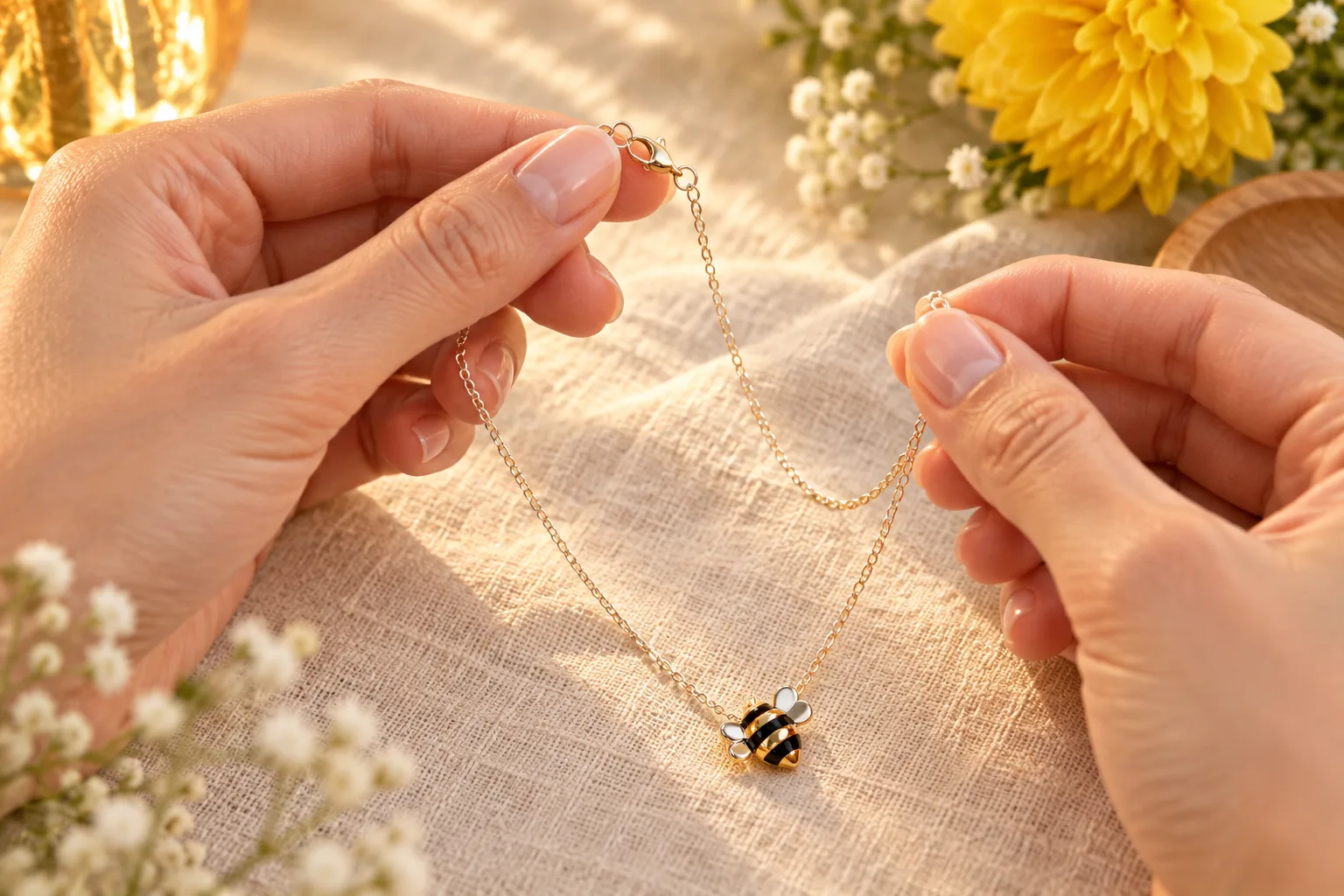
Check the stated materials, dimensions, fastening, care instructions, and return policy before letting a conservation message decide the purchase.
Product photographs are useful for style, but they cannot establish composition or scale. Read the written description of jewelry materials and look for measurements. If a finish or construction detail is unclear, ask the seller rather than guessing from a gold-colored or silver-colored image.
- Materials: Look for a clear description of the metal, coating, beads, or other components.
- Size: Check chain length, pendant dimensions, bracelet sizing, or earring measurements.
- Wearability: Consider whether the clasp and overall design suit the wearer’s usual routine.
- Care: Review instructions for cleaning, storage, water exposure, and avoiding damage.
- Returns: Check the current return window and any product-specific exclusions.
- Delivery: Confirm the shipping estimate before buying for a fixed date.
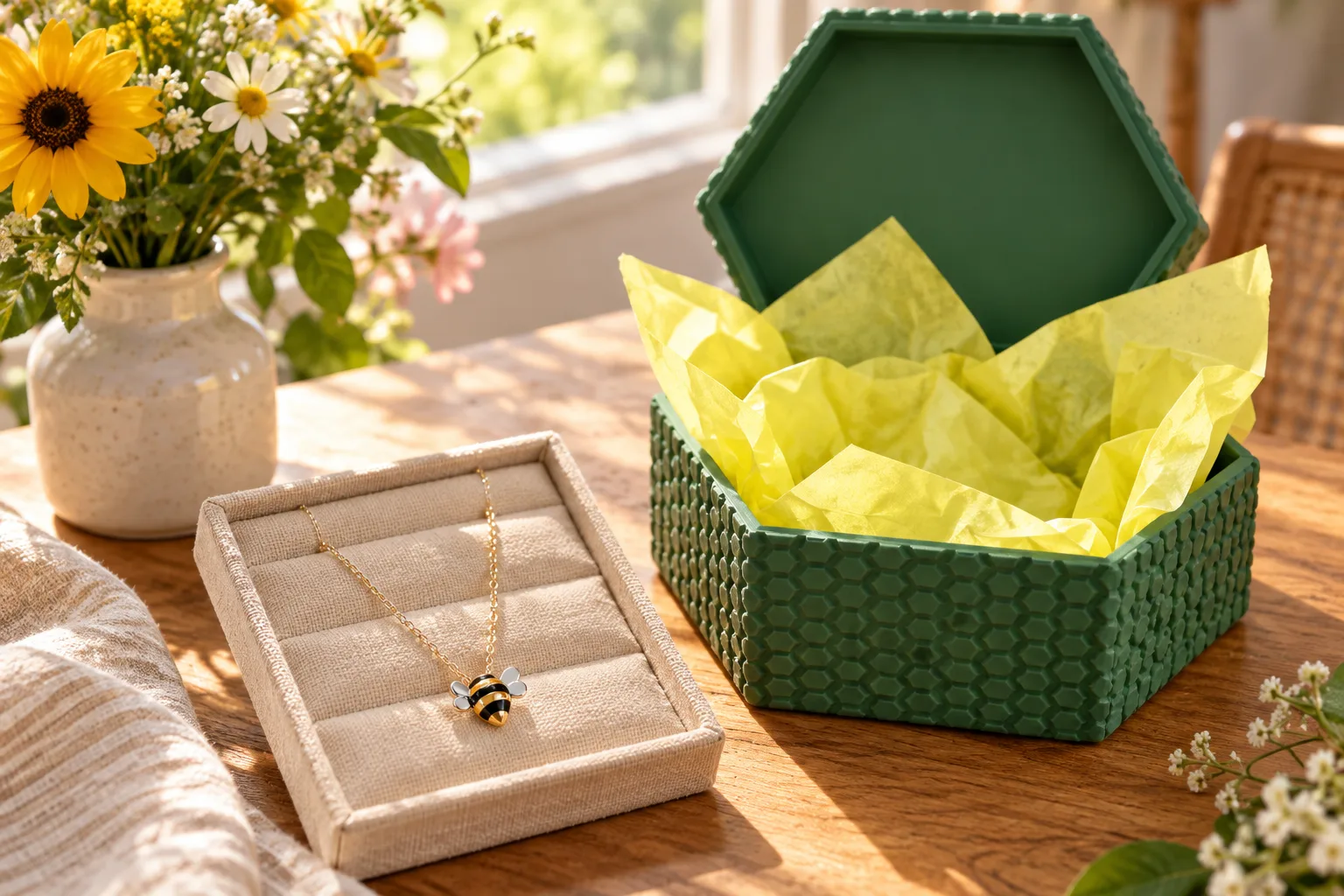
For someone who prefers a wearable reminder rather than a decorative keepsake, the Original Adopt a Bee® Necklace is an option to consider. Check the current listing for its specifications and any adoption benefits included with the purchase.
If the wearer avoids particular materials, use their preferences as a firm buying criterion. Do not infer suitability from phrases such as “premium,” “luxury,” or “natural.” Those descriptions cannot replace an actual materials list.
How can you evaluate claims about helping bees?
Look for conservation claims that recognize the difference between managed honey bees and the wider community of wild pollinators.
According to the USDA Forest Service, pollination helps flowering plants reproduce and supports the fruits and seeds that other organisms depend on. Honey bees contribute to pollination, but they are not the only pollinators. Native bees, butterflies, moths, flies, beetles, and other animals also play roles.
The U.S. Environmental Protection Agency identifies multiple pressures affecting pollinator health, including pests and pathogens, pesticide exposure, and poor nutrition. That complexity matters when evaluating marketing. No single piece of jewelry can resolve all the challenges facing honey bees and wild pollinators.
Be cautious when a product page treats adopting a queen bee as equivalent to protecting every bee species. Managed-colony support and wild-pollinator habitat work address different needs, even when a broader program includes both. A trustworthy explanation should help shoppers understand that distinction.
You can also pair meaningful bee jewelry with practical action. Regionally appropriate flowers, reduced unnecessary pesticide use, and suitable nesting habitat can make outdoor spaces more useful to pollinators. Consult your local university extension service for recommendations suited to your area rather than assuming one planting list works everywhere.
How do you choose bee jewelry as a meaningful gift?
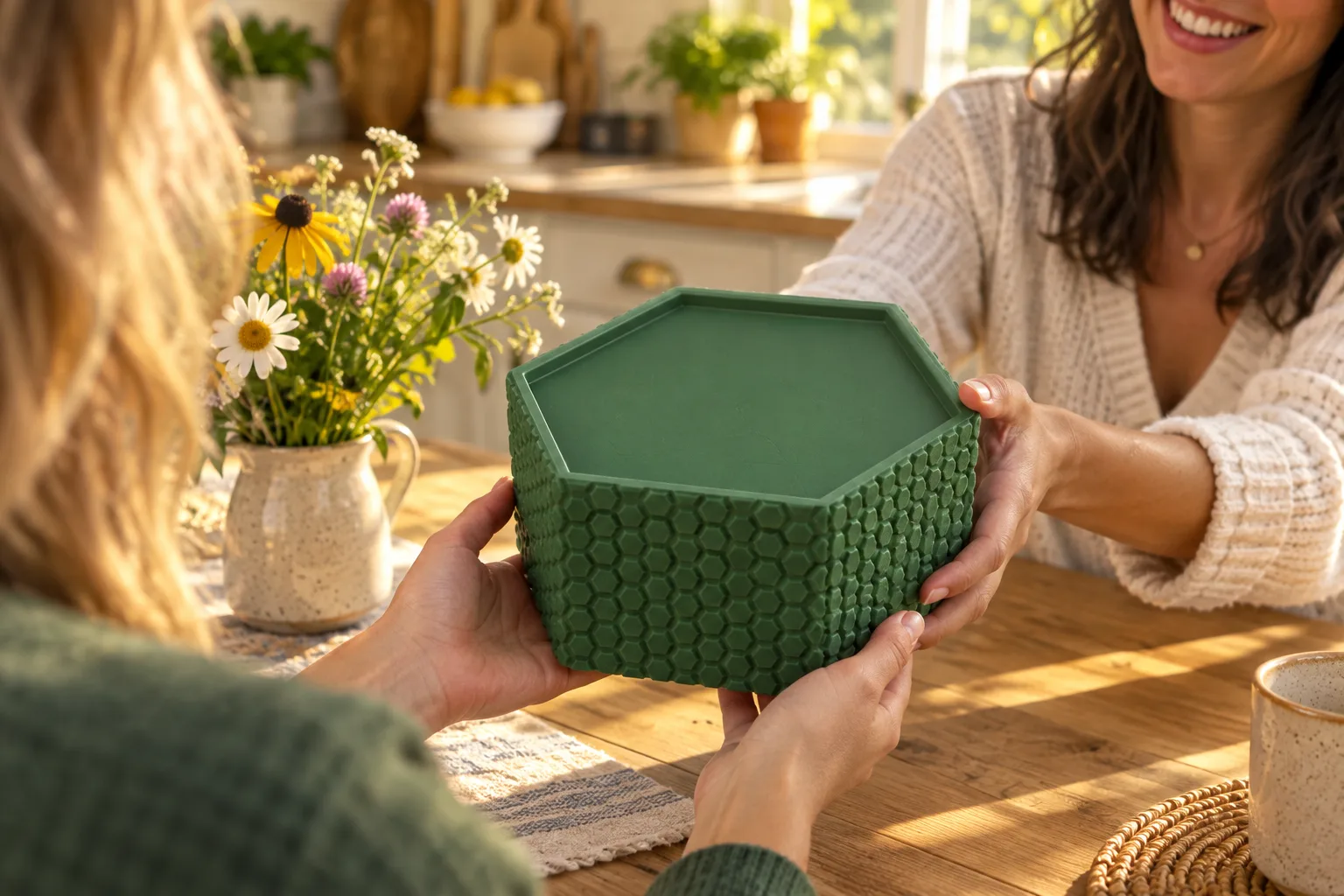
Choose the recipient’s preferred style first, then use any verified adoption details to make the gift more personal.
A gift works best when its design fits the person receiving it. Notice whether they usually wear necklaces, earrings, bracelets, or very little jewelry. Also consider whether they prefer understated pieces or accessories that invite conversation.
A documented conservation connection can provide a thoughtful explanation of why you chose it. You might describe the gift as a reminder of their love of gardening, wildlife, or the outdoors. Keep the message grounded: describe only the support the program documents, rather than personally guaranteeing that a hive or species has been saved.
For a surprise gift that includes queen bee naming, find out whether the recipient can complete that step themselves. Giving someone that choice may be part of the experience you want to preserve. Confirm the process before ordering, especially if the gift is being sent directly to them.
What are frequently asked questions about bees and bee jewelry?
Common questions concern why bees matter and how to help them. When choosing bee jewelry, distinguish practical pollinator protection from any purchase-linked support, which should be evaluated using the program’s documented terms.
Why are bees important?
Bees transfer pollen as they visit flowers, helping many flowering plants reproduce. According to the USDA Forest Service, animal pollination supports plant reproduction and the production of fruits and seeds that sustain other wildlife.
How can you help the bees?
Provide locally appropriate flowering plants, protect suitable nesting places, and avoid unnecessary pesticide use. You can also support pollinator conservation through a clearly explained program, while recognizing that purchases complement rather than replace habitat care.
How can you help protect honey bees?
Helping honey bees involves addressing several pressures, including pests, disease, nutrition, and pesticide exposure, rather than relying on one solution. Home gardeners can provide suitable flowers and follow pesticide labels, while beekeepers need appropriate colony-health management.
How can you protect the bees?
Protect bees by preserving food sources and nesting habitat and minimizing avoidable pesticide exposure. Follow EPA-approved label requirements when using pesticides in the United States, and seek local university extension guidance for plant choices and pest-management decisions.
Ready to choose a bee gift with a purpose?
Start with a piece the recipient will enjoy, then choose a conservation connection you can explain with confidence.
Explore Project Honey Bees’ jewelry and gifts, and confirm the adoption terms and documented conservation support for your chosen item. If you prefer a gift-set option, explore the Adopt a Bee® Gift Set and review its current contents before ordering.
Shop all bee gifts to find a style that suits your recipient, and read how adoption works so you can share the meaning behind your choice.