Are hydrangeas good for bees?
Yes, some hydrangeas are good for bees, but flower structure matters more than bloom size or color. Hydrangeas with accessible fertile flowers can provide nectar and pollen, while varieties dominated by showy sterile florets offer less forage. Choose plants with visible small flowers, and combine them with other seasonal bloomers.
A huge flower head can look like a feast without offering much food. When choosing hydrangeas for pollinators, look past the display and examine the individual flowers. That small shift makes it easier to select a shrub that works for both your garden and visiting bees.
North Carolina State University Extension’s Plant Toolbox identifies several hydrangea species as attracting bees or other pollinators. However, a species description does not guarantee that every cultivated variety offers the same floral resources.
Which hydrangea flowers can bees actually use?
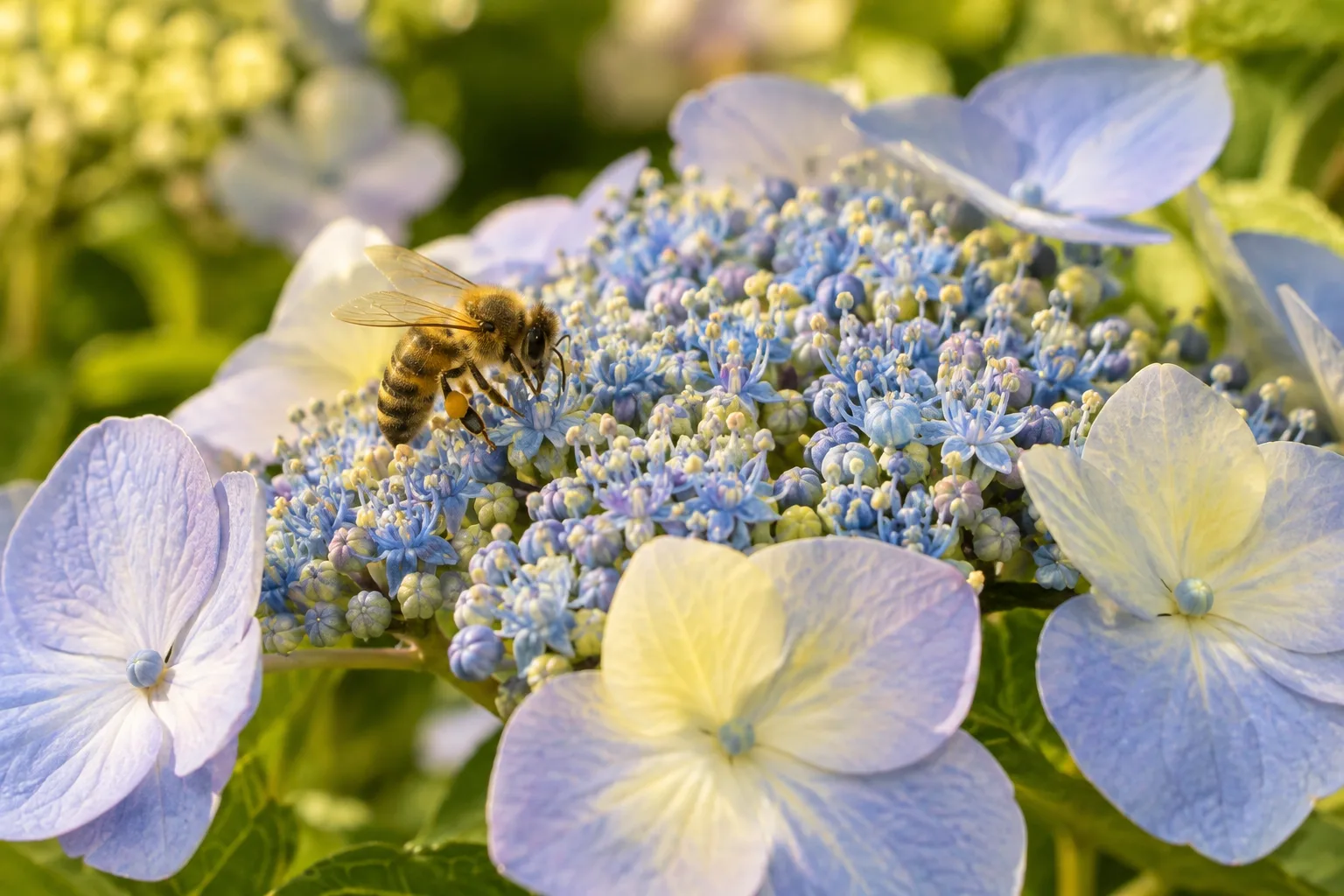
Bees can use the small fertile flowers found in many hydrangea flower heads, rather than relying on the large decorative florets.
A hydrangea flower head is a cluster, not one giant flower. In many familiar garden forms, the large, petal-like parts are showy sepals associated with sterile florets. The smaller fertile flowers contain the reproductive structures and can supply food to visiting insects.
Fertile hydrangea flowers may look like tiny buds before they open. Once open, they appear as small, delicate flowers, sometimes with visible projecting stamens. A photograph taken before those flowers open can make a useful plant look less accessible than it really is.
- Look for small open flowers: These are more informative than the overall size of the flower head.
- Check the whole cluster: Fertile flowers may sit in the center or among larger showy florets.
- Observe insect behavior: Repeated feeding visits are more useful evidence than a bee briefly landing on a petal.
- Read the cultivar description: Plants within the same species can have very different flower structures.
Do not judge a plant from one quiet visit, either. Weather, time of day, and the stage of flowering all influence whether bees are actively foraging.
Which hydrangeas are worth considering for pollinators?
Oakleaf, panicle, smooth, and lacecap-type hydrangeas can be worth considering, provided the particular plant has accessible fertile flowers.
Use the following groups as a starting point, not a guarantee. Local climate, available space, and the flower structure of the named variety should guide your final choice.
Is oakleaf hydrangea good for bees?
Oakleaf hydrangea can support visiting pollinators when its flower clusters include accessible fertile flowers.
NC State Extension’s oakleaf hydrangea profile describes this southeastern US native and its attraction to pollinators. Its elongated flower heads contain a mix of flower types, although selections differ in how much of the display is made up of showy florets.
Choose a form whose small flowers remain easy to reach rather than assuming the fullest-looking bloom is best. Check mature dimensions, too: oakleaf hydrangea is a substantial shrub, not simply a flowering replacement for a small perennial.
Is panicle hydrangea good for bees?
Panicle hydrangea can attract bees, especially when its flower heads contain a noticeable proportion of small fertile flowers.
According to NC State Extension’s panicle hydrangea profile, this Asian species attracts pollinators. Its cultivars vary considerably, from relatively open flower clusters to dense, showy heads.
Look at the exact variety in bloom whenever possible. A cone-shaped flower head alone does not tell you how much forage it offers, and a nonnative shrub should not be treated as a complete substitute for regionally native planting.
Is smooth hydrangea good for bees?
Smooth hydrangea can be useful for bees, but its wild-type flower structure and highly ornamental forms are not equivalent.
NC State Extension’s smooth hydrangea profile describes an eastern US native with small fertile flowers and, in wild forms, relatively few showy sterile flowers. Some garden selections emphasize large, rounded flower heads instead.
If pollinator value is your priority, examine the cultivar rather than buying on the strength of the native species name alone. Ask the nursery which selections retain abundant, accessible fertile flowers.
Are lacecap hydrangeas better than mopheads?
Lacecap hydrangeas are often a better starting point because their central fertile flowers are more exposed.
A typical lacecap has a center of small flowers surrounded by larger decorative florets. Traditional mophead hydrangeas emphasize a rounded mass of showy florets, which can mean fewer accessible feeding opportunities.
These terms describe flower-head forms, not a universal pollinator rating. Some mopheads retain fertile flowers, and not every lacecap will attract the same visitors in every garden.
How can you choose a bee-friendly hydrangea at the nursery?
Choose a hydrangea by checking its exact cultivar, open flowers, and growing requirements before you buy.
A label showing a bee is less useful than a clear plant name and a good view of the blooms. If the plant is not flowering, ask for photographs of that cultivar at full bloom rather than relying on a generic species image.
- Record the full name: Include both the species and cultivar so you can check a university extension description.
- Inspect flower structure: Favor visible fertile flowers over an almost solid mass of decorative florets.
- Check regional suitability: Match the shrub to your hardiness zone, sunlight, soil, and available space.
- Ask about pesticide treatments: Nursery staff may be able to explain which products were used and when.
- Plan for mature size: A shrub that fits its location needs less corrective maintenance.
There is no need to remove a healthy ornamental hydrangea simply because it is not your garden’s strongest pollinator plant. Adding better forage nearby is often a practical first step.
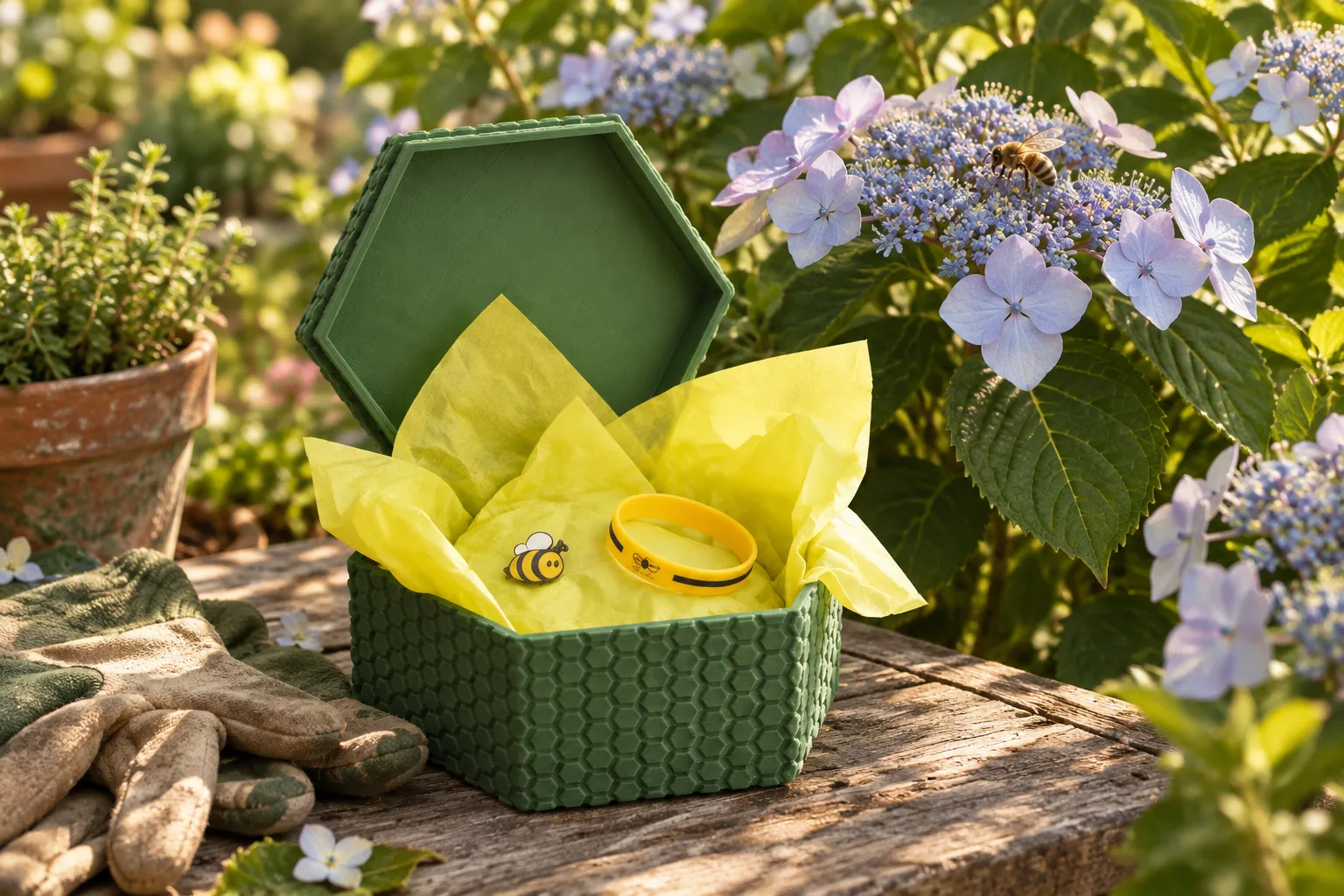
For someone who enjoys making thoughtful garden choices, consider Project Honey Bees’ Adopt A Bee® Gift Set as a complementary gift. Check the product page for current contents and adoption details. It is a keepsake option alongside, rather than instead of, habitat-friendly planting.
Are hydrangeas good for bees throughout the growing season?
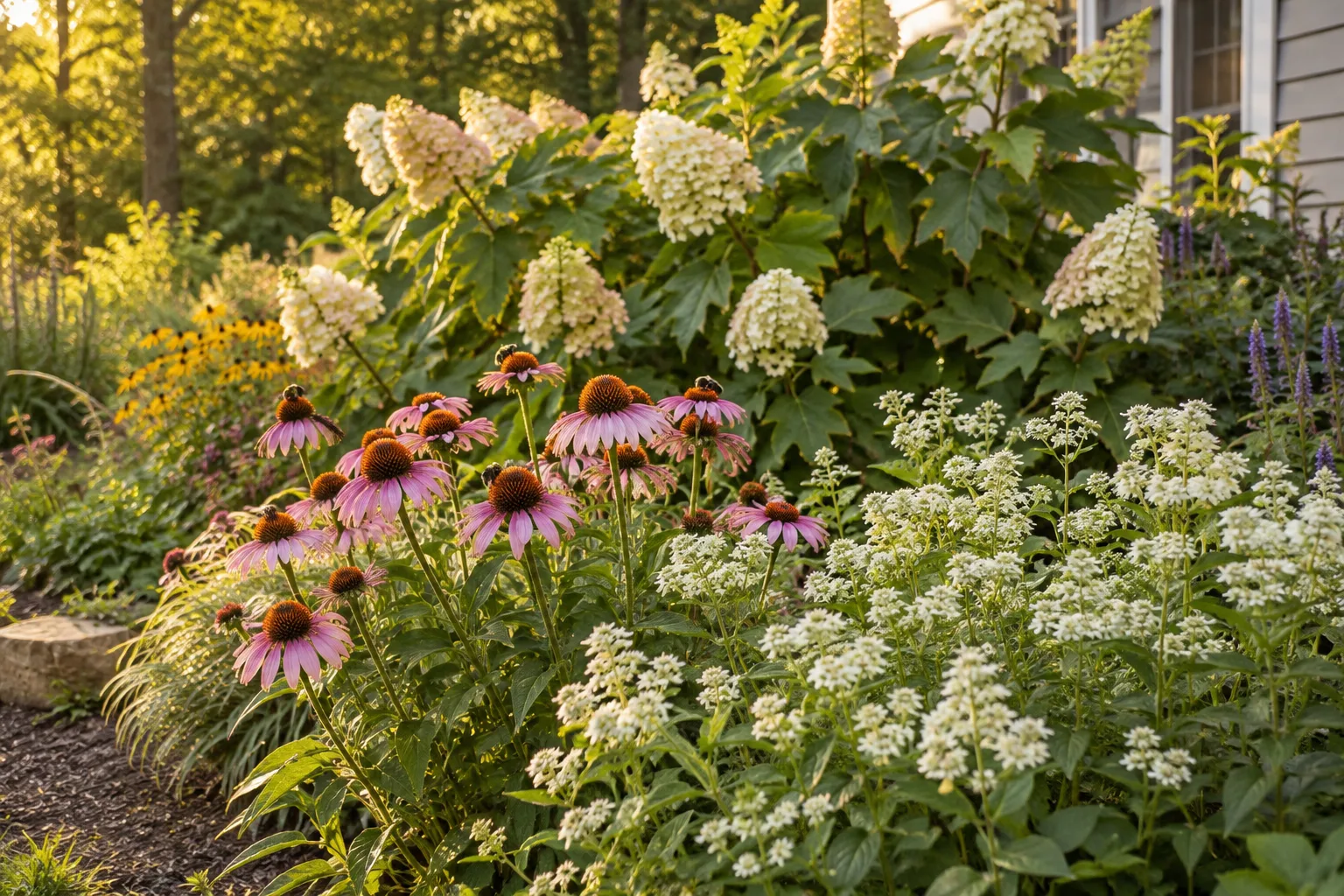
Hydrangeas can contribute during their flowering period, but they cannot feed bees throughout the entire growing season.
Bloom timing varies by species, cultivar, and climate. Even a heavily visited shrub leaves gaps before its fertile flowers open and after they finish, so a pollinator-friendly garden needs more than one flowering plant.
The USDA Natural Resources Conservation Service recommends habitat that supplies flowers across the growing season, along with nesting opportunities and protection from pesticide exposure. Apply that principle by treating hydrangeas as one component of a varied planting.
- Before hydrangeas bloom: Include locally appropriate spring-flowering trees, shrubs, or perennials.
- During their flowering period: Offer additional flower shapes and sizes to serve different pollinators.
- After their main display: Add regionally suitable late-season flowers, such as native asters or goldenrods.
- Beyond flowers: Preserve suitable nesting habitat, including undisturbed ground where practical.
Honey bees and native bees do not all use the same flowers or nesting sites. A diverse planting supports a wider range of visitors than a single shrub, however attractive that shrub may be.
How should you care for hydrangeas around visiting bees?
Support visiting bees by growing hydrangeas in suitable conditions and avoiding unnecessary pesticide use.
Follow species-specific watering and pruning guidance from your local extension service. Some hydrangeas flower on older stems and others on new growth; pruning at the wrong time can remove the next display of flowers.
According to the EPA, pesticide labels contain directions and precautions intended to reduce risks, including risks to pollinators. Never assume a product is harmless because it is described as natural, and follow all label restrictions concerning flowering plants and bee activity.
Identify a pest before treating it. Where appropriate, tolerate minor cosmetic damage or use nonchemical management rather than routinely spraying a flowering shrub.
What are the answers to frequently asked questions about hydrangeas and bees?
Some hydrangeas offer food for bees, but accessible fertile flowers—not bloom color or size—are the key feature to check. The FAQ below covers attraction, blue flowers, butterflies, and varieties that offer less forage.
Do hydrangeas attract bees?
Some hydrangeas attract bees when their fertile flowers are open and accessible. Varieties dominated by decorative sterile florets generally offer less forage than forms with abundant small fertile flowers.
Do bees like blue hydrangeas?
Blue color alone does not make a hydrangea a useful bee plant. A blue lacecap with accessible fertile flowers can offer feeding opportunities that a densely ornamental blue mophead may not.
Are hydrangeas good for butterflies?
Some hydrangeas attract butterflies to accessible flowers, but their value varies by plant and visitor. A butterfly-friendly garden also needs appropriate caterpillar host plants, not just flowering shrubs.
Which hydrangeas do not attract bees?
Hydrangeas with flower heads dominated by sterile florets tend to offer fewer reasons for bees to visit. No variety guarantees a bee-free space, because insects may investigate flowers or visit other nearby plants.
How can you give a bee-inspired gift with a purpose?
You can pair habitat-friendly planting with a bee-inspired gift from Project Honey Bees that reflects the recipient’s interest in pollinators.
The Original Adopt a Bee® Necklace is a wearable reminder of that interest. Review the product page and adoption information for current terms and any documented conservation contributions before buying.
Ready to find a meaningful keepsake? Shop all bee gifts, or explore how adoption works before choosing your favorite.