
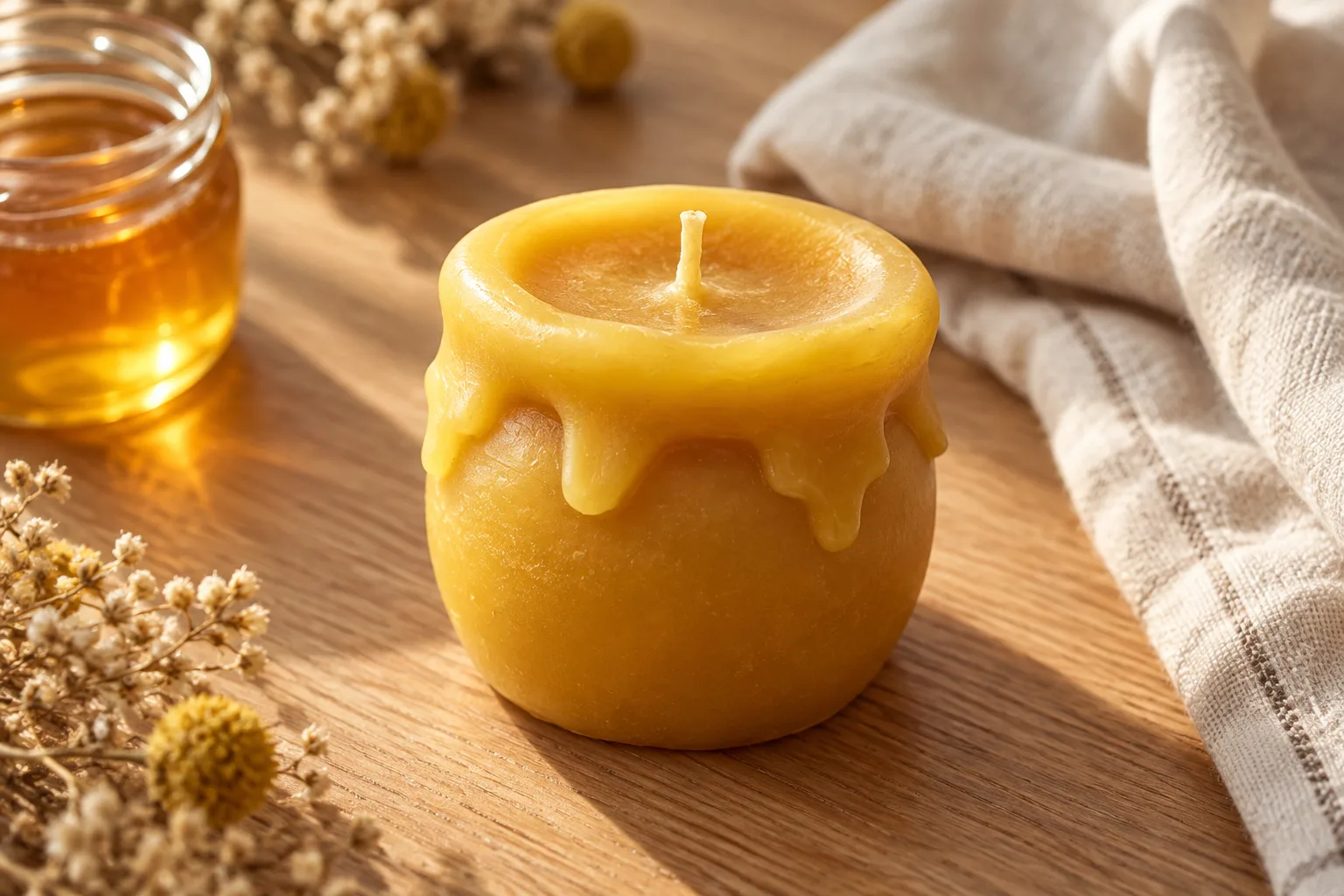
Why do beeswax candles turn white?
Beeswax candles usually turn white because of beeswax bloom, a natural process in which components of the wax migrate and crystallize at the surface. This creates a pale, cloudy film as the candle ages. Bloom alone does not mean the candle is spoiled, moldy, or unsafe to burn.
If your golden candle now looks slightly frosted, you probably do not need to replace it. A thin white film on beeswax candles is generally a cosmetic change, although fuzzy growth, damp packaging, or an unusual odor deserves closer attention.
This guide explains how to recognize bloom, when to leave it alone, and how to freshen the surface without damaging your candle. The simplest approach is usually the best: inspect it, gently buff it if desired, and follow the manufacturer's burning instructions.
What does beeswax bloom look like?
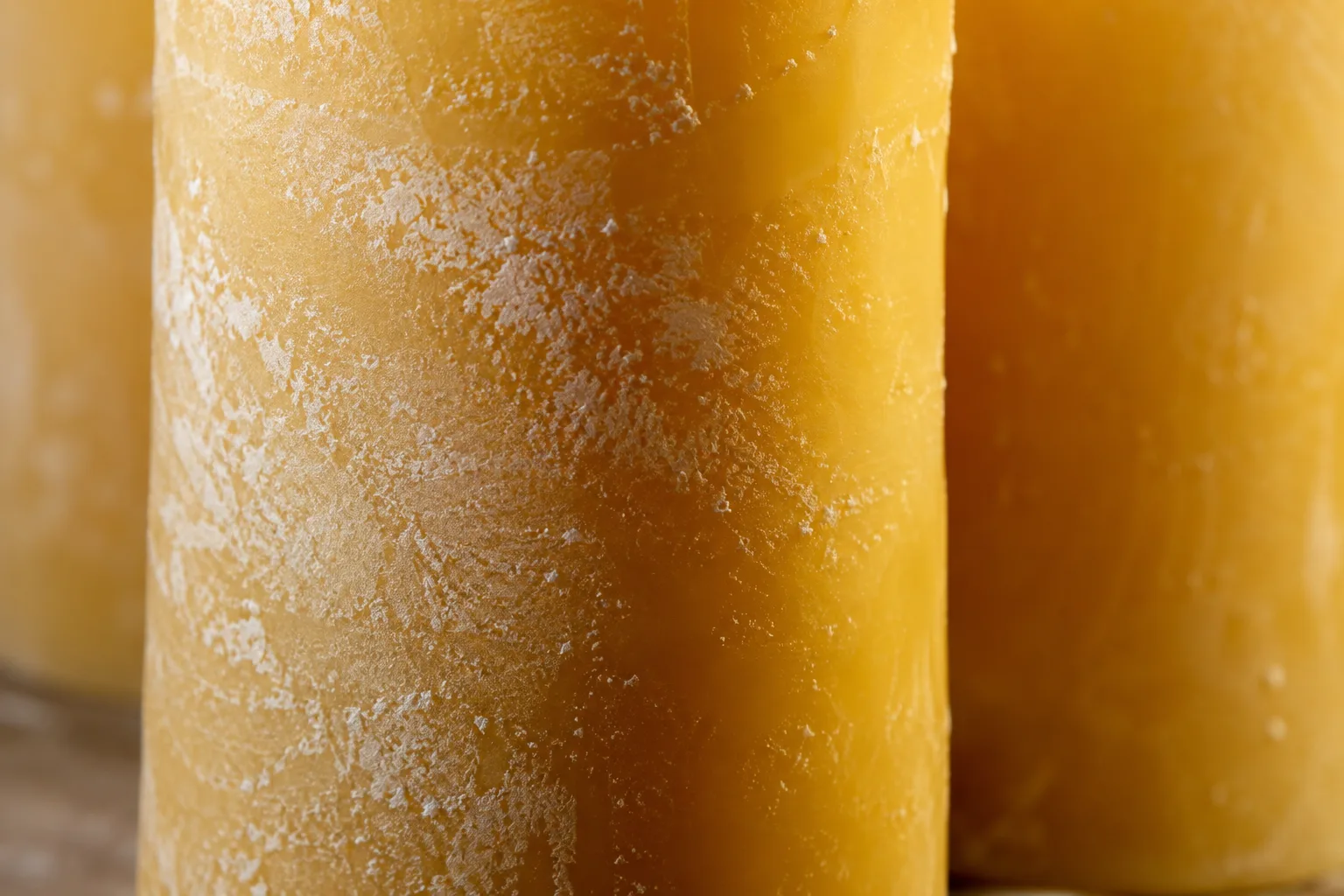
Beeswax bloom usually looks like a thin, whitish haze sitting on the surface of otherwise normal wax.
It may resemble a dusty coating, a soft frost, or pale patches. On a yellow candle, the contrast can be obvious; on lighter-colored wax, you may notice it only when the light hits at an angle. It can appear on exposed wax in a jar as well as on freestanding candles.
Beeswax is a complex mixture of naturally occurring substances, rather than a single uniform material. Over time, some components can move toward the surface and form fine crystals. Those crystals scatter light, giving the surface its pale appearance.
- Color: Usually white, off-white, or a pale grayish haze.
- Texture: Often a thin, fine coating rather than raised, fuzzy growth.
- Location: It can cover exposed wax evenly or develop in irregular patches.
- Response to buffing: A soft cloth often reduces the film and reveals the wax beneath.
Appearance alone is not a laboratory test. If the candle also has signs of moisture damage, visible debris, or an unexpected musty smell, do not assume every pale mark is ordinary bloom.
Why do beeswax candles turn white in storage?
Beeswax candles can turn white in storage because the wax continues to undergo natural surface changes even when the candle is not being used.
Time and storage conditions influence how noticeable bloom becomes. Temperature changes can affect wax crystallization, while the composition of the particular beeswax also matters. Two candles bought together may not develop the same coating at the same pace.
This does not necessarily mean a seller stored the candle badly or that you have done something wrong. A candle kept for a special occasion can develop bloom while remaining usable, provided it is otherwise clean and undamaged.
Does a white coating prove that a candle is pure beeswax?
No, a white coating by itself does not prove a candle's ingredients or purity.
Bloom is commonly associated with pure beeswax candles, but other waxes can also develop pale surface changes. Read the product's material description rather than treating appearance as certification. Neither a strong yellow color nor an absence of bloom establishes what a candle contains.
Can beeswax bloom come back after cleaning?
Yes, bloom can return because wiping the surface does not stop the natural changes within the wax.
You may buff a candle for display and notice a pale film again later. That does not mean the cleaning failed. If you prefer a low-maintenance approach, leaving ordinary bloom in place is reasonable.
How can you tell whether it is wax bloom or mold?
A fine, dry haze is more consistent with bloom, while fuzzy growth, moisture damage, and a musty odor call for caution.
A candle is not necessarily a sterile object. Dust, packaging, surface contamination, and damp surroundings can complicate the picture. Do not use a photograph or one visual clue as a definitive identification.
- Inspect the surroundings: Check the box, shelf, and container for dampness or visible growth.
- Look closely at the surface: A thin crystalline film suggests bloom; raised or fuzzy patches deserve further investigation.
- Consider the odor: An unexpected musty smell is a reason to pause, not something to mask with fragrance.
- Buff only if contamination is not suspected: Ordinary bloom often diminishes with gentle wiping, but this alone cannot rule out contamination.
- Ask the seller when uncertain: Share clear photographs and describe how the candle was stored.
Do not light a questionable candle to see whether the problem burns away. If it appears contaminated, keep it out of use until the manufacturer can advise you.
How do you remove beeswax bloom without damaging a candle?
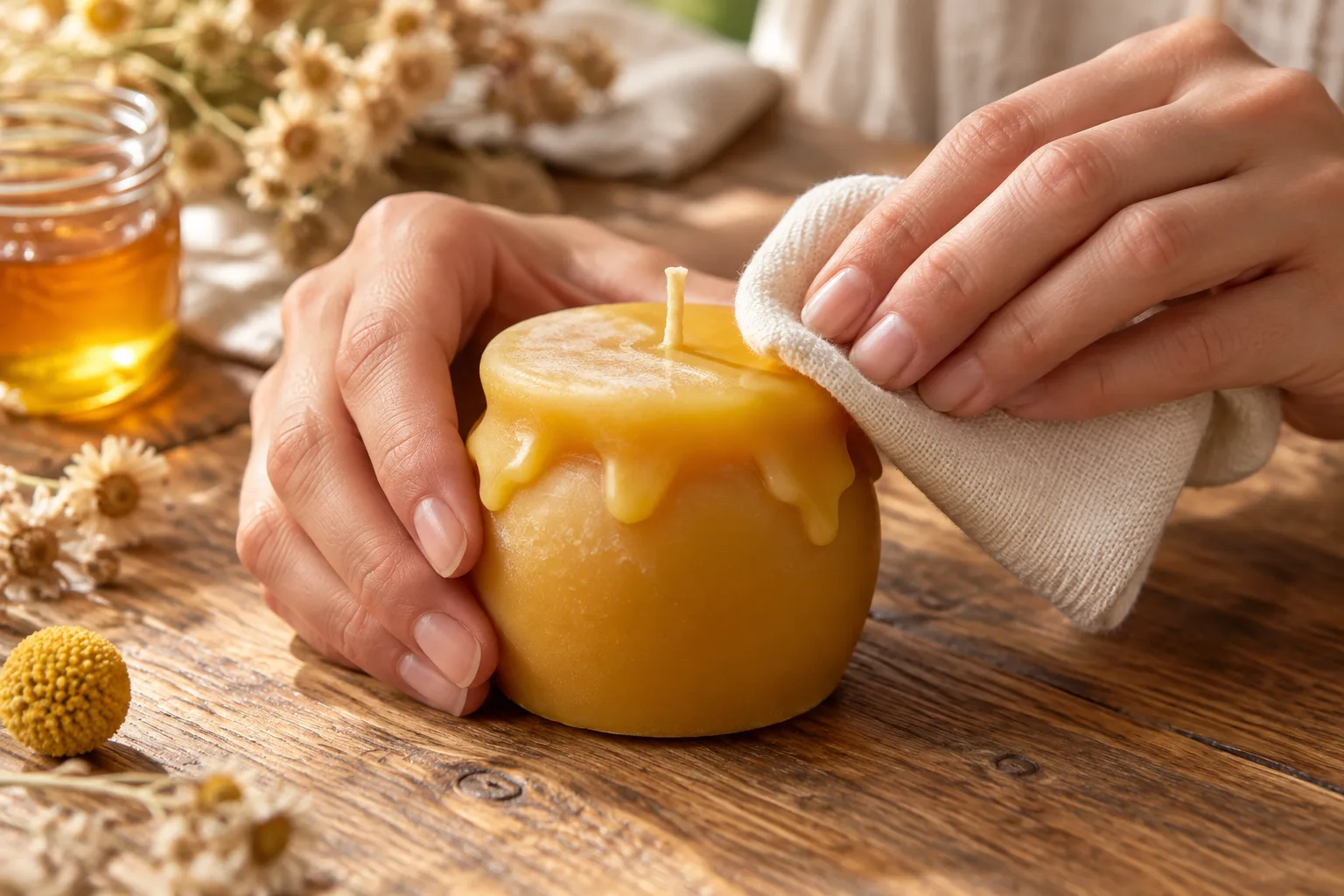
To remove beeswax bloom, gently buff a cool, unlit candle with a clean, soft, dry cloth.
Removal is optional, so start with the least aggressive method. The goal is to improve the surface appearance, not to scrape away a layer of wax.
- Let the candle cool completely: Never clean a burning candle or work around liquid wax.
- Choose a lint-free cloth: Avoid rough scrubbers that can scratch the surface.
- Test an inconspicuous area: Use light pressure, especially around decorative details.
- Buff the exposed wax gently: Work in small sections and avoid pulling or bending the wick.
- Remove loose debris: Make sure no cloth fibers remain near the wick before the next burn.
For a container candle, buff only wax you can reach comfortably. Do not dig around the wick, pry wax from the glass, or try to reach down into a deep container with a tool.
Avoid household cleaners, oils, or solvents; they can introduce unwanted substances into a product intended to burn. An open flame is never an appropriate polishing tool. Unless the manufacturer supplies specific instructions, skip ovens, microwaves, and other improvised heating methods.
If you are choosing a candle for your space or a gift, explore Project Honey Bees' Save The Bees™ Beeswax Candle and check the product page for current specifications. Understanding bloom helps you care for a beeswax gift without mistaking a natural finish change for damage.
Can you burn a beeswax candle with a white coating?
You can generally burn a candle with ordinary beeswax bloom, provided the candle is otherwise clean, undamaged, and used as directed.
Bloom alone is not a reason to discard a candle. It also does not establish that a candle will burn cleanly under every condition: wick care, drafts, debris, and the manufacturer's instructions still matter.
The National Fire Protection Association recommends keeping lit candles at least 12 inches from anything that can burn. It also advises extinguishing candles when you leave a room or go to bed.
- Follow the candle's instructions for wick trimming and burn duration.
- Use a stable, heat-resistant surface and an appropriate holder when needed.
- Keep the wax pool free of matches, wick trimmings, and other debris.
- Keep burning candles away from children, pets, and drafts.
- Stop using a container candle if its glass is cracked or damaged.
How should you store beeswax candles between uses?
Good candle storage means keeping beeswax candles in a cool, dry place away from direct sunlight and strong heat.
Choose a cupboard or shelf with relatively stable conditions rather than a hot windowsill or damp basement. Heat can soften and distort wax, while dust can settle on exposed surfaces. Protecting a candle from those problems matters more than keeping it completely bloom-free.
Allow a used candle to cool fully before covering or packing it. A suitable lid or clean protective wrapping can help keep dust away, but it will not necessarily prevent bloom. Avoid wrapping that sheds fibers onto the wick or wax.
For gifts, inspect the candle before packing it and gently buff it if you prefer a brighter finish. A simple explanation that beeswax can develop a natural pale coating makes beeswax candle care less mysterious for the recipient.
What are frequently asked questions about beeswax bloom?
Common questions about beeswax bloom concern mold, removal, storage life, and whether the coating can return. Ordinary bloom is a cosmetic surface change; suspected contamination or damage requires a separate assessment.
Is white stuff on beeswax candles mold?
A thin white coating is often beeswax bloom rather than mold. Fuzzy patches, damp packaging, or an unusual musty smell warrant caution and a check with the seller before burning.
How do you remove bloom from beeswax candles?
Gently buff the cool, unlit wax with a soft, dry, lint-free cloth. Avoid cleaners, solvents, and aggressive heating, and remember that removing bloom is cosmetic rather than necessary.
Does beeswax go bad?
Beeswax is a durable material that can remain usable for a long time when stored properly. A candle can still become dirty, distorted, or damaged, so inspect its condition rather than judging it by age or bloom alone.
Why is my beeswax candle turning white again?
Bloom can reappear as wax components continue to migrate and crystallize at the surface. Buffing removes the visible coating temporarily but does not permanently prevent the process.
Ready to choose a bee-inspired candle or gift?
Explore Project Honey Bees' candles and bee-inspired gifts, and review each product's materials, dimensions, and care instructions before choosing.
For an XL option, explore the Save The Bees™ XL Beeswax Candle. Check the product page for current specifications, choose the size that suits your space, and remember that a natural bloom is usually a cosmetic change, not a flaw.
Honey bees and other pollinators help pollinate many crops and wild plants. To understand the brand's adoption program and any stated conservation contributions, review its current program details rather than assuming what a purchase includes.
Shop all bee gifts to find a candle, jewelry piece, or thoughtful present, and explore how adoption works before choosing your favorite.