
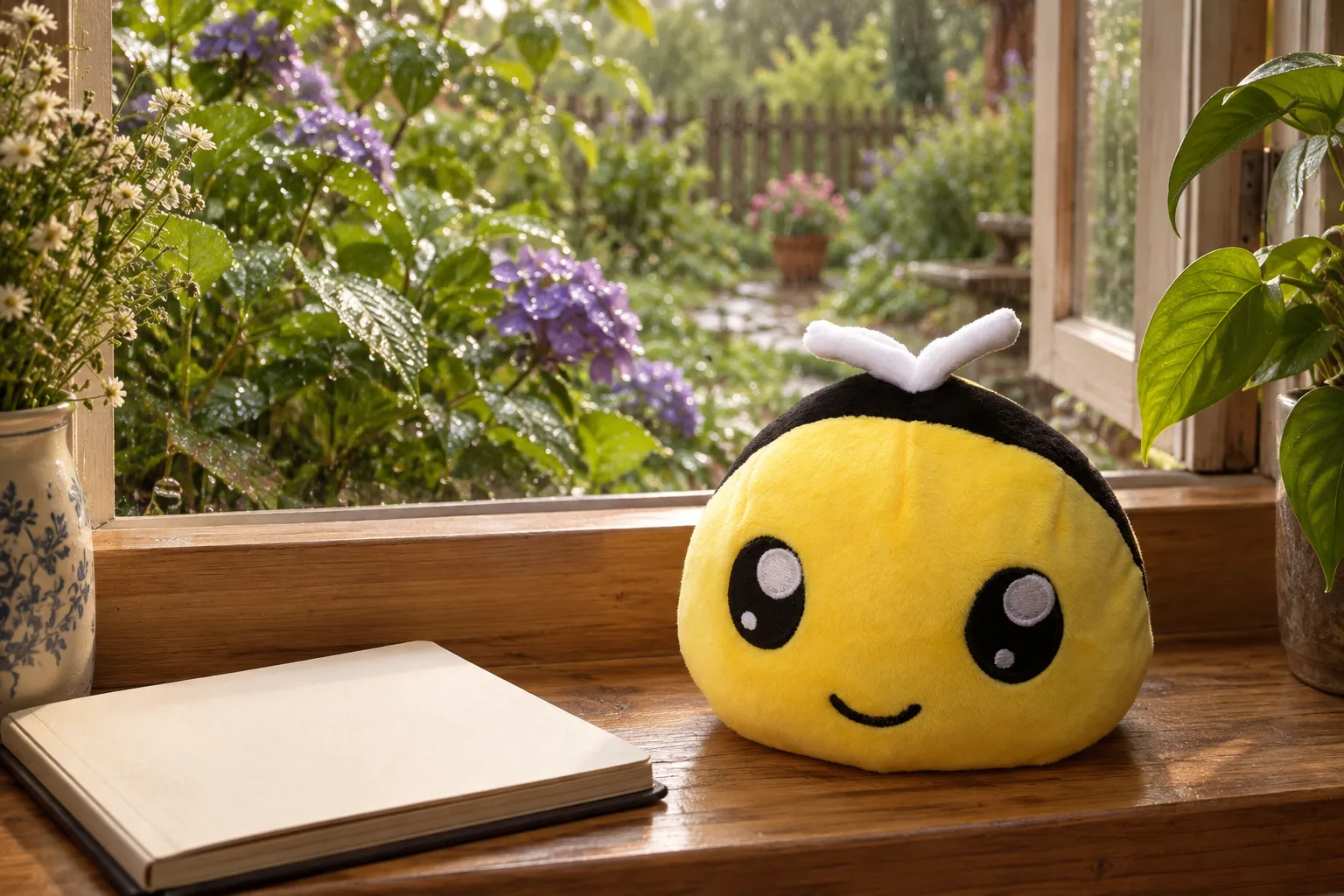
A busy flower bed can become surprisingly quiet when a shower arrives. If you have wondered what do bees do when it rains, the short explanation is that many stop foraging and wait somewhere protected. Their shelter depends on the species, whether they can reach their nest, and how severe the weather becomes.
Honey bees have a shared colony to return to, but wild bees have many different nesting habits. Understanding that difference helps you recognize normal rainy-weather behavior—and avoid disturbing a bee that simply needs time.
What do bees do when it rains?
When it rains, honey bees usually reduce or stop foraging and shelter in their hive, while wild bees may retreat to nests or nearby protected spots. Bees caught outside may wait beneath vegetation until conditions improve. Some bees still fly in light rain, but heavy rain makes foraging more difficult.
Rain does not mean every bee immediately disappears indoors. A bee already visiting flowers may continue briefly, head toward its nest, or pause nearby. Weather conditions influence honey bee foraging, so a quiet garden during a downpour is not, by itself, evidence that something is wrong.
Can bees fly in the rain?
Bees can sometimes fly in light rain, but heavier rainfall, wind, and cool temperatures can restrict their activity.
There is no single rainfall threshold that applies to all bees. Species differ, and a warm drizzle is not the same challenge as a cold, windy storm. You may see an occasional bee moving between flowers even after most others have stopped.
Bumble bees can generally forage under cooler conditions than honey bees. That does not make bumble bees immune to bad weather: heavy rain can interrupt their visits too.
For a home gardener, the useful takeaway is simple: fewer flower visits during rain are normal. Watch again when conditions improve rather than assuming that your plants have stopped attracting pollinators.
Where do honey bees and wild bees shelter?
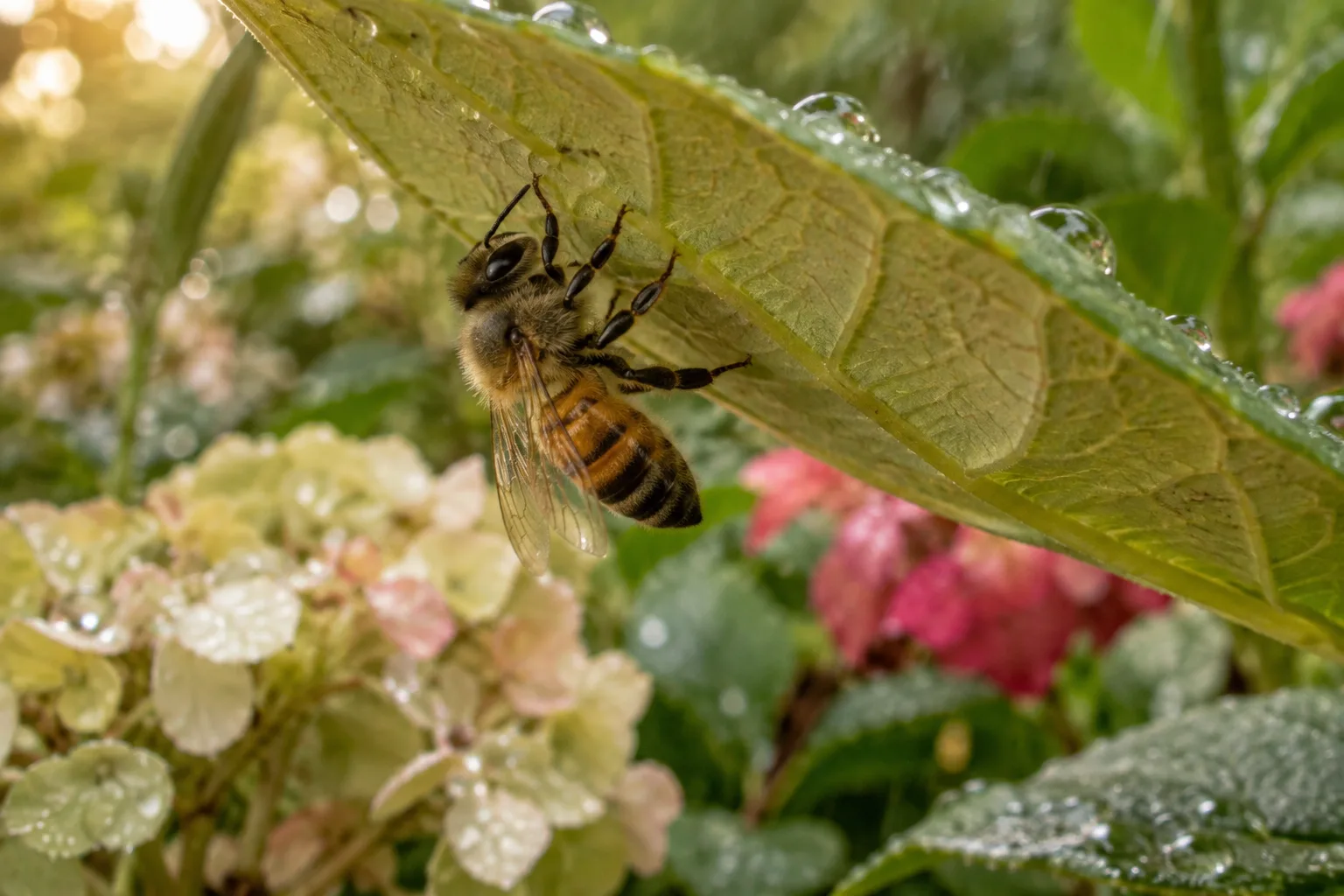
Honey bees generally shelter in their colony's nest, while wild bees use a much wider variety of nests and temporary resting places.
Do honey bees go back to the hive?
Honey bees that can return safely usually shelter with their colony when weather prevents foraging. A managed hive is one kind of home; honey bee colonies can also occupy sheltered cavities, such as hollow trees.
Rain outside does not mean all activity inside stops. Workers still care for developing bees, maintain the nest, and attend the queen bee. Stored food helps the colony continue functioning when workers cannot collect fresh nectar and pollen.
Where do wild bees go?
Wild bees may return to underground nests, hollow stems, wood cavities, or other nest sites, depending on their species. Both ground nesting and cavity nesting occur among wild bees.
A bee caught away from its nest may use a protected spot under a leaf or within vegetation. Not every flower is waterproof shelter, however, and a bee resting on a bloom is not necessarily nesting there.
This variety matters when planning bee shelter. A suitably designed bee house can provide nest sites for certain cavity-nesting species; it is not a universal rain refuge for honey bees, bumble bees, and all other wild bees.
What do bees do when it rains for several days?
During extended rain, honey bee colonies depend more on stored food, while wild bees face different challenges depending on their life cycle and nesting habits.
Honey bees store honey as an energy source and pollen as a source of nutrients, including protein. These food stores support colony life when fresh forage is unavailable. Rainy periods are one reason stored resources matter.
Most solitary bees do not maintain the large, shared honey reserves associated with honey bee colonies. Female solitary bees typically provision individual nest cells with pollen and nectar for their offspring. Prolonged poor flying weather can limit opportunities to gather those resources.
For flowering plants, several wet days can also mean fewer insect visits during part of their bloom period. The effect varies with the plant, its flowering schedule, and the pollinators present. One rainy afternoon is not enough to predict whether a garden crop will be well pollinated.
How can you help bees during rainy weather?
The most useful help is to preserve safe habitat and avoid disturbing bees that are already sheltered.
You do not need to collect bees before a storm or bring them into your house. Instead, make your outdoor space a place where pollinators can find food and suitable nesting opportunities when weather allows.
- Leave protected vegetation in place. Avoid cutting back every stem or clearing every sheltered corner while bees may be resting there.
- Provide flowers across the growing season. A succession of blooms gives bees more opportunities to forage between periods of poor weather.
- Protect appropriate nesting areas. Preserve some undisturbed ground and suitable stems rather than assuming every bee needs a purchased house.
- Avoid unnecessary pesticide use. Reduce opportunities for pesticide exposure, and always follow product labels and pollinator precautions.
- Watch without handling. Give resting bees space, especially around nest entrances where traffic may resume after a shower.
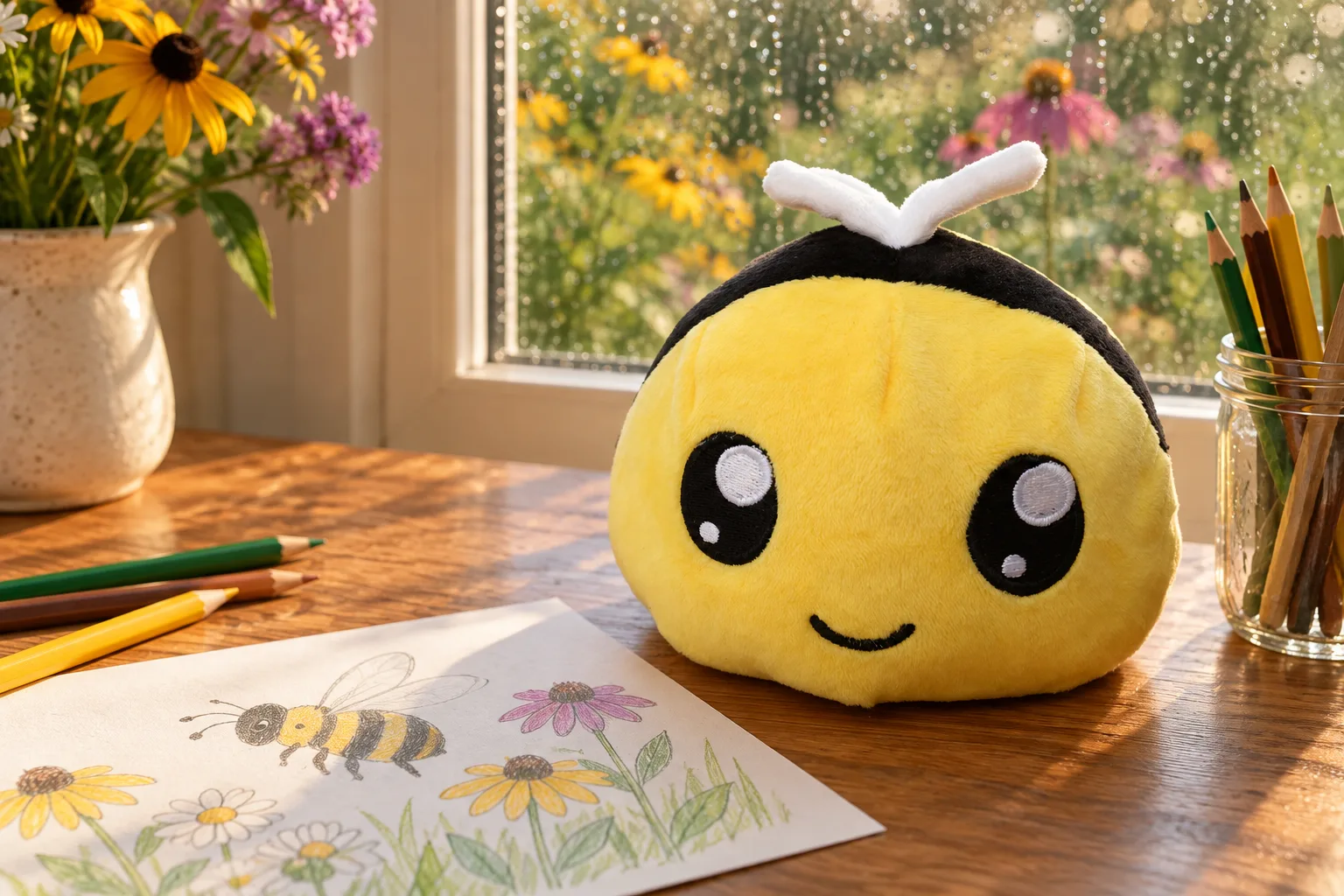
For rainy-day bee activities indoors, children can sketch bees seen from a window or plan flowers to observe when sunshine returns. The Original Adopt a Bee® Plush Toy from Project Honey Bees offers a bee-themed companion for those conversations without bringing a living insect inside.
Should you rescue a wet bee?
A wet bee in a protected location usually needs space and time, not immediate handling.
Start by looking at the situation rather than assuming that stillness means injury. Cool or wet weather can reduce bee activity, and a bee may remain motionless while conditions are unsuitable for flight. You cannot reliably diagnose its condition just by watching it briefly.
If the bee is beneath foliage and away from foot traffic, leave it alone. If it faces an immediate hazard, such as being stepped on, you can offer a leaf or piece of card for it to climb onto and move it a short distance to a nearby sheltered spot. Avoid touching it directly or forcing it to move.
Do not use a hair dryer, radiator, or other artificial heat source to dry a bee. Do not force-feed it or leave honey outdoors as an attempted rescue measure; honey can carry pathogens affecting honey bees. If you suspect flooding or damage to a managed hive, contact its beekeeper rather than opening or moving it yourself.
How can a garden support bees after the rain?
A garden supports returning bees by providing accessible flowers and undisturbed nesting habitat once flying conditions improve.
Bees can transfer pollen between flowers as they forage, supporting plant reproduction. Keeping a range of suitable plants in bloom creates feeding opportunities when bees return. Choose plants appropriate to your region and growing conditions, including locally native species where practical.
Good pollinator habitat is more than a collection of flowers. Nesting space, protection from unnecessary pesticide exposure, and a variety of plants all matter. A sheltered garden edge can complement an open flower bed without requiring you to build an artificial rain station.
After a shower, observe which flowers receive visits and which sheltered areas bees use. Those observations can guide future planting, but avoid drawing conclusions from one weather event. Bee activity changes with season, temperature, flowering patterns, and time of day.
What are the answers to frequently asked questions about bees?
Bees generally seek shelter during heavy rain, and their activity, resting places, and use of stored food depend on the species. These frequently asked questions cover rainy-weather behavior and other common bee habits.
What do bees do when it rains?
Honey bees usually reduce foraging and shelter in their hive, while wild bees may return to nests or wait in protected vegetation. Some bees fly in light rain, but heavy rain and unfavorable temperatures can keep them from visiting flowers.
What do bees do at night?
Most familiar garden bees stop foraging at night and rest in nests or other sheltered places, although some bee species are active in low light or darkness. Honey bee colonies remain active internally, with workers performing tasks even when outside foraging has stopped.
What do bees do to flowers?
Bees visit flowers to collect nectar, pollen, or both, and they can transfer pollen as they move between blooms. This pollination helps many flowering plants produce seeds and fruits.
What do bees do with honey?
Honey bees store honey and consume it as an energy source, including when weather prevents foraging. Honey is colony food, not simply a by-product made for people to harvest.
Want to turn your curiosity into a bee-inspired gift?
A bee-themed gift from Project Honey Bees is one way to share your interest in bees with someone else.
The Adopt a Bee® Gift Set is an option for someone who loves noticing the small details of nature, from a bee visiting a flower to the garden waking up after rain. Check the product page and adoption information for current details about what is included.
Ready to explore? Shop all bee gifts, or learn how adoption works before choosing a meaningful gift.