
What do bees do to flowers? They visit for food, but their movements can also help flowering plants reproduce. As bees travel between blossoms, they carry pollen that can make seed formation possible. That exchange helps explain why a busy flower bed matters beyond its color and fragrance.
The important distinction is that bees do not deliberately make flowers grow or turn every blossom into fruit. Their role is pollination: moving pollen to the part of a flower where the reproductive process can begin.
What do bees do to flowers during a visit?
Bees visit flowers to collect nectar and pollen. As they move around a blossom, pollen can stick to their bodies and transfer to a receptive stigma on that flower or another compatible flower. This process, called pollination, can enable fertilization and the development of seeds and, in many plants, fruit.
According to the USDA Forest Service, pollination involves moving pollen from a flower’s anther, its pollen-producing structure, to a stigma, its pollen-receiving structure. Bees are among the animals that perform that transfer while visiting flowers for food.
Not every bee visit successfully pollinates a blossom. The bee must carry suitable pollen and contact a receptive stigma, and the details vary with the flower’s shape and the bee’s behavior.
How do bees pollinate flowers step by step?
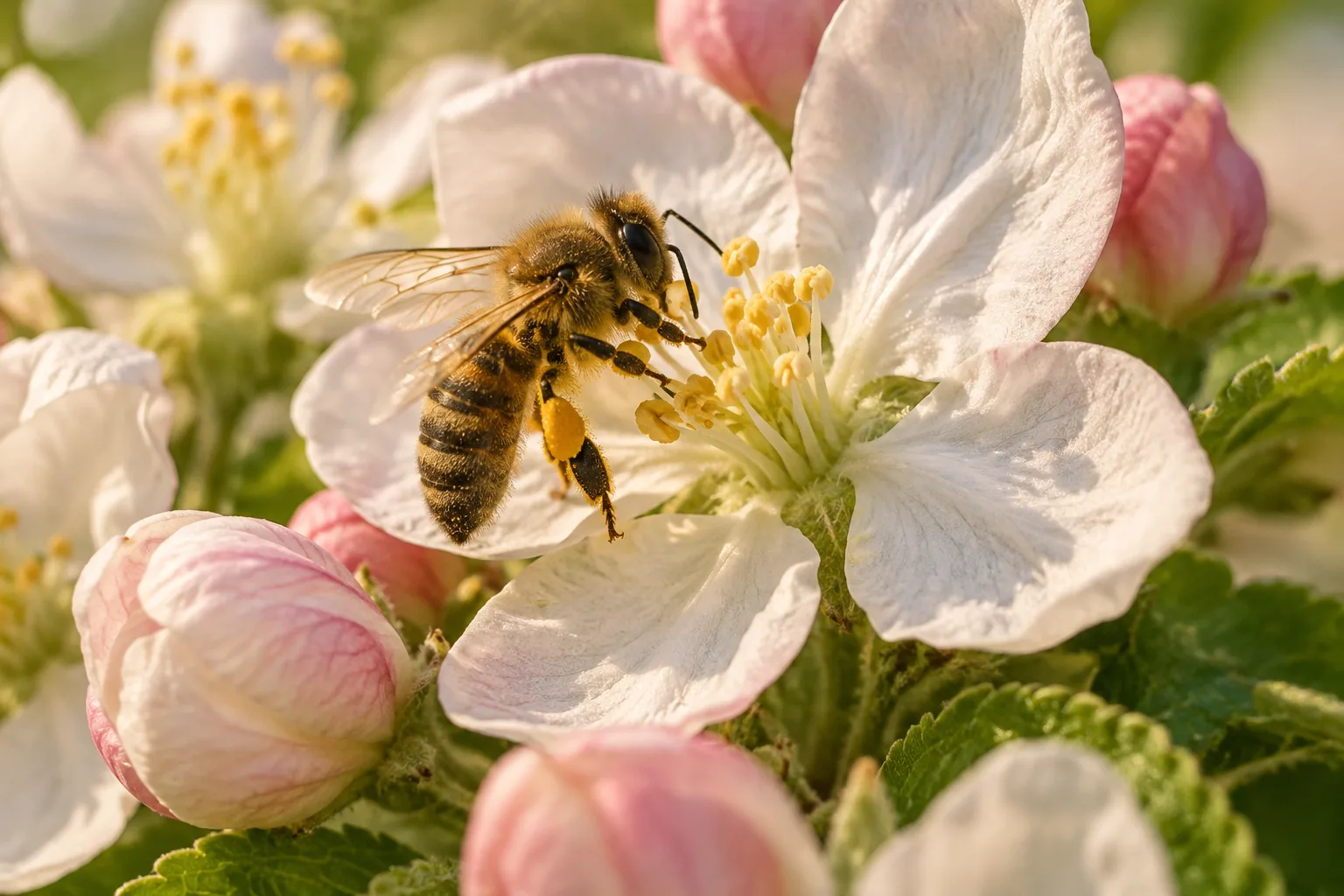
Bee pollination happens when a visiting bee picks up pollen and deposits some of it where a compatible flower can use it.
You can understand the process without memorizing every flower part. Follow the bee’s route from landing to departure:
- A bee approaches a flower. Flower colors, shapes, and scents can help bees locate potential food sources.
- The bee searches for food. Depending on the plant and the bee, the visitor may collect nectar, pollen, or both.
- Pollen reaches the bee’s body. Contact with the anthers can leave pollen on the bee’s hairs or other body surfaces.
- The bee contacts a stigma. Some pollen may rub off on the same flower or a later flower.
- Compatible pollen can begin the next stage. Under suitable conditions, a pollen grain germinates and grows a pollen tube toward an ovule.
This is why pollen transfer is more precise than simply “spreading yellow dust.” Pollen must arrive at the right structure, and it must be compatible with the receiving flower.
What do bees do to flowers that helps seeds form?
Bees deliver pollen that can allow fertilization, but the plant itself carries out seed and fruit development.
Pollination and fertilization are different events. Pollination is the delivery of pollen to a stigma. Fertilization happens later, when a male reproductive cell delivered through the pollen tube joins an egg within an ovule.
The USDA Forest Service explains that fertilized ovules develop into seeds. In flowering plants, the ovary generally develops into fruit, sometimes with other flower tissues contributing to the structure we recognize.
An apple blossom offers a familiar example: a bee’s visit can contribute to the pollination needed for seed and fruit development. The bee does not build the apple; it helps set the plant’s reproductive process in motion.
Successful pollination is also not a guarantee of mature fruit. Plant health, weather, water availability, and other growing conditions still matter after pollen arrives.
Why do bees move between different flowers?
Bees move between flowers because they need to gather food, and that travel can carry pollen between plants.
Nectar provides sugars that fuel activity, while pollen supplies important nutrients for bee development. Honey bees bring these resources back to their colony; many solitary female bees gather provisions for their own offspring rather than a shared colony.
When pollen moves between flowers on different plants of the same species, the process is called cross-pollination. Some plants depend on pollen from a compatible partner, while others can reproduce using their own pollen.
“Self-fertile” does not always mean “unvisited by bees” or “unable to benefit from bees.” A flower’s structure and the plant’s breeding system influence whether animal visits improve pollen movement. When choosing fruit trees or vegetable varieties, use university extension guidance specific to that crop rather than assuming every plant has identical needs.
Do bees help every flower in the same way?
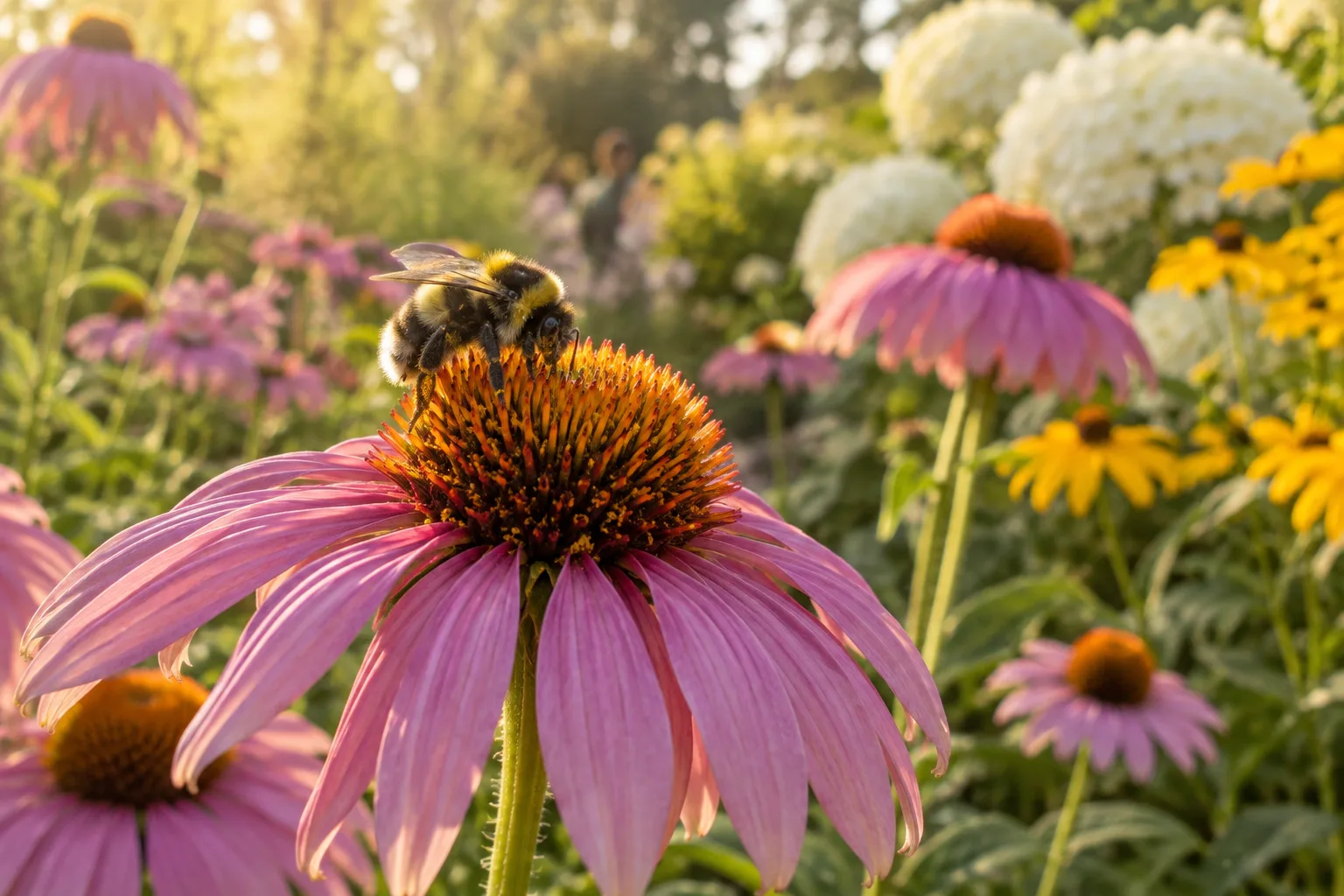
No—flowers differ in their pollination needs, and bees differ in how effectively they move pollen for particular plants.
According to the USDA Forest Service, plants may be pollinated by animals or by physical forces such as wind. Bees are important pollinators, but they are not responsible for pollinating every flowering plant.
- Wind-pollinated plants: Many grasses rely on airborne pollen rather than bee visits.
- Flowers visited by other animals: Flies, beetles, butterflies, moths, birds, and other animals pollinate different plants.
- Flowers suited to particular bees: A bee’s size, reach, and behavior affect how it contacts the flower’s reproductive structures.
- Flowers that benefit from repeated visits: One brief landing may not deliver enough suitable pollen for a plant’s full reproductive potential.
Honey bees are only part of this picture. Bumble bees and other wild bees contribute to pollination, so a useful garden supports a variety of pollinators rather than focusing on one familiar species.
For the same reason, seeing a honey bee on a flower does not tell you how much pollination occurred. The visitor’s contact with anthers and stigmas matters more than its presence alone.
How can you watch bee pollination in your garden?
You can observe possible pollen transfer by watching where a bee touches a flower, without handling the bee or disturbing the blossom.
Choose an open flower on a mild, dry day and stand quietly nearby. Watch whether the bee brushes against the pollen-bearing anthers and pollen-receiving stigmas. A phone’s zoom can help you observe without moving close to the insect.
Look for differences between visits: one bee may crawl deep into a flower, while another works across many small florets in a flower head. Visible pollen on a bee is interesting, but it does not prove that a particular blossom has been successfully pollinated.
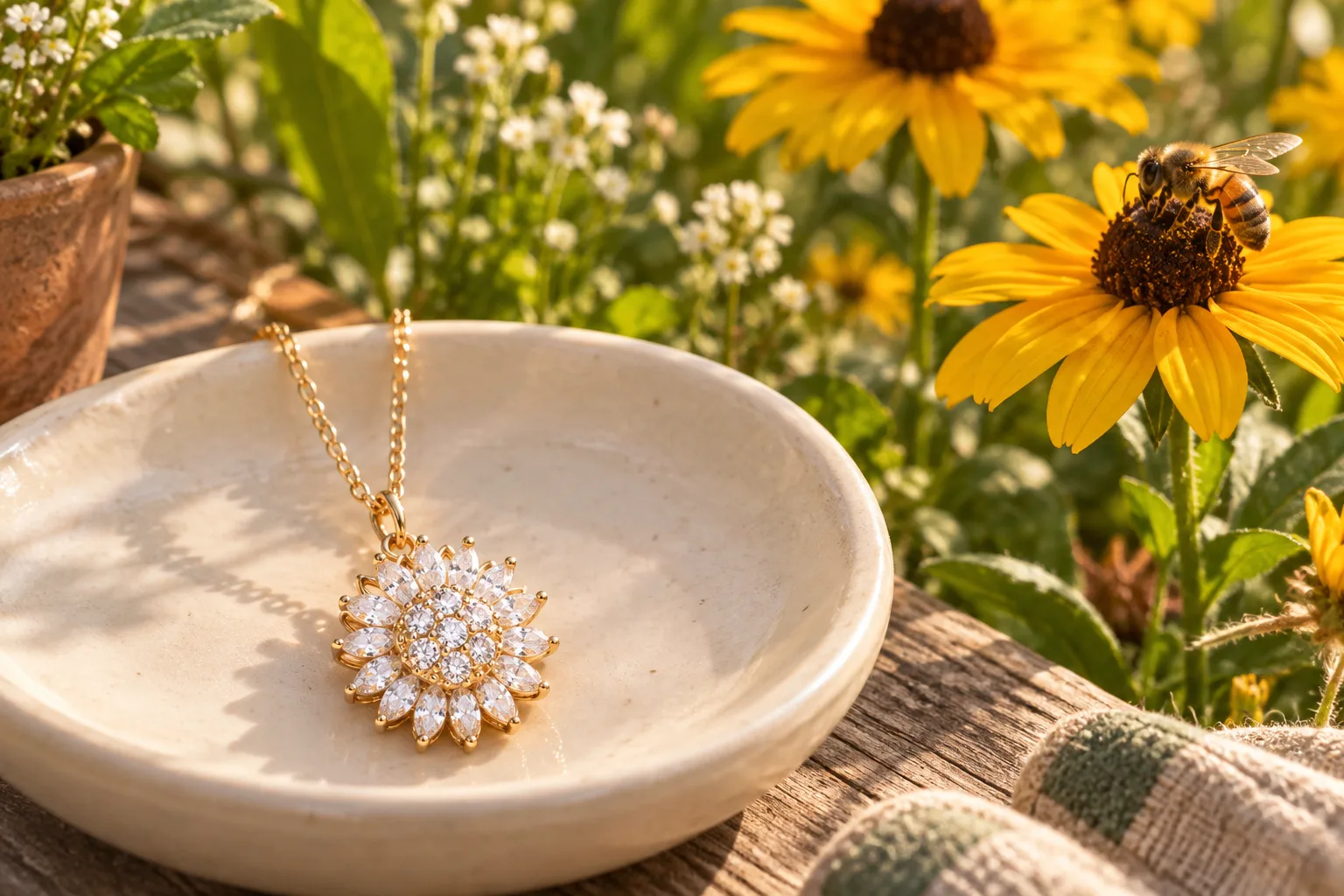
For someone who enjoys these small discoveries, Project Honey Bees’ Spinning Sunflower Necklace offers a flower-inspired reminder of the connection between blooms and bees. It is a wearable gift rather than gardening equipment.
How can you grow flowers that support pollinators?
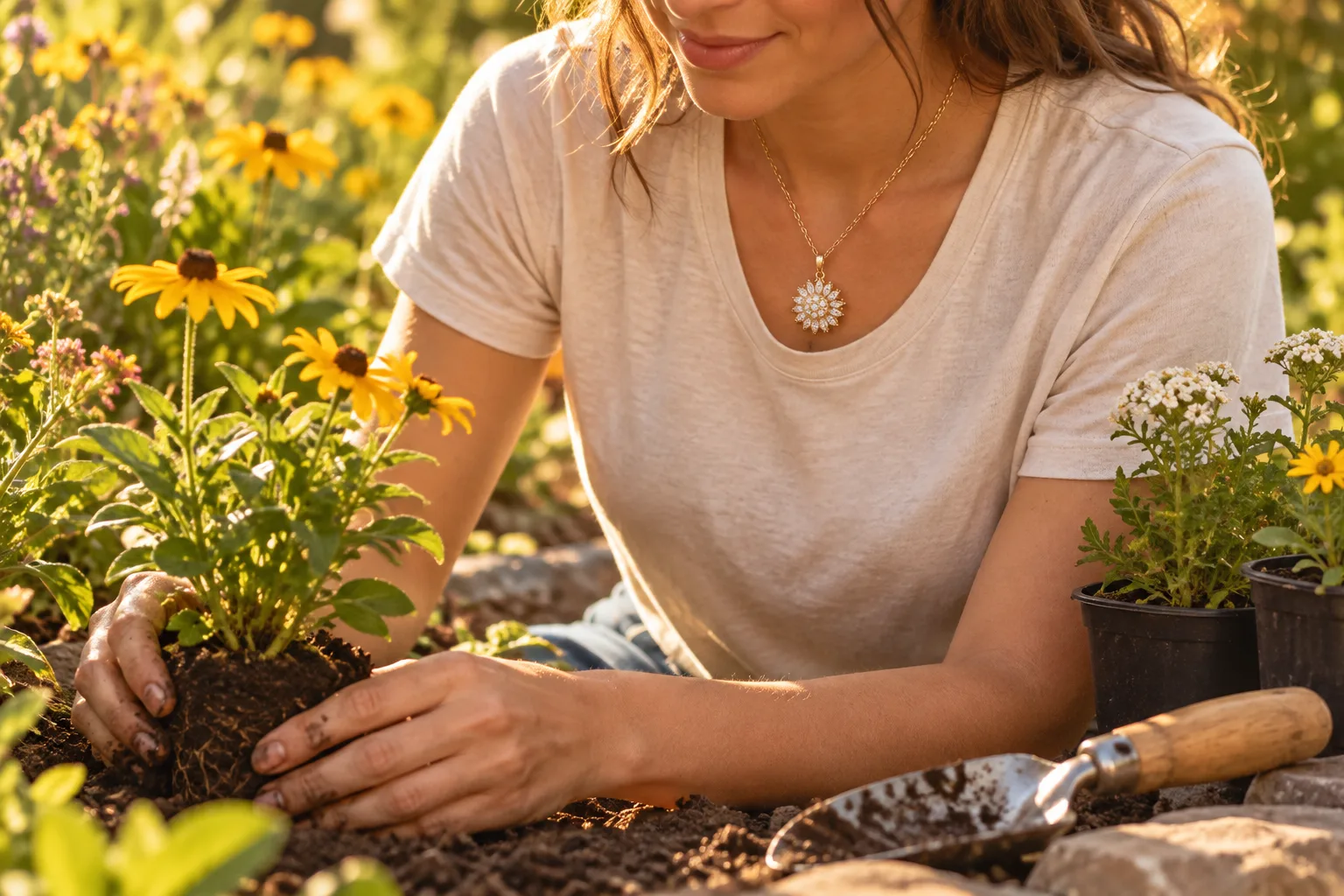
Grow a locally appropriate mix of bee-friendly flowers that offers nectar and pollen across the growing season.
The Environmental Protection Agency recommends creating pollinator habitat and taking steps to reduce pesticide risks. In a home garden, thoughtful planting and careful maintenance are more useful than assuming any colorful flower will provide the same resources.
- Choose plants for your region. Ask a local university extension office for native flowering plants suited to your soil, sunlight, and climate.
- Plan successive blooms. Include plants that flower at different times instead of providing one short burst of food.
- Offer different flower shapes. Variety can accommodate pollinators with different body sizes and feeding behaviors.
- Check ornamental varieties. Some highly modified flowers provide less accessible nectar or pollen than other forms.
- Use pesticides carefully. Follow the label, including restrictions intended to protect bees, and consider nonchemical pest-management options.
A practical starting point is to notice when your yard has few flowers, then add a suitable plant that blooms during that gap. A small planting can offer useful forage, even though it cannot meet every pollinator’s needs by itself.
What are frequently asked questions about bees and flowers?
Common questions concern how bees pollinate flowers, why they collect pollen, and how weather affects their visits. Bees gather food from flowers and can transfer pollen in the process, but their effectiveness varies with the bee, plant, and conditions.
What do bees do to flowers?
Bees collect nectar and pollen from flowers and can transfer pollen between a flower’s reproductive structures as they move. This pollination can allow fertilization and seed development when compatible pollen reaches a receptive stigma.
Why are bees important to flowers?
Bees help many flowering plants reproduce by moving pollen within flowers or between compatible flowers. Not all plants require bees, but bee visits are important to the reproduction of many wild plants and crops.
What do bees do with pollen?
Bees collect pollen as a nutrient source, particularly for developing offspring. Pollen gathered for food serves a different purpose from the loose pollen that may be deposited on a flower’s stigma during a visit.
What do bees do when it rains?
Many bees reduce or stop foraging during rain and shelter in their nest or another protected location. Rain can temporarily reduce flower visits, but its effects depend on the bee species, weather conditions, and flowers involved.
How can you turn an interest in flowers into a bee-inspired gift?
Choose a gift that keeps pollinators part of everyday conversation while continuing practical, bee-friendly habits outdoors.
Project Honey Bees’ Adopt a Bee® Gift Set is an option for a gardener, flower enthusiast, or someone curious about honey bees. Check the product listing and adoption information for current details about what your purchase includes.
Ready to choose something meaningful? Shop all bee gifts or explore how adoption works before selecting your gift.