
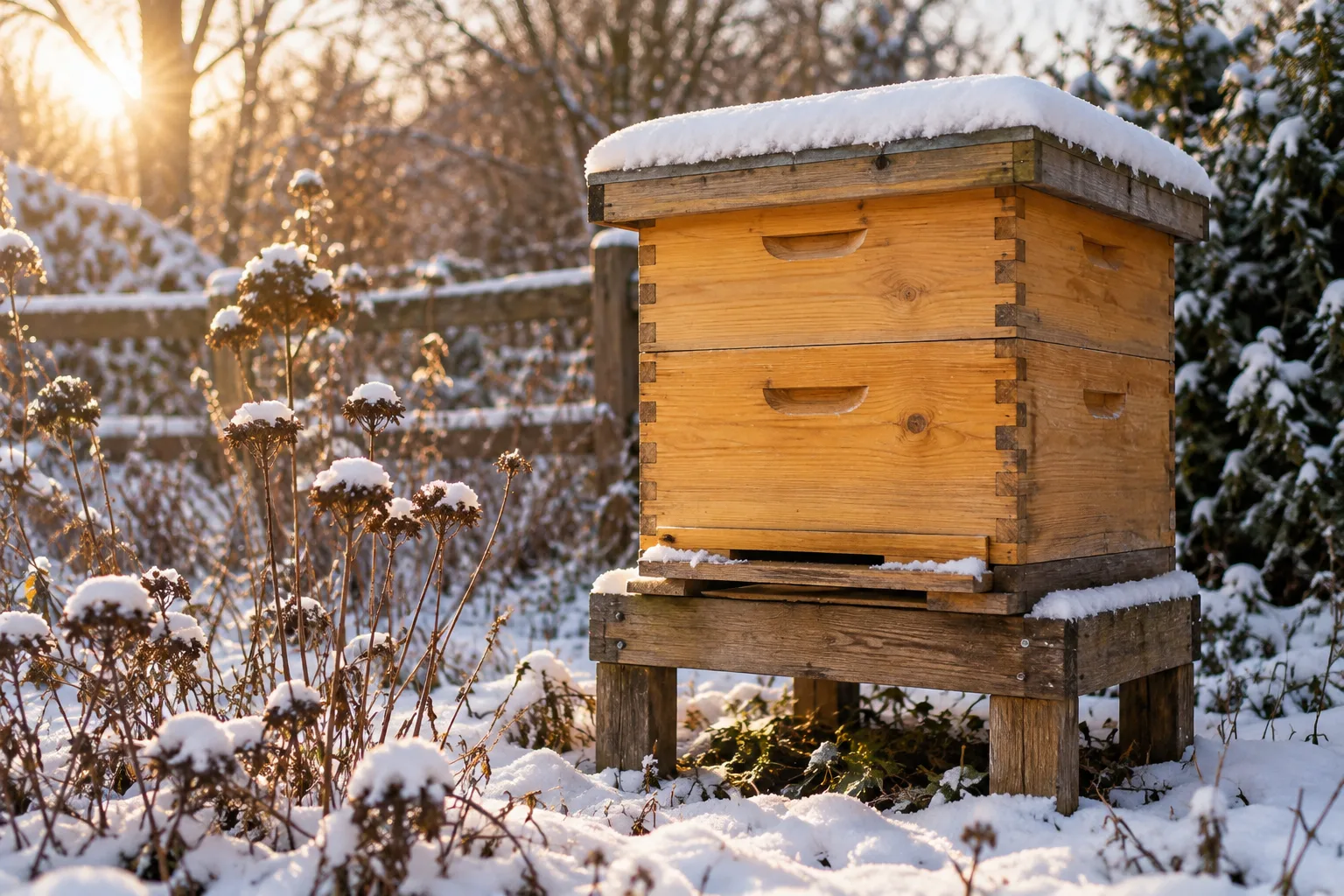
When flowers fade and frost arrives, bees seem to disappear. But what do bees do in the winter? The answer depends on the species: honey bees stay together inside their hive, while many native bees survive the season tucked into soil, stems, or other protected spaces.
Understanding those differences makes it easier to help pollinators without accidentally disturbing them. Here is what happens during the quiet months, why honey matters, and which winter garden habits actually help.
What do bees do in the winter inside a hive?
Honey bees spend cold weather clustered inside their hive, using stored honey for energy and producing heat with their flight muscles. They do not hibernate. Many native bees overwinter individually in sheltered nests, while temperate bumble bee colonies typically die off, leaving newly mated queens to survive until spring.
Honey bee colonies survive cold winters by forming a cluster and relying on stored food. The colony remains alive and responsive even when there is little activity at the entrance. A quiet hive is not necessarily an empty hive.
This strategy differs from the seasonal life cycle of many bees in temperate gardens. Honey bees maintain a colony through winter, rather than leaving only a new generation to emerge when temperatures rise.
How do honey bees stay warm without a heater?
Honey bees stay warm by clustering closely and generating heat with their flight muscles.
The cluster has a relatively insulating outer layer, while bees inside generate warmth. As weather changes, the cluster can tighten or loosen. Honey bees protect the queen bee within this group rather than trying to warm every empty corner of the hive.
Adequate food stores and colony health are important for winter survival. Clustering helps conserve heat, but it does not eliminate the need for fuel. Bees must remain able to reach the food they have stored.
Winter worker bees also differ physiologically from short-lived summer workers and can live for several months. Their extended lives help maintain the colony through a season when replacing workers is limited. Brood rearing can decline sharply or pause, then increase as the colony moves toward spring.
Do honey bees ever leave the hive in winter?
Honey bees may leave their hive during mild winter weather, especially for brief flights to eliminate waste.
Seeing a few bees outside on a sunny day does not mean winter is over. Flight depends on conditions such as temperature, sunlight, and wind. In regions with mild winters and flowering plants, bees may also have opportunities to forage.
Why do honey bees need honey during winter?
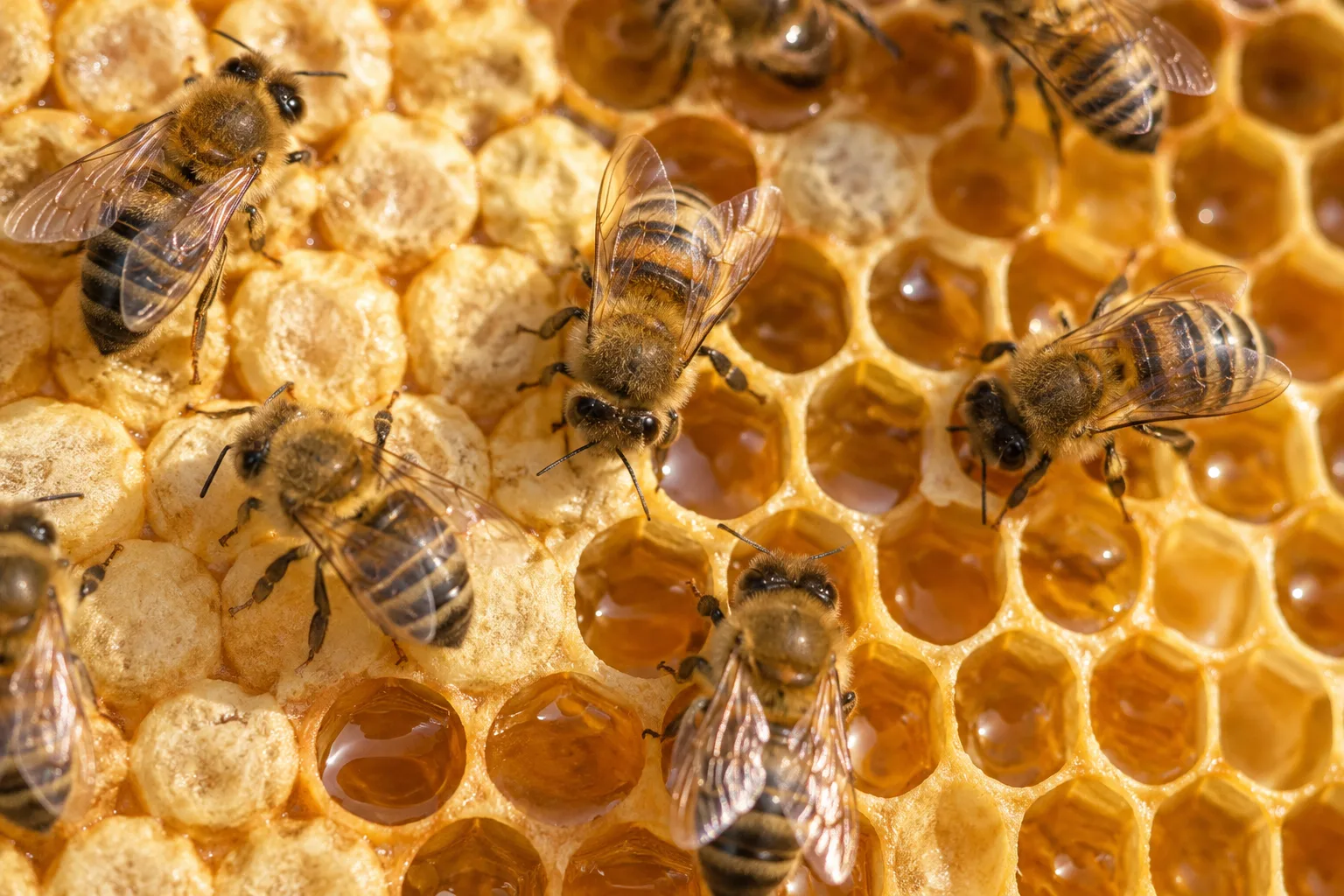
Honey supplies the carbohydrates honey bees need to stay alive and generate heat when fresh nectar is scarce.
Honey bees collect nectar during suitable weather and process it into honey for storage. Those reserves help the colony bridge periods when flowers are unavailable or flying conditions are poor. Winter survival is one important reason honey bees store food rather than consuming every incoming drop immediately.
Pollen serves a different purpose: it provides protein, fats, and other nutrients, particularly for raising young bees. Honey bee nutrition depends on both nectar-derived carbohydrates and pollen-derived nutrients. Honey and pollen are complementary foods, not interchangeable supplies.
- Honey: Provides energy for adult bees and heat production.
- Stored pollen: Supplies nutrients used in feeding and raising developing bees.
- A managed colony: Needs sufficient food, suitable shelter, and appropriate management of pests and disease.
For beekeepers, winter preparation begins before cold weather arrives. Food assessment and colony health management require local guidance; a passerby should not open a hive or attempt to feed an unfamiliar colony.
What do bees do in the winter outside honey bee hives?
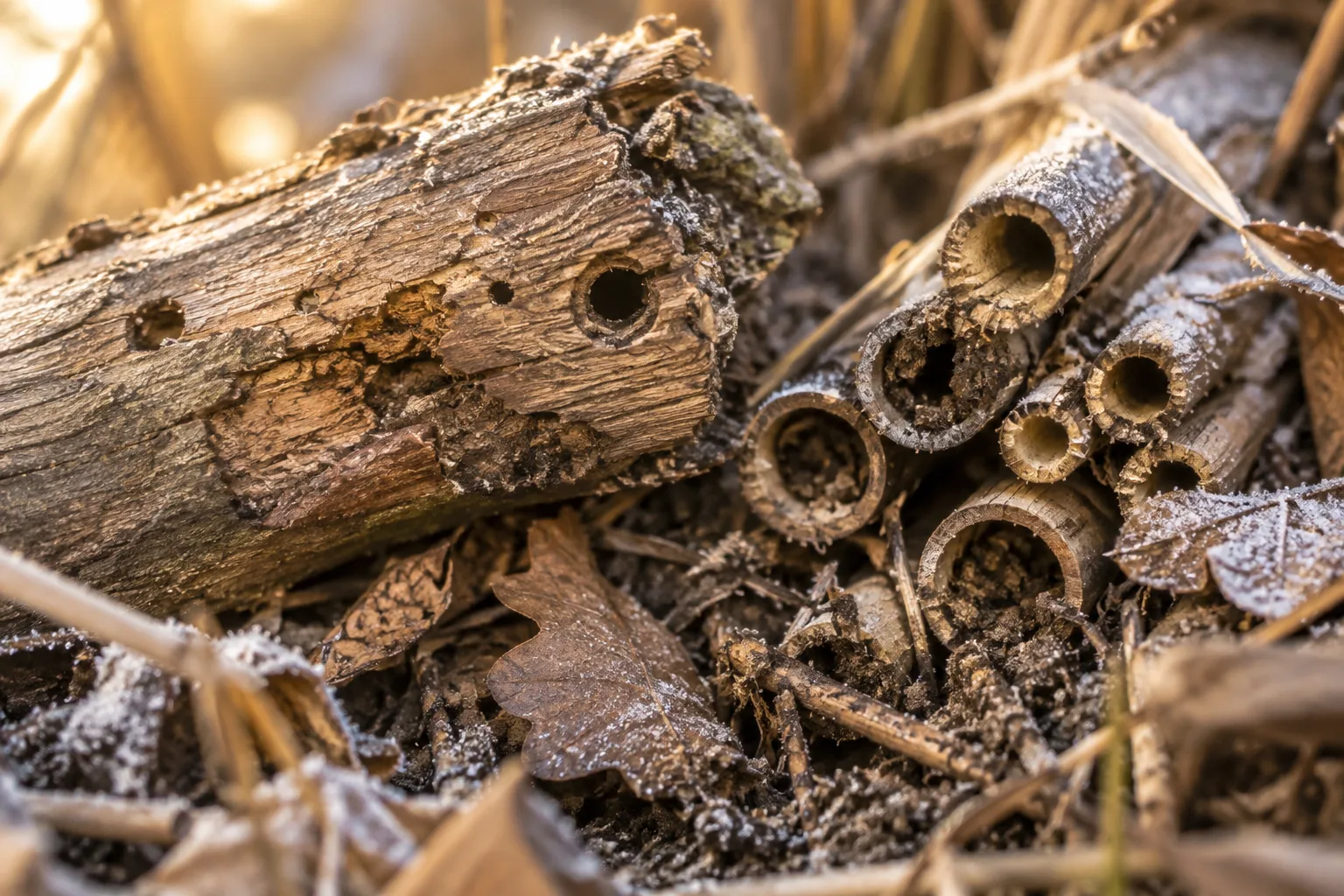
Many native bees in winter remain in protected nests, surviving as adults or immature stages depending on the species.
Native bees have a wide variety of nesting habits, including nests in soil and cavities. These differences matter in winter: there is no single shelter or life stage shared by every bee. A dormant garden can contain bees even when none are flying.
Where do bumble bee queens spend winter?
Newly mated bumble bee queens typically overwinter alone in protected sites, often in or near the soil.
In the usual temperate bumble bee life cycle, workers, males, and the old queen die as the season ends. The new queens enter a dormant state and emerge when conditions become suitable. Each surviving queen must establish a new nest rather than return to an active colony of winter workers.
This is why honey bee winter advice does not automatically apply to bumble bees. An overwintering bumble bee queen needs a suitable sheltered site, not a hive full of stored honey and thousands of companions.
Where do solitary bees shelter?
Solitary bees can spend winter in underground nests, hollow or pithy stems, and existing cavities in wood.
Some species overwinter as adults inside cocoons, while others remain in immature stages. Nesting resources matter alongside flowers: leaving suitable nesting material undisturbed can protect a generation that will not become visible until later.
How does a warmer climate change winter bee activity?
Bees may remain active for longer in mild climates, but their behavior still depends on species, weather, and available flowers.
A honey bee colony in a warm region may have more opportunities to forage than one experiencing prolonged freezes. Some native bees also have seasonal schedules that do not match a simple spring-to-fall pattern. Local conditions are more useful than a nationwide calendar for predicting activity.
A warm afternoon alone does not guarantee that bees have enough food. Flowers must be present and accessible, and conditions must allow flight. This is one reason regionally appropriate plants with different bloom periods are valuable to pollinators.
How can you protect winter bee habitat at home?
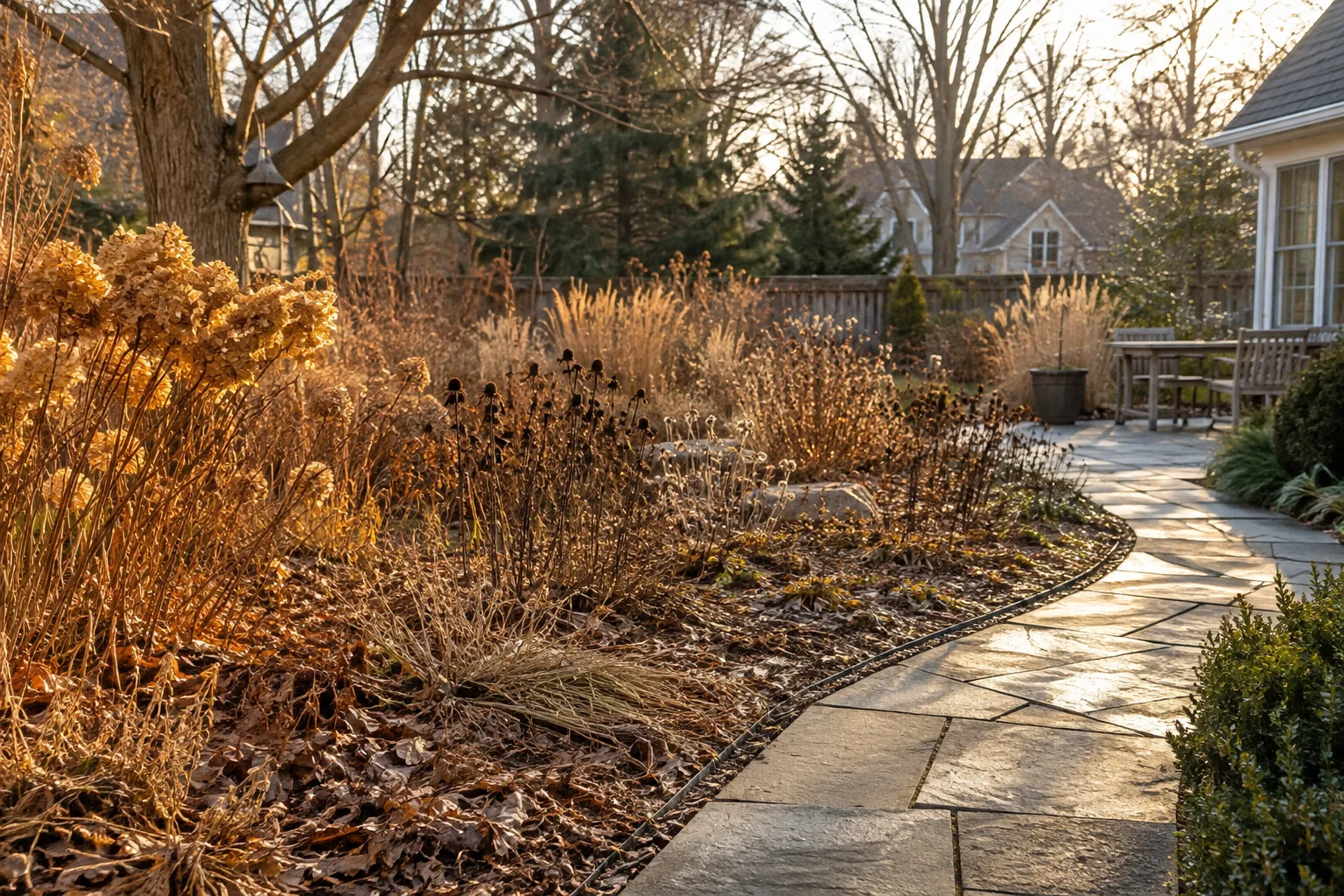
You can help overwintering bees by preserving suitable shelter and avoiding unnecessary disturbance.
Winter support is often about what you leave alone rather than what you buy or install. Protecting nesting areas alongside providing flowers helps preserve pollinator habitat. A garden that looks inactive may still be supporting living bees.
- Keep some standing stems: Leave suitable hollow and pithy stems in a designated habitat area instead of clearing every stalk.
- Retain some leaf litter: Undisturbed leaves and sheltered ground can support overwintering pollinators and other beneficial insects.
- Protect known nesting spots: Avoid digging, tilling, or compacting areas where ground-nesting bees have been active.
- Plan for seasonal blooms: Choose plants suited to your region that provide flowers across the local growing season.
- Avoid unnecessary pesticide use: Follow all pesticide label directions, including restrictions and precautions intended to protect bees and other pollinators.
Do not move an occupied bee hotel into a heated house to keep it warm. Artificial warmth can disrupt seasonal timing. If nesting materials need maintenance, follow species-specific advice from your local cooperative extension service rather than treating every nest the same way.
For someone who enjoys sharing these small conservation habits, the Save The Bees® Pin from Project Honey Bees can be a conversation starter on a bag or jacket. It is a simple way to keep interest in pollinators visible beyond gardening season.
Should you help a bee you find on a cold day?
A cold or inactive bee does not automatically need feeding, warming, or relocation.
A resting bee may be responding normally to cool conditions, and a bee uncovered during gardening may have been sheltering there. Stop disturbing the area and avoid handling it unnecessarily. Do not dig up a nest or bring wild bees indoors to force them into activity.
For concerns about a managed honey bee hive, contact its beekeeper. For an unfamiliar nest or repeated bee activity around a building, a local extension office can help with identification and appropriate next steps. Identifying the bee is more useful than assuming every species needs the same intervention.
What are the answers to frequently asked questions about bees in winter?
Winter bee behavior varies by species: honey bees rely on stored food and clustering in cold weather, while many other bees pass the season dormant in protected sites.
What do bees do in the winter?
Honey bees cluster in their hive during cold weather and use stored honey to fuel heat production. Many native bees overwinter in sheltered nests, while newly mated bumble bee queens in temperate regions typically survive alone until they can establish colonies in spring.
What do bees do with honey?
Honey bees eat honey for energy and store it for periods when nectar is unavailable. During cold weather, that energy supports the muscle activity used to generate heat within the winter cluster.
What do bees do with pollen?
Honey bees collect pollen as a source of protein, fats, and other nutrients, especially for raising young. Many solitary bees also provision their nests with pollen and nectar for their developing offspring.
What do bees do when it rains?
Bees generally reduce foraging during rain and may stay in their nest or shelter nearby. Rain, wind, and cool temperatures can make flying and collecting food more difficult.
How can you turn winter curiosity into a meaningful bee gift?
A bee-inspired gift can keep the conversation about pollinators going after the garden goes quiet.
For a bee-themed present, explore the Adopt A Bee® Gift Set from Project Honey Bees and check the product page for its current contents and details.
Start with Shop all bee gifts, or explore how adoption works to review the brand’s adoption program before choosing your gift.