
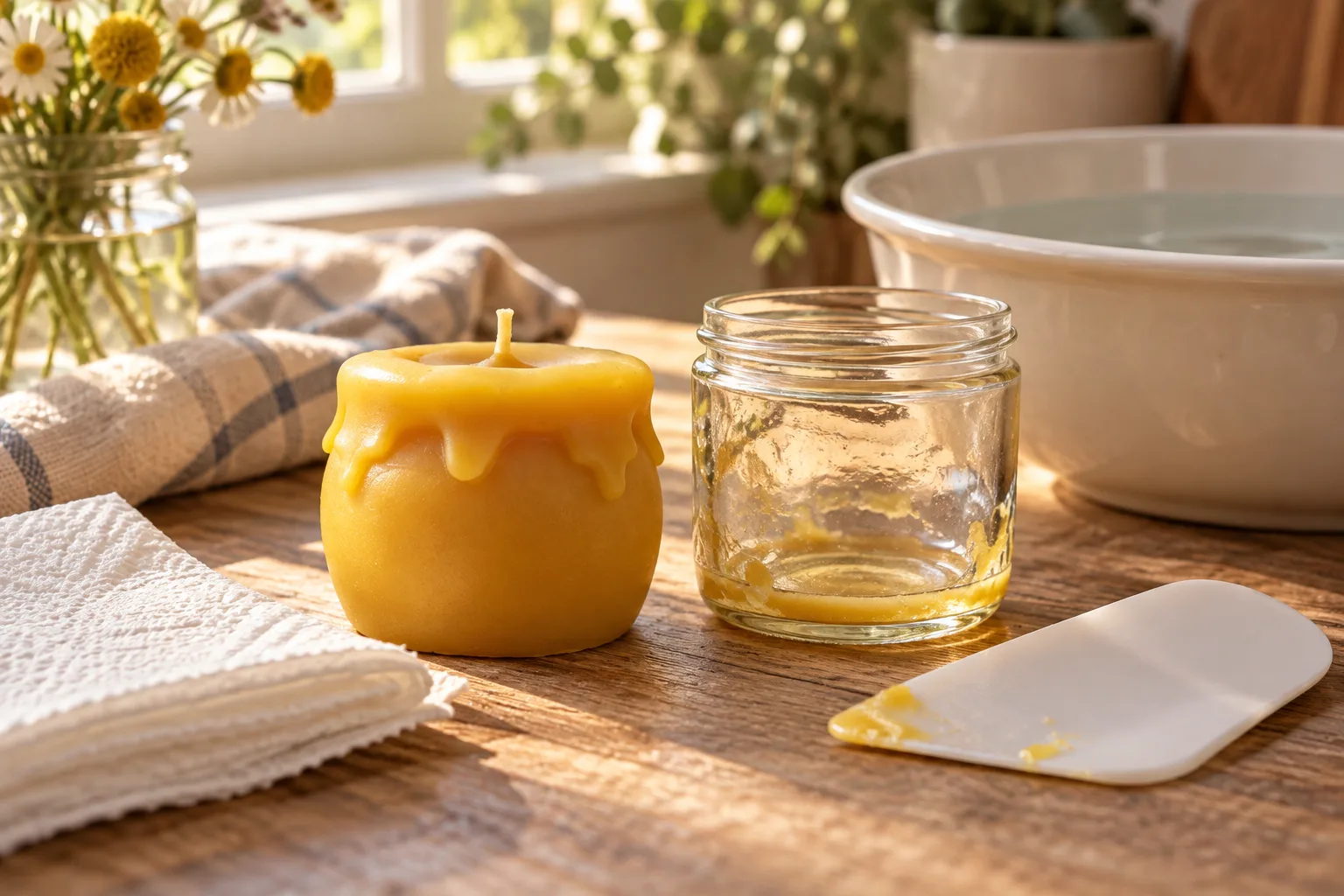
To remove beeswax from glass, start with a completely cool candle jar, gently lift out loose wax, and use mild warmth only if needed to soften the remaining residue. The goal is to remove the wax without scratching the glass, overheating the container, or sending wax into your plumbing.
Whether you want to tidy a favorite beeswax candle jar or turn it into a pencil holder, patience matters more than force. Keep the candle’s care instructions handy: coatings, labels, decorative finishes, and glass construction can affect which cleaning methods are appropriate.
How do you remove beeswax from glass safely?
Let the candle jar cool completely, then lift out loose beeswax with a plastic scraper. If the container’s instructions allow washing, use a gently warm water bath to soften stubborn residue. Wipe the wax into the trash before washing with dish soap. Avoid boiling water, sharp tools, and sudden temperature changes.
This approach separates the job into two parts: remove the solid wax first, then wash away the thin film left behind. Water alone will not dissolve beeswax, so filling a jar and hoping the wax disappears usually creates more cleanup.
Do not light a nearly finished candle just to melt its last layer of wax. Follow the manufacturer’s stopping point, and stop using the candle when the remaining wax reaches the manufacturer’s specified minimum.
What supplies do you need to clean candle jars?
You need a few gentle household tools rather than a knife, strong solvent, or high-heat appliance.
- A plastic scraper or old plastic card: Choose an edge without sharp burrs.
- Paper towels or a disposable absorbent cloth: Use these to collect wax rather than rinse it away.
- Mild dish soap: Save it for the final washing stage.
- A bowl or basin: Use a separate container for a controlled warm water bath.
- A soft sponge: Avoid abrasive pads that could scratch glass or damage finishes.
- A protected work surface: A tray or scrap paper makes loose pieces easier to collect.
Inspect the jar before beginning. If you see a crack, chipped rim, or other damage, do not heat it or try to pry out stuck components. Follow local disposal guidance for the damaged container.
If the jar has a decorative coating or a label you want to preserve, check whether washing is permitted. When care instructions are unavailable, start with dry removal and avoid soaking decorated surfaces.
What is the best way to remove beeswax from glass step by step?
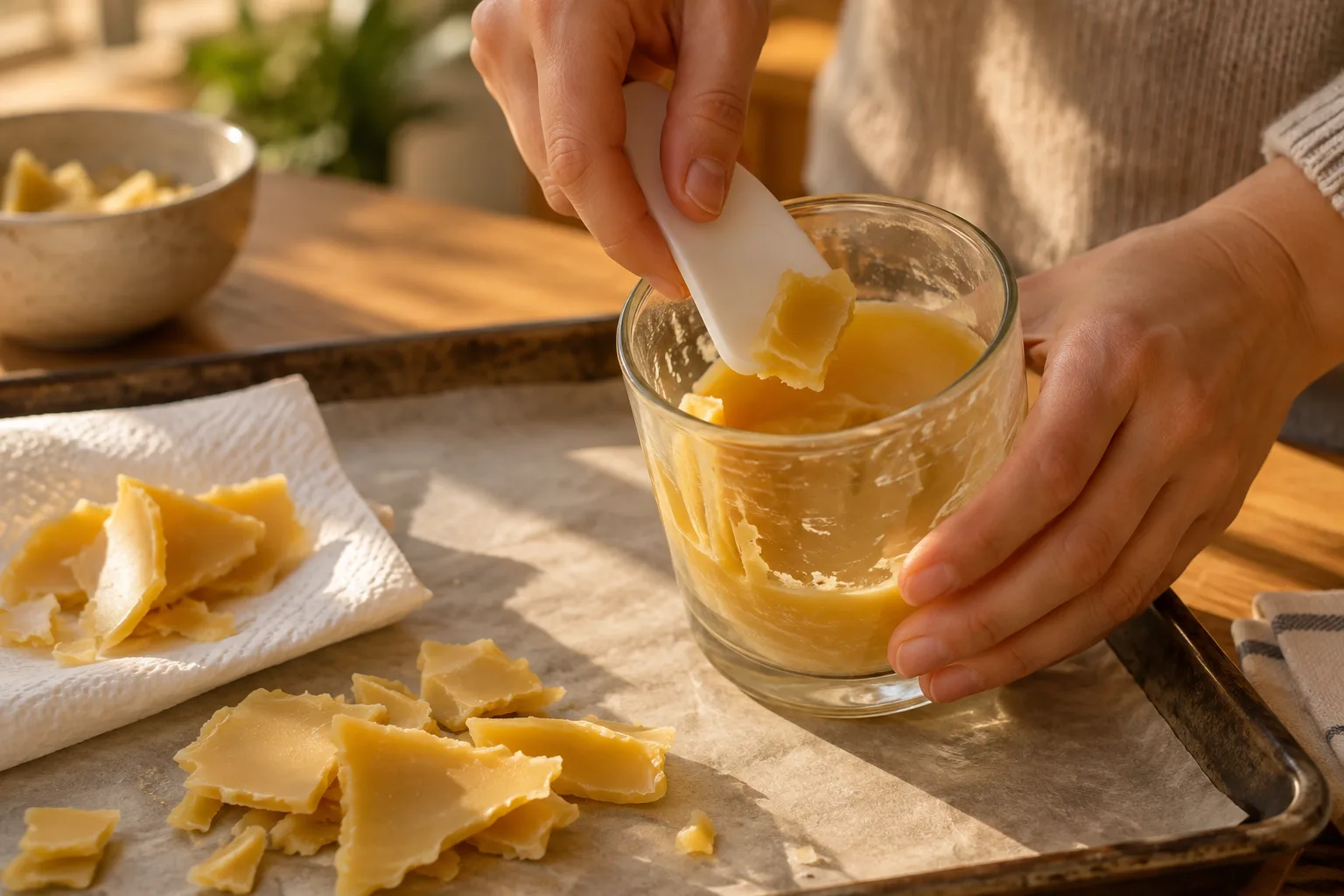
The best starting method is gentle dry removal, followed by mild warmth and washing only when the container can tolerate them.
How do you remove the loose beeswax first?
Use a plastic edge to lift pieces that separate easily from the completely cooled glass.
Hold the jar securely on your protected surface and work around the edge of the leftover beeswax. Apply light pressure rather than levering against the rim or pushing hard into the base.
If the wax stays firmly attached, stop scraping. A stubborn layer is a reason to change techniques, not to reach for a metal knife.
How do you soften stubborn wax without boiling water?
A gently warm water bath may make a thin layer of wax easier to remove, though lukewarm water will not melt beeswax.
For a washable, undamaged jar, begin with the glass at room temperature. Set it upright in a basin of lukewarm water, keeping the water below the rim so it stays outside the jar.
Allow the container to warm gradually, then remove it, dry the outside, and check whether the wax yields to the plastic scraper. Never pour boiling water onto the glass or place the jar directly on a stove burner.
If mild warmth does not help, do not keep escalating the temperature. Leave the remaining wax in place until you can obtain guidance from the candle maker.
How do you remove the final wax residue?
Wipe away as much wax residue as possible before using dish soap and water.
If the residue has softened, collect it with paper towels and put the towels in the trash. Repeat with a fresh towel rather than spreading the same wax around the jar.
Once no visible wax remains, wash a washable container with mild dish soap, comfortably warm water, and a soft sponge. Rinse, dry, and inspect it again; another wipe-and-wash cycle may be needed.
What should you do with a stuck wick tab?
Remove a metal wick tab only if it releases with gentle pressure from a plastic tool.
Some wick tabs are attached with adhesive that does not loosen during ordinary cleaning. Do not dig underneath with a sharp blade or twist hard against the bottom of the jar.
A tab that remains firmly attached may limit how you reuse the container. It is better to choose a different project than damage the glass trying to make it perfectly empty.
Why does beeswax leave a film on glass?
Beeswax leaves a film because it does not dissolve in water, and a thin layer can remain after larger pieces come away.
Honey bees produce wax to construct comb. Beeswax is a natural building material, but that does not mean it washes away like a water-soluble ingredient.
For cleaning purposes, the important distinction is between softening wax and dissolving wax. Mild warmth may help you physically remove residue; dish soap then helps with the final cleanup after most of the material is gone.
For your next candle, explore the Save The Bees™ Beeswax Candle from Project Honey Bees. Check the product page for current specifications, and keep its care instructions so you can follow the product-specific burning and container guidance.
Which candle jar cleaning methods should you avoid?
Avoid methods that introduce open flames, sudden temperature changes, sharp tools, or uncontrolled heat.
- Burning away the final wax: Do not use the candle beyond its stated stopping point.
- Pouring boiling water into the jar: Sudden temperature changes can crack glass.
- Heating a jar on the stove: A candle container is not automatically suitable for direct cooking heat.
- Microwaving the container: A hidden metal wick tab or metallic decoration makes this especially inappropriate.
- Scraping with knives: Sharp tools can slip, scratch surfaces, or chip glass.
- Using a dishwasher for initial cleanup: Remove the wax first, and only machine-wash a container explicitly identified as dishwasher-safe.
The U.S. Fire Administration’s candle safety guidance recommends sturdy holders, separation from combustible materials, and extinguishing candles before leaving a room or going to bed. Those precautions still apply when a candle is almost finished.
Never add water to a burning candle. Cleaning begins only after the flame is extinguished and the container has cooled completely.
Can you put candle wax down the drain?
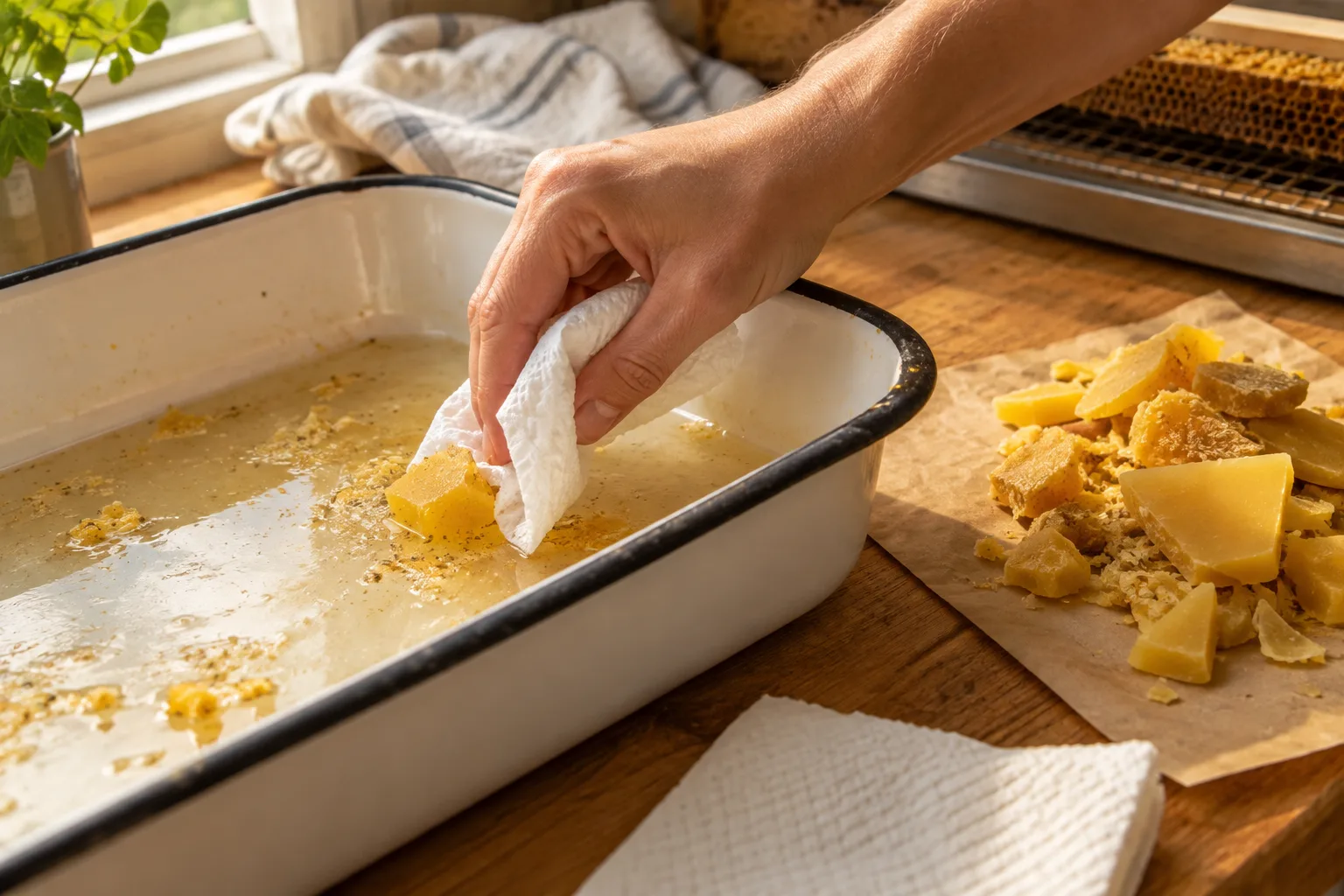
No—collect candle wax as solid waste rather than pouring it down a sink.
Wax that is soft or liquid during cleanup can harden again as it cools. Keep wax chunks, wax-coated towels, and substantial residue out of household drains.
If pieces escape into your cleaning basin, collect them before emptying the water. Do not rely on extra hot water to carry wax through the plumbing.
For disposal of the container itself, check local rules. Candle jars are not automatically accepted with glass bottles and food jars; acceptance can depend on the glass type and the recycling program.
How can you reuse candle jars after cleaning?
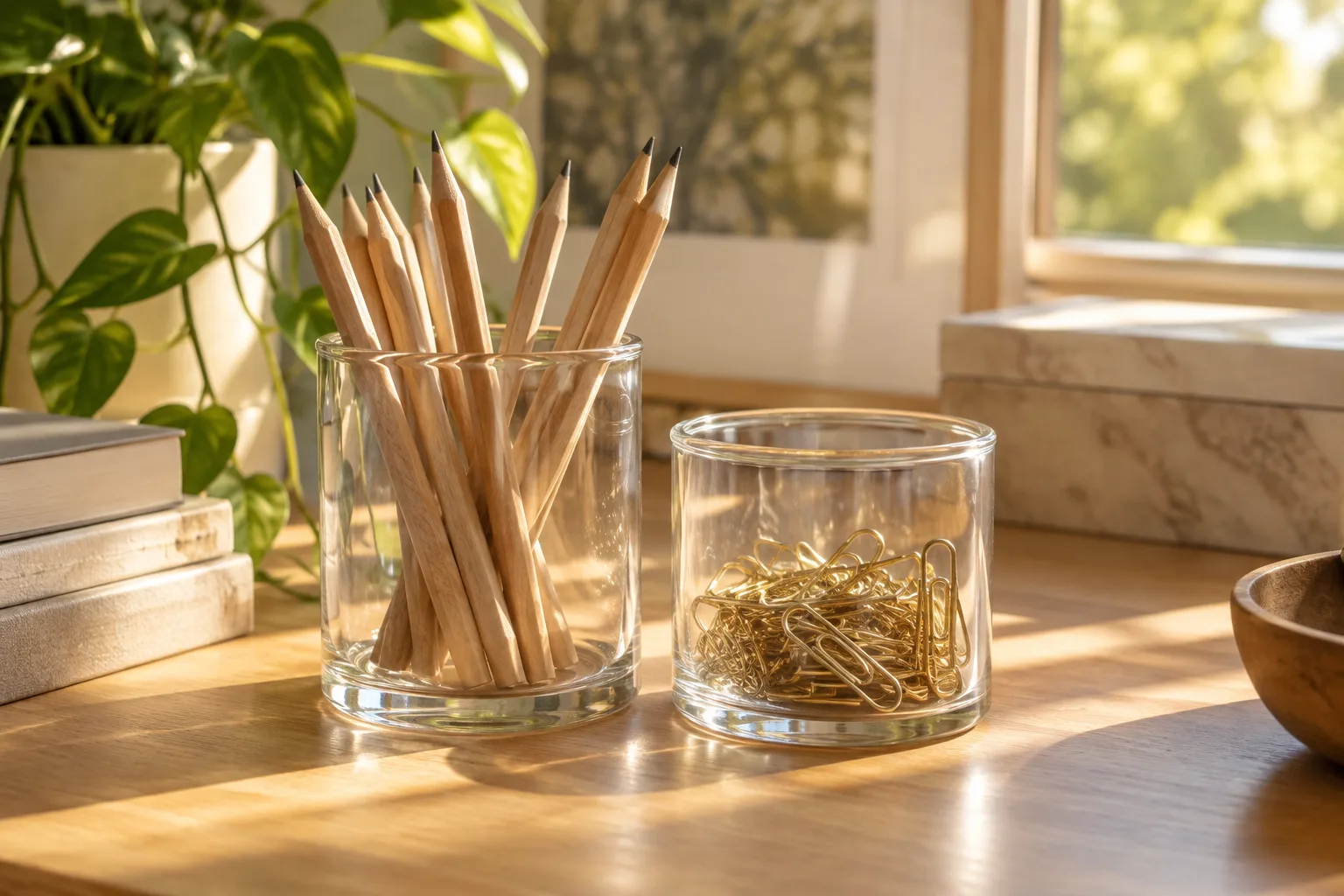
Reuse candle jars for dry, non-food storage when they are clean, intact, and suitable for the intended purpose.
A small jar can hold paper clips, buttons, or other desk supplies. A larger container may work for pencils or craft tools, provided its shape keeps it stable.
Do not assume a former candle jar is food-safe, oven-safe, microwave-safe, or appropriate for another poured candle. Cleaning removes residue; it does not establish the glass’s manufacturing specifications.
A modest reuse is often the simplest choice. If the container remains sticky, damaged, or unsuitable for your project, follow local disposal guidance instead of forcing a second use.
What are the frequently asked questions about removing beeswax from glass?
Common questions concern vinegar, freezing, boiling water, and dishwashers. Vinegar does not dissolve beeswax, and temperature-based methods or machine washing require attention to the container’s care instructions.
Does vinegar dissolve beeswax?
No, household vinegar does not dissolve beeswax. Remove the wax physically first, then use mild dish soap for the remaining film on a washable jar.
Can you freeze a candle jar to get the wax out?
Freezing can make some wax easier to release, but it is not a universal recommendation for candle containers. Follow the manufacturer’s guidance, and never move cold glass directly into warm or hot water.
Can you use boiling water to remove candle wax?
Boiling water can soften or melt wax, but it can also expose glass to a damaging temperature change. Avoid it for this task; gentle dry removal and manufacturer-approved cleaning are better starting points.
Can you put candle jars in the dishwasher?
Only consider it after removing all visible wax and confirming that the manufacturer identifies the container as dishwasher-safe. Otherwise, hand-wash the empty, washable jar with mild dish soap and a soft sponge.
Where can you shop for bee-themed gifts?
Explore Project Honey Bees for bee-themed gift ideas, and check individual product pages for current details.
If you are choosing a present, explore the Adopt A Bee® Gift Set. Review the product listing and adoption information to confirm what is included and how the program works.
Ready to start shopping? Shop all bee gifts, or read how adoption works before choosing something meaningful.