What should a pollinator garden sign say?
A pollinator garden sign should identify the space as habitat, explain one helpful gardening practice, and offer a clear visitor request if needed. Keep the message brief and accurate: “Pollinator garden: flowers provide food for bees and butterflies. Please stay on the path.” Use certification wording only if your garden has earned that designation.
The best sign helps people understand what they are seeing without requiring a long explanation. It can make a small front-yard planting feel intentional, explain why stems remain standing, or invite children to watch flower visitors from a respectful distance.
You do not need an official program or an expensive plaque to label your own garden. A homemade marker can communicate just as clearly, provided its wording describes the habitat you actually maintain.
Why put a sign in a pollinator garden?
A garden sign can explain your choices to neighbors and visitors, especially when your planting looks different from a conventional lawn.
According to the USDA Natural Resources Conservation Service, pollinator habitat includes food resources, nesting opportunities, and shelter. Flowers are an important part of that habitat, but a useful garden may also contain standing stems, leaf litter, or patches of undisturbed soil.
Without an explanation, someone might mistake those features for unfinished maintenance. A short sign gives them context: the space is being managed with pollinators in mind, not simply ignored.
It also creates an easy conversation starter about bee conservation. Honey bees are only part of the story; native bees and other pollinators have their own habitat needs. Wording such as “Habitat for bees, butterflies, and other pollinators” is more inclusive than suggesting the garden serves honey bees alone.
A sign does not, however, replace habitat or override local rules. Check applicable property, community garden, or homeowners association requirements before installing a permanent marker.
How do you write a pollinator garden sign people understand?
Write one main message, add one useful explanation, and stop before the sign becomes a lesson board.
Start by deciding who will read it. A sidewalk-facing sign needs a short message that someone can understand while walking past. A school or community garden can use a little more explanation because visitors may pause to learn.
These pollinator garden sign ideas offer starting points you can adapt:
- Simple identification: “Pollinator garden: growing food and shelter for flower visitors.”
- A visitor request: “Please leave flowers for the pollinators and enjoy them from the path.”
- A seasonal explanation: “Standing stems and leaves can provide shelter. This garden changes with the seasons.”
- A family-friendly invitation: “Look closely: how many different flower visitors can you spot?”
- A planting explanation: “Native plants support local pollinators.” Use this only when it accurately describes your planting.
Choose readable lettering with strong contrast against the background. Leave open space around the words, and make the main message larger than any supporting sentence. A simple flower or bee illustration can communicate the theme without adding another paragraph.
Avoid promises such as “saves every bee” or claims that the garden is officially protected when it is not. Likewise, “no insecticides applied here” describes your own management more precisely than a broad “chemical-free” claim.
Which sign materials and placement work best?
Choose an outdoor-suitable material and position the sign where people can read it without stepping into the planting.
Wood offers an approachable, handmade appearance, while metal or an outdoor-rated composite may suit a more permanent installation. Rather than assuming any material is weatherproof, check the maker’s instructions for outdoor exposure, mounting, and maintenance.
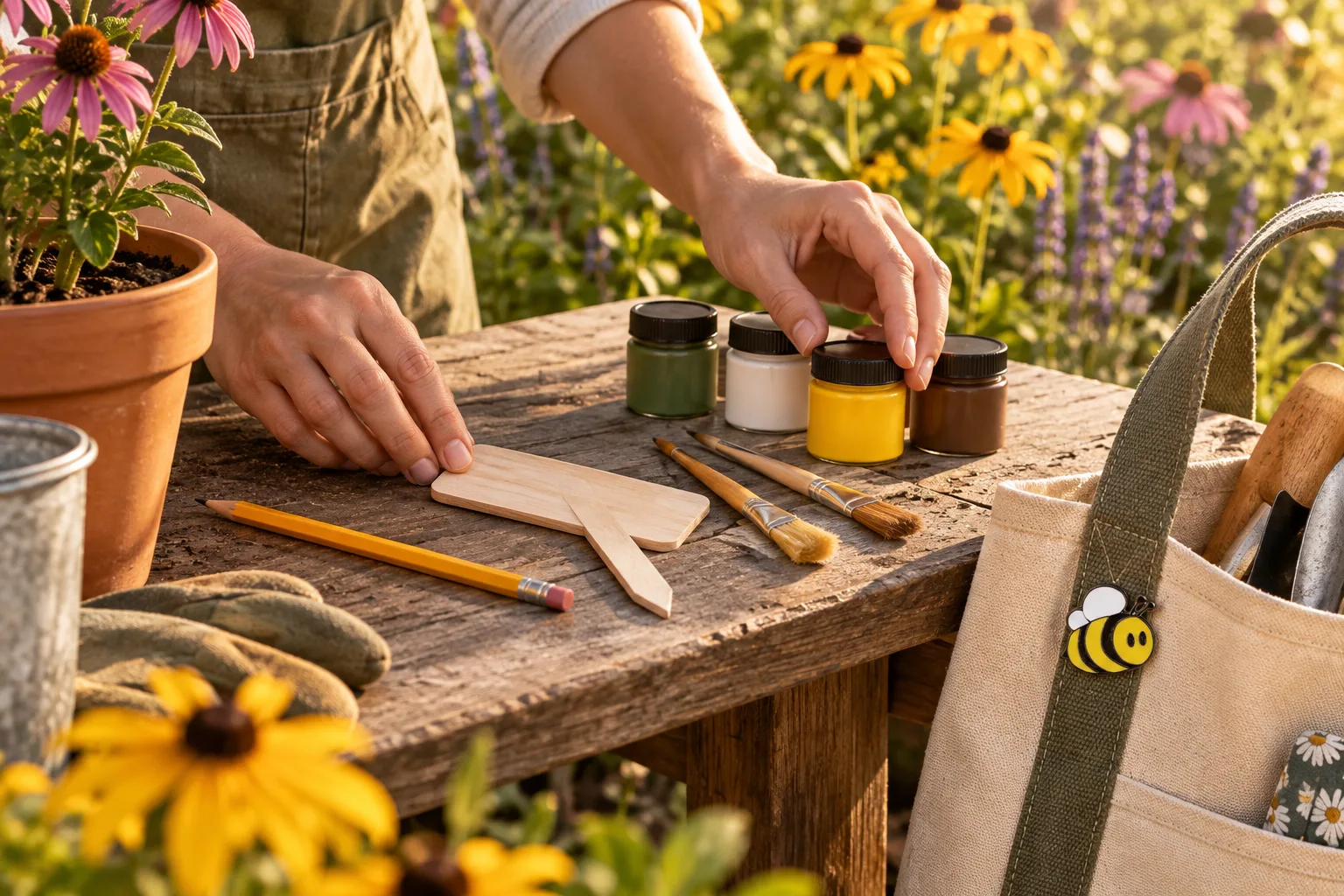
For a DIY sign, use finishes intended for the surface and setting, follow the product label, and let coatings cure before installation. Check for sharp edges, loose fasteners, and unstable stakes, especially where children help garden.
- At a sidewalk: Face the message toward approaching pedestrians without narrowing the walking route.
- Beside a path: Keep the sign within comfortable viewing distance but outside the walking surface.
- Near taller plants: Account for their mature height so foliage does not hide the lettering.
- In a shared garden: Ask the site manager about installation rules before driving a stake or attaching hardware.
Think of the marker as part of your pollinator garden design, not an afterthought. Place it near an existing access point so you can inspect or remove it without trampling plants or disturbing potential nesting areas.
What should grow around your sign?
Surround the sign with locally appropriate plants that provide flowers across the growing season, rather than choosing plants only for a photograph.
The USDA Natural Resources Conservation Service recommends diverse flowering resources for pollinators. When choosing pollinator garden plants, consult a regional university extension service or native plant organization for options suited to your climate, soil, and available sunlight.
Native plants are often useful choices because local wildlife has longstanding ecological relationships with them. Still, “native” is a regional description: a plant native to one part of the United States may not be appropriate everywhere else.
Look beyond the week when you install the sign. Combine plants with different flowering periods, give them enough room to mature, and retain suitable nesting or shelter features where practical. A small, well-maintained planting is a worthwhile starting point.
The EPA’s pollinator protection guidance emphasizes reducing pesticide risks to bees and other pollinators. If a pesticide is needed, follow its label, including restrictions intended to protect pollinators; a garden sign cannot compensate for unsafe use.
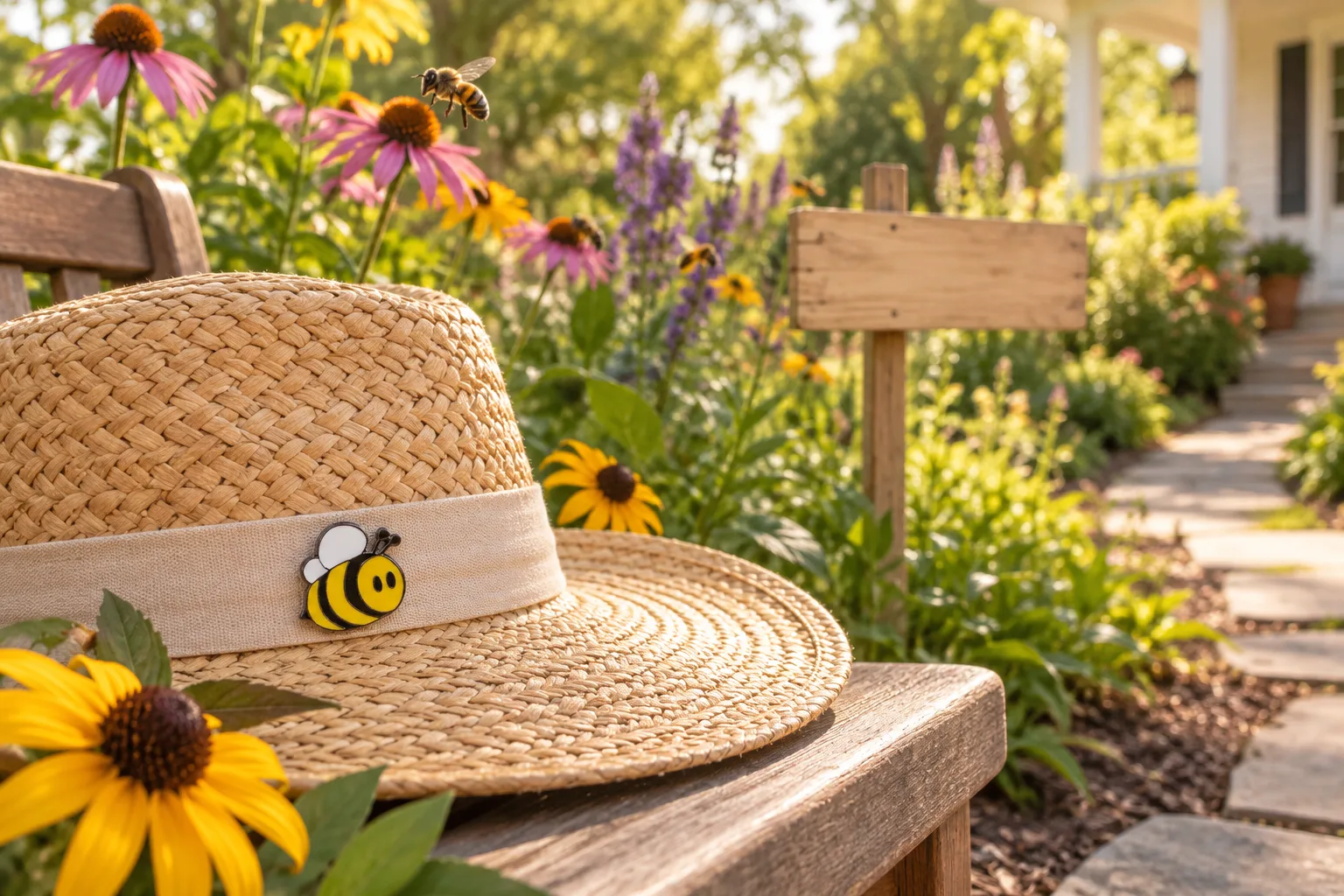
For someone who wants to carry that conservation message beyond the yard, Project Honey Bees offers the Save The Bees® Pin. Attached to a gardening tote or jacket, it is a simple conversation starter—not a substitute for creating habitat.
Can a pollinator garden sign make a thoughtful gift?
A garden sign can be a thoughtful gift when it matches the recipient’s garden, available space, and personal style.
Among gifts for bee lovers, a personalized marker works especially well for someone who already enjoys planting or observing wildlife. Ask before choosing permanent wording, drilling mounting holes, or purchasing a large sign for a shared outdoor space.
A practical gift might pair a small marker with a planting day or a nursery gift card. If you include plants or seeds, choose them for the recipient’s region and growing conditions rather than relying on a generic wildflower mix.
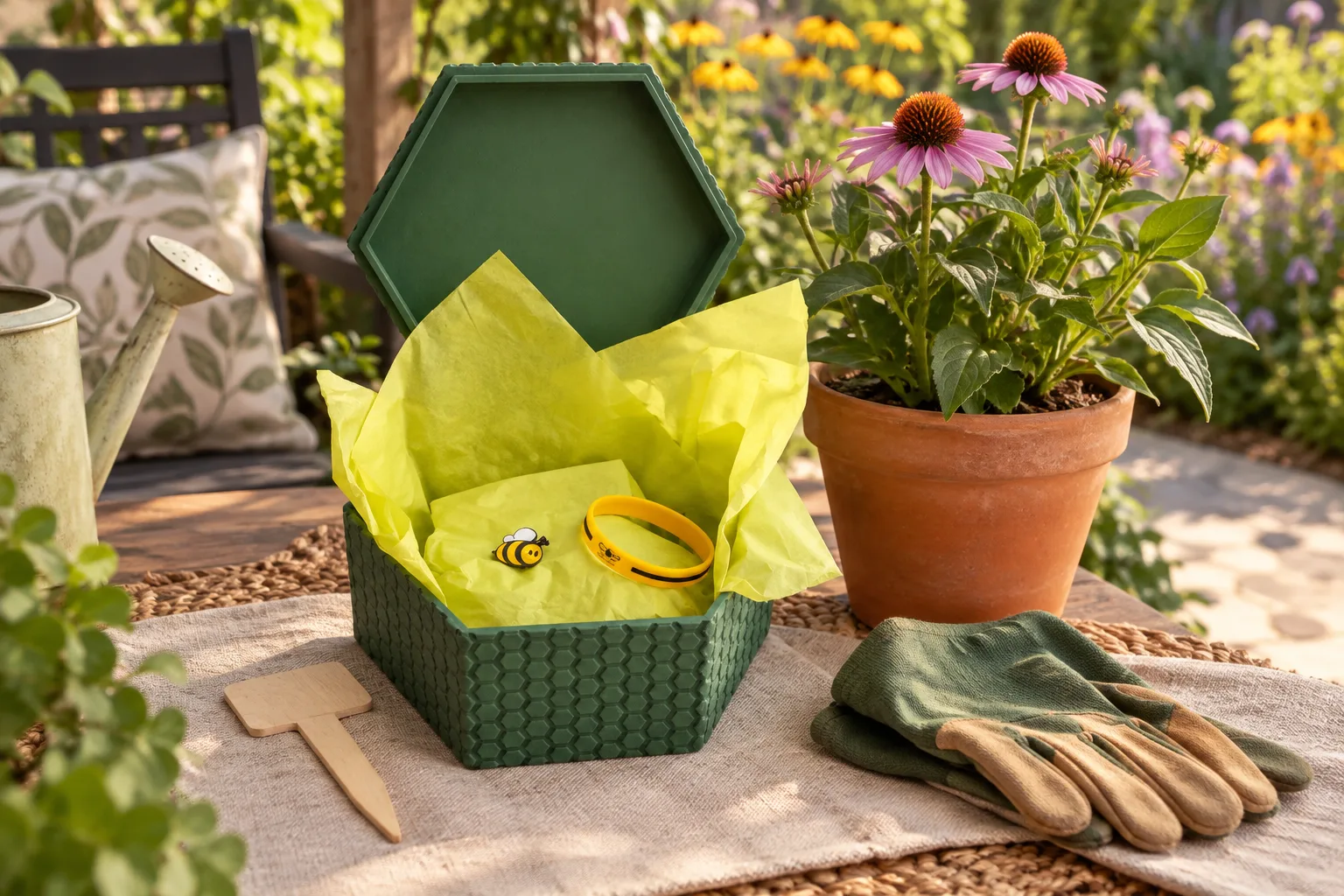
A bee-themed keepsake can complement the outdoor gift without creating another gardening task. If you choose an adoption-themed gift, check the current program details to understand what the adoption includes and whether any conservation contribution is documented.
What are frequently asked questions about pollinator garden signs?
Frequently asked questions cover where to get a pollinator garden sign, whether it indicates certification, which plants to choose, and where to visit an established garden.
Where can I get a pollinator garden sign?
You can make your own sign, buy an independently designed garden marker, or obtain one through a participating habitat program. Check whether a program’s sign requires an application or approval before ordering.
Does a sign count as pollinator garden certification?
No, a homemade or independently purchased sign does not establish pollinator garden certification. Certification requirements belong to the issuing organization, so use its name, logo, or certified wording only with the appropriate approval.
What are good pollinator garden plants?
Good choices fit your region and growing conditions while providing flowers at different times of year. A local university extension service can help identify suitable native plants and explain which options support particular pollinators.
How can I find a pollinator garden near me?
Check local botanical gardens, university extension demonstration gardens, parks departments, and nature centers for publicly accessible plantings. Visiting one can help you compare sign wording, plant labels, and layouts before planning your own space.
Ready to share your love of bees beyond the garden?
A bee-themed gift can extend the message of your garden into everyday life and give you another way to start conversations about pollinators.
The Adopt a Bee® Gift Set is an option for celebrating a gardener or someone beginning to explore bee conservation. Review the current product and adoption details before purchasing to confirm what is included.
Ready to find something meaningful? Shop all bee gifts, or explore how adoption works before choosing your gift.