What is the best pollinator garden layout for a small yard?
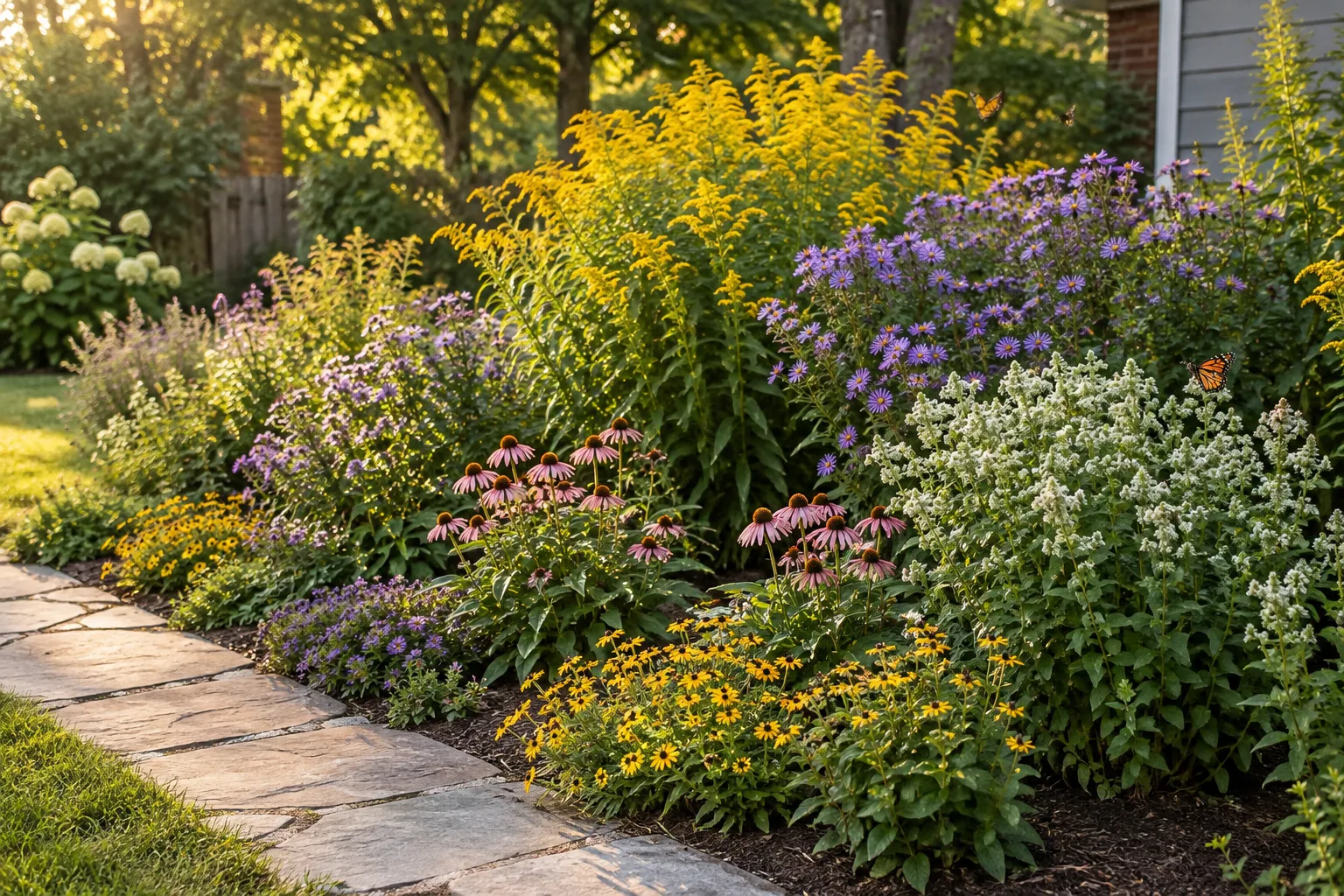
The best pollinator garden layout groups locally appropriate flowering plants in repeated patches, places taller plants where they will not shade shorter ones, and provides blooms across the growing season. Include undisturbed nesting habitat and access for maintenance. Match every plant to your region, sunlight, soil, and available space.
A small pollinator garden does not need an elaborate shape or dozens of species. A manageable bed with well-chosen plants can provide food and habitat for visiting pollinators while fitting neatly beside a patio, fence, or walkway.
According to the USDA Natural Resources Conservation Service, pollinator habitat should provide food, shelter, and nesting resources. Those needs—not a particular decorative style—are the foundation of a useful garden plan.
How do you plan a pollinator garden layout?
Start with the conditions in your yard, then arrange plants around their mature size and habitat needs.
Before buying flowers, sketch the planting area and mark nearby buildings, trees, paths, and outdoor seating. Observe how sunlight moves through the space rather than assuming that a bright morning means full sun all day.
- Check sunlight: Choose plants whose light requirements match the actual site.
- Check moisture: Note whether water drains quickly, collects after rain, or varies across the bed.
- Record mature dimensions: Use the plant label or a regional university Extension guide to estimate eventual height and spread.
- Keep access open: Leave a route for weeding, watering, and observing flowers without stepping into the planting.
- Mark habitat areas: Reserve an out-of-the-way spot for standing stems, leaf litter, or suitable exposed soil.
Place busy flower patches a little back from narrow entrances or frequently used seating. This gives people and foraging insects room to share the yard without requiring the garden to be hidden away.
What could a simple small-yard planting plan look like?
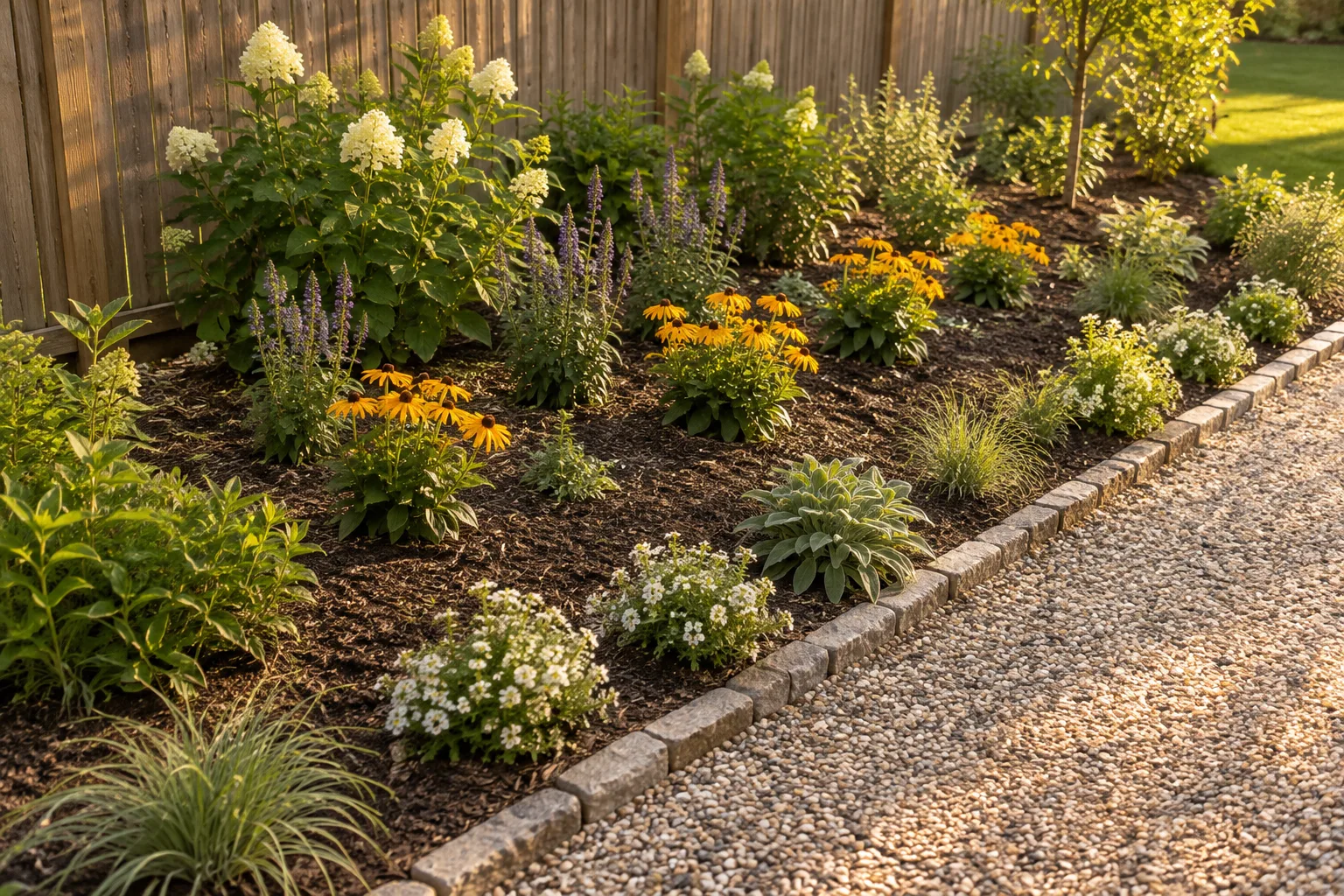
A shallow rectangular bed can use three planting bands, with taller flowers at the back and lower plants along the accessible edge.
For illustration, imagine a bed about 6 feet deep and 10 feet wide, viewed mainly from a path. These dimensions are a planning example, not a minimum habitat requirement; adjust the outline to fit your yard and selected plants.
- Back band: Place taller, locally suitable perennials where they are least likely to shade the rest of the planting.
- Middle band: Repeat patches of medium-height flowers with overlapping bloom periods.
- Front band: Use lower-growing flowers that will not spill heavily across the walkway.
- Quiet corner: Keep some suitable ground or stems undisturbed for nesting insects.
- Access point: Add a small gap or stepping area if the bed cannot be reached from its edges.
For an island bed viewed from all sides, taller plants may work better toward the center. Either way, consider the direction of sunlight before finalizing the arrangement.
Do not squeeze plants into a fixed grid simply to fill the space immediately. Spacing based on mature width allows room for growth and makes maintenance easier as the bed fills in.
Which pollinator garden plants should you choose?
Choose regionally appropriate plants that suit your growing conditions and offer accessible flowers across the season.
There is no single nationwide shopping list for native plants for pollinators. A species suitable for a dry Southwestern yard may struggle in a wet Midwestern bed, and a plant native to one part of the United States may not be native to another.
Depending on your location, regional recommendations might include particular species of asters, goldenrods, penstemons, mountain mints, or milkweeds. Treat these as groups to investigate, not interchangeable plants: species differ in size, moisture needs, bloom time, and spreading behavior.
Ask your state university Extension service or a reputable native-plant nursery for a short list matched to your county and site. Check botanical names so you know exactly what you are buying, and avoid invasive plants even when they attract flower visitors.
Include different flower shapes for different insects. Honey bees, bumble bees, smaller native bees, butterflies, and other pollinators do not all use flowers in the same way.
How do you keep flowers blooming across the season?
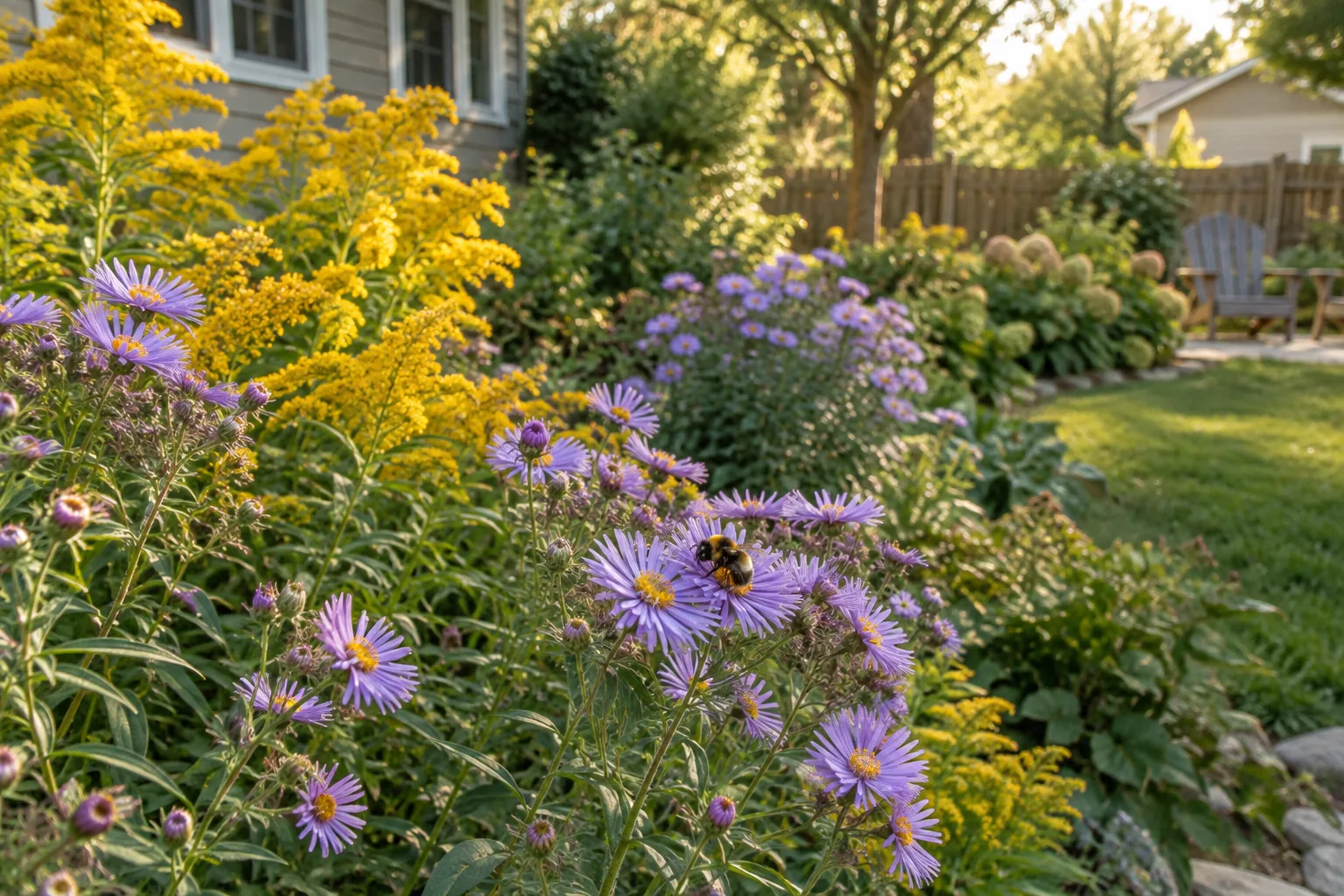
Build your planting list around early-, middle-, and late-season bloom periods rather than choosing everything that looks attractive on one nursery visit.
USDA NRCS guidance emphasizes a succession of flowering resources. Overlapping bloom periods help prevent the garden from providing abundant flowers briefly and then little food for the rest of the growing season.
- Early season: Investigate locally appropriate spring flowers, shrubs, or trees that fit the available space.
- Middle season: Use several suitable summer-flowering plants rather than relying on one favorite.
- Late season: Include regional fall-blooming options where your climate supports them.
Write the expected bloom window next to each plant on your sketch. Local weather can shift flowering times, so overlapping choices are more useful than a schedule that depends on one species blooming on an exact date.
For a garden-loving friend, Project Honey Bees' Save The Bees® Pin is a small wearable reminder of this interest. Pairing it with a locally researched planting list makes the gift personal without assuming which plants will suit the recipient's yard.
Where should you leave nesting habitat?
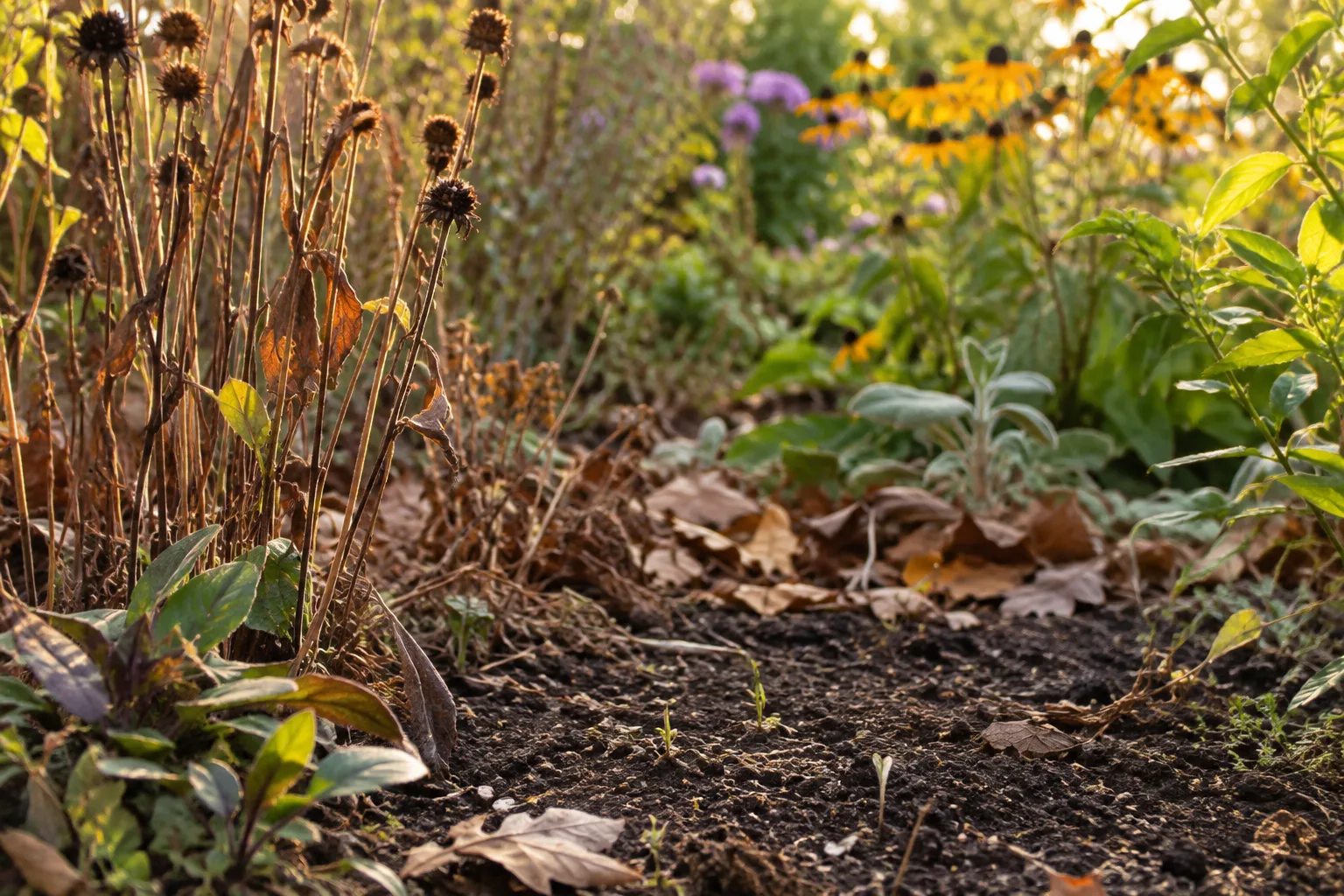
Leave nesting habitat in quiet areas that will not be repeatedly dug, covered, or cleared.
According to USDA NRCS, many native bees nest in the ground, while others use cavities or plant stems. A flower-filled bed can therefore be more useful when its pollinator garden design includes nesting opportunities as well as nectar and pollen.
Where suitable, leave a small area of well-drained soil without a thick mulch covering. Retain some standing dead stems in an out-of-the-way patch, and keep leaf litter where it will not smother plants or obstruct paths; these features can support different insects and other wildlife.
Honey bees generally live in managed hives or other enclosed cavities, not in the small bare-soil patches used by ground-nesting native bees. You do not need a honey bee hive to create useful pollinator habitat.
A bee hotel is also optional, not a requirement. For a first garden, focus on appropriate plants and low-disturbance habitat rather than adding equipment you may not have time to maintain.
How can you maintain the garden while reducing risks to pollinators?
Use routine observation, targeted weeding, and careful pesticide decisions instead of treating every insect or damaged leaf as a problem.
The U.S. Environmental Protection Agency advises taking steps to reduce pesticide exposure to pollinators and following pesticide label directions. Products described as natural are not automatically harmless to bees or other beneficial insects.
- Identify problems first: Some insects on plants are pollinators, predators of pests, or harmless visitors.
- Remove weeds selectively: Learn what your intended seedlings look like before clearing unfamiliar growth.
- Water during establishment: Even locally native plants may need supplemental water while their roots develop.
- Avoid unnecessary spraying: Where treatment is needed, seek Extension guidance and follow the label's pollinator protections.
- Clean up thoughtfully: Retain habitat where practical instead of clearing every stem and leaf at once.
Take notes on which plants thrive and which bloom gaps remain. The most useful pollinator garden ideas often come from observing your own site and improving one section at a time.
What are frequently asked questions about pollinator gardens?
Common questions cover how to help and protect bees, what garden certification involves, and where to find local pollinator gardens to visit.
How can you help the bees in your garden?
Provide suitable flowering plants across the growing season, protect nesting habitat, and reduce unnecessary pesticide use. Helping native bees as well as honey bees means considering bare soil, stems, and other habitat features—not flowers alone.
How can you protect the bees?
Protect bees by conserving habitat and reducing avoidable exposure to pesticides. In your yard, identify insects before treating plants, follow pesticide labels, and avoid disturbing occupied nests.
What is pollinator garden certification?
Pollinator garden certification is recognition offered by an organization or program for meeting its habitat criteria. Requirements, fees, and eligible locations vary, so check the specific program before designing your garden around its standards.
Where can I find pollinator gardens near me?
Check local botanical gardens, university Extension demonstration gardens, parks, and native-plant organizations. Visiting during different parts of the growing season can reveal useful plant combinations and show how a mature garden actually looks.
How can you give a bee-inspired gift with purpose?
Choose a gift that reflects the recipient's interest in bees, then pair it with a practical idea for supporting local habitat.
Project Honey Bees offers jewelry and gifts for people who care about pollinators. The Adopt A Bee® Gift Set is an option when you want a bee-themed present without needing to choose plants for someone else's growing conditions.
Before purchasing, review the product and adoption information for current details about what is included. A bee-themed gift can accompany hands-on actions such as creating habitat in your own yard.
Ready to start shopping? Shop all bee gifts and learn how adoption works before choosing a meaningful gift.