
A Minnesota pollinator garden needs more than flowers that look good in July. It needs plants suited to your particular site, blooms across the growing season, and places where native bees can nest or overwinter. This first-year guide explains how to start a manageable planting, work with Minnesota’s changing seasons, and avoid maintenance habits that undermine useful habitat.
How do you start a Minnesota pollinator garden?
Start a Minnesota pollinator garden by choosing a manageable site, matching locally native flowers to its sunlight and soil moisture, and planning blooms from spring through fall. Remove competing vegetation before planting, water new plants as they establish, avoid unnecessary pesticides, and retain suitable stems and undisturbed ground for native bees.
Your first goal is a planting you can maintain, not the largest bed you can afford. A small, well-prepared area is easier to weed and monitor than a large seed mix scattered into existing lawn. You can expand once you understand which plants thrive.
According to the University of Minnesota Extension’s prairie garden guidance, site selection, preparation, and ongoing weed control are important parts of establishing a prairie planting. Buying native plants does not eliminate those steps.
What should you check before buying plants?
Check sunlight, soil moisture, existing vegetation, and local requirements before choosing pollinator garden plants.
Minnesota contains different growing conditions, so a recommendation for a dry prairie planting is not automatically right for a shaded, damp yard. Watch the proposed bed at different times of day and after rain. Notice whether water drains away, collects, or leaves the soil consistently moist.
- Sunlight: Match each plant’s light requirements to the actual site rather than assuming every native flower needs full sun.
- Moisture: Separate dry, average, and wet locations when making your plant list.
- Existing growth: Identify persistent weeds before planting around them.
- Access: Leave room to water, weed, and observe without stepping through the bed.
- Rules and utilities: Check municipal or association requirements and arrange utility marking before digging where needed.
For an approachable first project, choose an existing bed or a clearly defined lawn edge. A visible border helps communicate that the planting is intentional and makes it easier to keep spreading plants away from paths.
When should you plant a Minnesota pollinator garden?
Planting time depends on whether you are using nursery-grown plants or seeds, as well as local soil and weather conditions.
When should you plant native plant plugs?
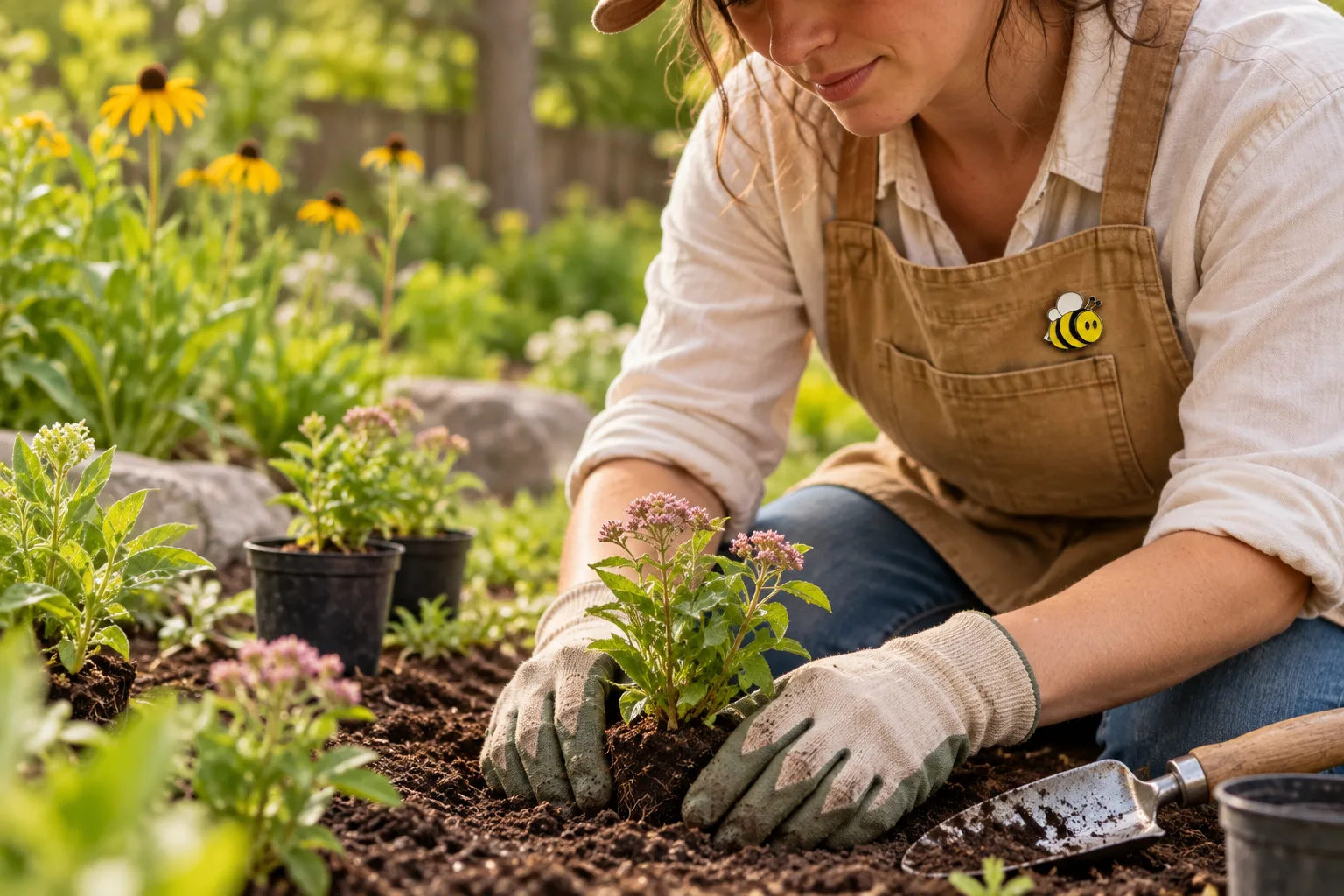
Spring is often a practical starting point for native plant plugs once the ground is workable and conditions suit the plants.
Follow the nursery’s advice about hardening off plants grown under protection. Avoid digging in saturated soil, and plan to water during establishment. Early fall can also work for suitable plants, provided they have time to establish roots before the ground freezes; ask a local nursery or Extension educator about timing in your area.
When does dormant seeding make sense?
Dormant seeding can suit native species whose seeds benefit from exposure to cold, moist conditions.
For those species, late-fall sowing can let winter provide part of that treatment naturally. However, seed requirements differ, and timing should prevent unwanted germination before winter. Follow species-specific instructions rather than treating every native seed mix alike.
Seeds generally demand more patience and seedling identification than plugs. If you want a clearly arranged first garden, plugs make spacing and weeding easier, though they do not guarantee a full display immediately.
Which Minnesota native plants can provide successive blooms?
Choose locally appropriate Minnesota native plants with overlapping bloom periods rather than relying on one summer-flowering species.
The following are examples to investigate, not a universal shopping list. Flowering time shifts with location and weather, and each plant still needs a suitable site. Check regional suitability and growing requirements with a knowledgeable native-plant nursery.
- Earlier-season possibilities: Prairie smoke suits sunny, well-drained sites, while wild columbine can fit some partly shaded settings.
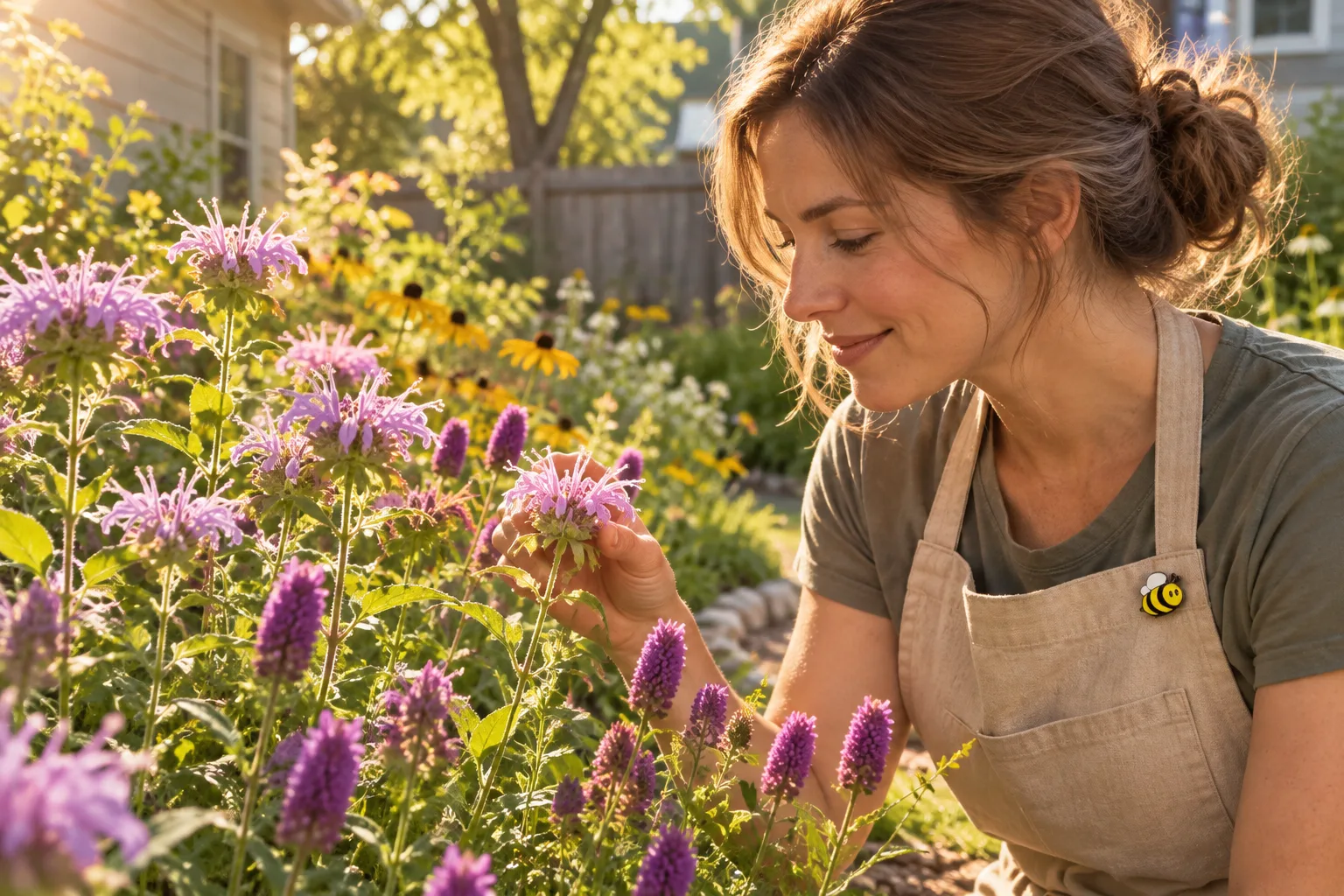
- Summer possibilities: Wild bergamot works in many sunny plantings, and purple prairie clover is an option for suitable sunny, well-drained ground.
- Later-season possibilities: Smooth blue aster and stiff goldenrod can extend floral resources beyond the main summer flush.
Group several plants of the same species where space allows, while keeping the recommended mature spacing. That creates recognizable patches of flowers without crowding young plants together. Avoid filling every gap before you know how large the planting will become.
Flower shape also matters: different pollinators use different flowers. A mix of compatible species offers more opportunities than a bed selected entirely for one color or bloom shape.
How should you care for the garden in its first summer?
First-summer care should prioritize establishment, weed control, and observation rather than an instantly finished appearance.
Check moisture around the root zone of new plants and water according to soil conditions and nursery guidance. Established drought-tolerant plants may need less irrigation later, but newly planted roots still need attention. Avoid assuming that “native” means no watering from day one.
- Inspect regularly: Pull identifiable weeds before they establish deeply or set seed.
- Keep a plant map: Knowing where plugs were planted helps prevent accidental removal.
- Watch before treating: Chewed leaves or visiting insects do not automatically mean the garden needs pesticide treatment.
- Record bloom gaps: Note weeks with few flowers so next year’s additions solve a real problem.
The EPA’s pollinator protection guidance emphasizes reducing pesticide risks to bees. If treatment is necessary, identify the problem first and follow pesticide labels, including restrictions intended to protect pollinators. Avoid treating flowering plants while bees are visiting; some pesticides can also pose risks through residues after application.
For someone celebrating a first garden, Project Honey Bees’ Save The Bees® Pin offers a small, wearable reminder of that commitment. It complements the practical work of creating habitat rather than replacing it.
What should you leave standing through a Minnesota winter?
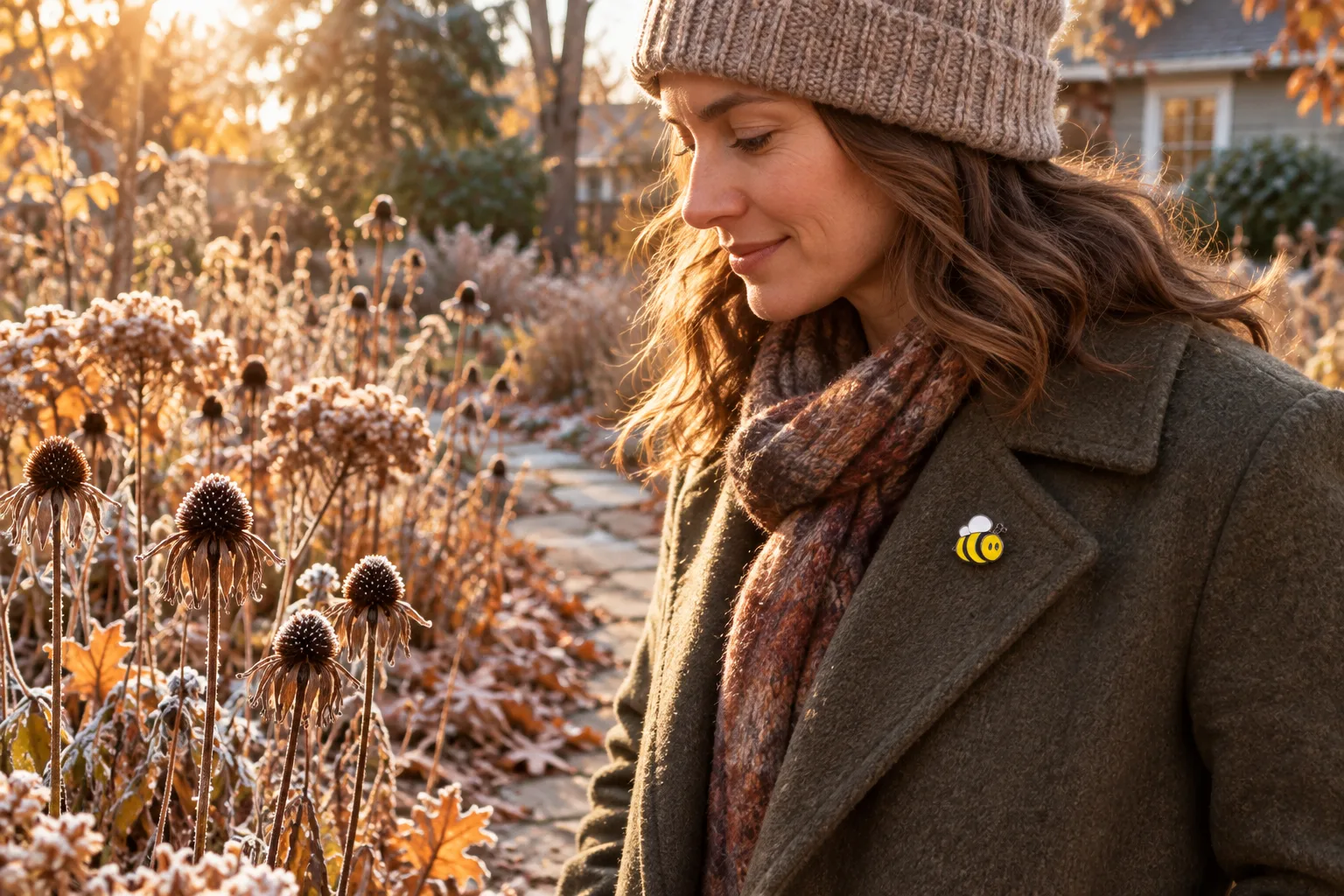
Leave suitable stems, some leaf litter, and undisturbed nesting areas instead of clearing the entire garden in fall.
Native bees do not all spend winter in the same way. Depending on species, they may overwinter in the ground or protected cavities, including plant stems. Honey bees are different: a colony remains together in its hive and uses stored food through winter.
Pollinator habitat includes more than flowers. Leaving part of the garden undisturbed helps preserve potential shelter, although not every stem contains a nest and not every bee uses stems.
Keep leaves away from places where they create slipping hazards, and address diseased plant material appropriately. Habitat-friendly maintenance is selective, not an instruction to ignore every practical garden problem.
When should spring garden cleanup begin?
Use a gradual, selective spring garden cleanup rather than clearing everything on one calendar date.
Minnesota weather varies substantially between locations and years, and different insects become active at different times. A single warm afternoon does not mean every overwintering insect has emerged. No simple temperature rule guarantees that all occupied stems are empty.
Start with paths and essential access areas while retaining habitat elsewhere. If you must cut potentially occupied stems, avoid immediately shredding or discarding them; keep them outdoors in a protected place where any emerging insects can leave. Retain some undisturbed stems and ground as ongoing habitat.
Review your notes before buying more plants. Expand successful species, replace plants that clearly mismatched the site, and address missing bloom periods first.
What are frequently asked questions about Minnesota pollinator gardens?
Common questions concern helping backyard bees, their winter habitat, and whether pollinator garden certification is necessary.
How can you help bees in your backyard?
Provide flowers across the growing season, preserve suitable nesting areas, and reduce unnecessary pesticide use. A dedicated bed is one option; the University of Minnesota Bee Lab’s bee lawn resources describe another approach that combines low-growing flowers with lawn grasses where conditions and use allow.
What do bees do in the winter?
Honey bees stay together in their hive, forming a cluster and using stored honey for energy. Native bees have different winter strategies depending on species, including overwintering underground or in protected cavities; most do not live in honey-bee-style colonies.
Do you need pollinator garden certification?
Pollinator garden certification is optional recognition through a particular program, not a requirement for helping bees. Criteria vary, so check the program’s current habitat requirements, fees, and geographic eligibility before applying; certification does not replace ongoing care.
Are you ready to pair your garden plans with a meaningful bee gift?
A bee-themed gift can celebrate a new garden while keeping pollinator conservation part of the conversation.
The Adopt a Bee® Gift Set from Project Honey Bees is an option for a gardening friend or someone starting their first habitat project. Review the current product and adoption information for details about what is included and any stated conservation contributions.
Start with Shop all bee gifts, or learn how adoption works. Pair that gesture with locally suitable flowers and patient garden care to turn your enthusiasm for bees into everyday action.