Which plants belong in a Michigan pollinator garden?
A Michigan pollinator garden should combine locally appropriate native plants that flower from spring through fall, matched to the yard’s sunlight and soil moisture. Start with plants such as wild geranium, wild bergamot, and native goldenrods, then add suitable shrubs and nesting habitat. Avoid insecticide exposure and buy clearly identified plants.
The best choices depend on where you live in Michigan. A sheltered southern Michigan yard and an exposed Upper Peninsula property do not share the same growing conditions. Rather than buying a generic wildflower mix, use your location, soil, and available light to build a practical plant list.
Michigan State University Extension recommends selecting plants that provide flowers across the growing season. Its native plants and ecosystem services resources are a useful starting point for checking Michigan native plants and their suitability for beneficial insects.
How do you choose Michigan pollinator garden plants for your yard?
Choose plants for the conditions you already have, rather than repeatedly watering or amending an unsuitable site.
Before shopping, watch the planting area at different times of day and after rain. Notice whether neighboring trees shade it, whether water drains quickly, and whether the soil stays damp between storms. These observations matter more than choosing a coordinated flower color.
- Check sunlight: Separate open, sunny beds from partly shaded edges and areas beneath trees.
- Check moisture: Identify dry, sandy ground, average garden soil, and consistently moist areas.
- Check mature size: Some native plants become tall or spread beyond a small planting pocket.
- Check local suitability: Ask a native plant nursery or Michigan State University Extension about your county and growing conditions.
- Check flowering periods: Choose overlapping bloom seasons rather than several plants that all finish together.
For pollinator garden design, repeat compatible plants in recognizable groups instead of scattering isolated specimens everywhere. Leave enough space for mature growth and access for weeding. A modest bed that you can maintain is more useful than a large planting overwhelmed by invasive weeds.
Which native plants work in sunny Michigan gardens?
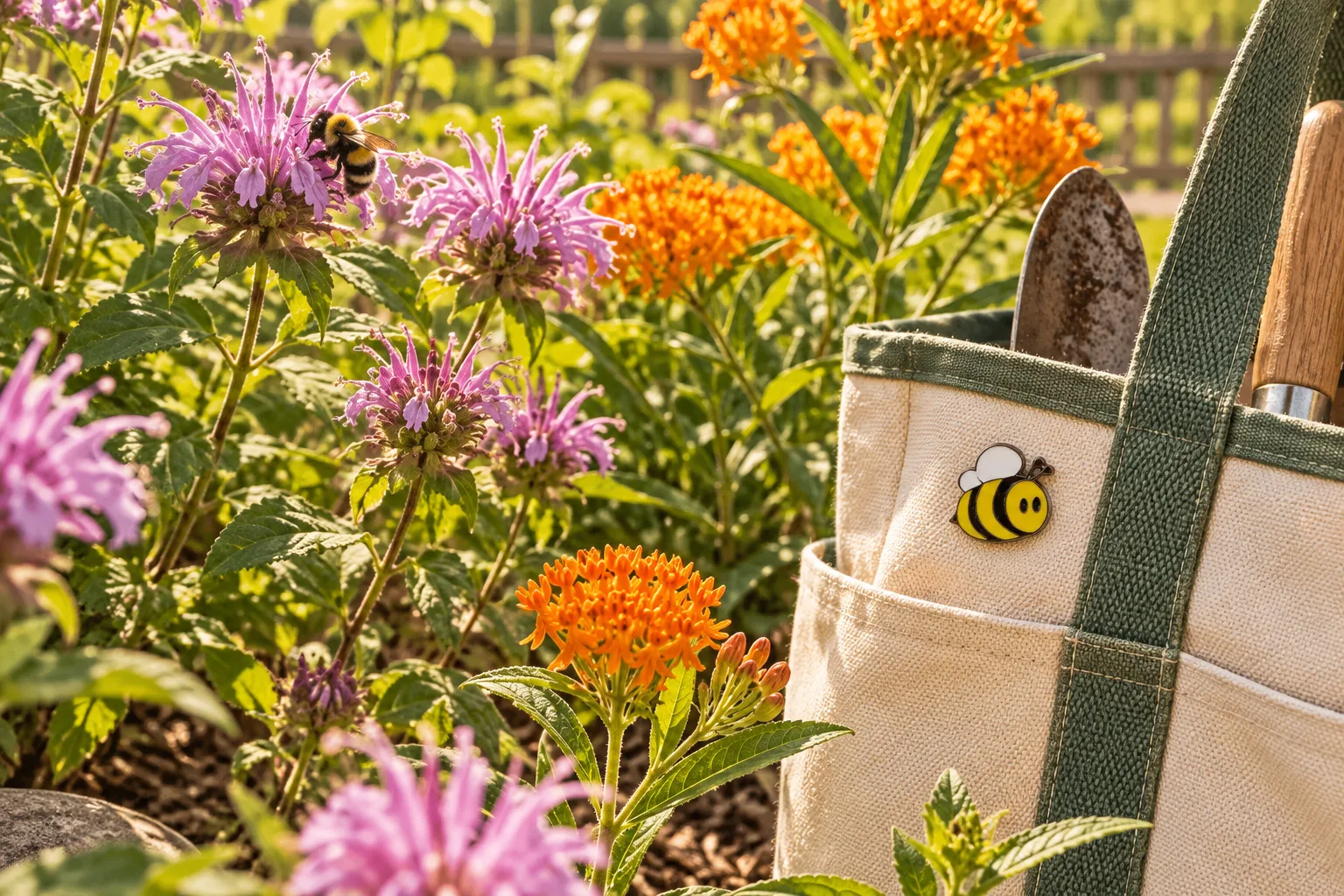
Sunny Michigan gardens can support a long flowering season with a mix of spring perennials, summer flowers, and fall-blooming natives.
The following pollinator garden plants are useful candidates, not a universal planting prescription. Confirm their native range and site requirements locally, especially when gardening in northern Michigan or the Upper Peninsula.
- Golden alexanders: A spring-flowering option for sunny to partly shaded sites with suitable moisture. Its clusters of small yellow flowers offer feeding opportunities for different insects.
- Foxglove beardtongue: An early-season perennial with tubular white flowers visited by bees. It can help bridge the gap between spring and summer bloom.
- Wild bergamot: A summer-flowering native with lavender-colored flower heads. Give it room and choose a site with appropriate drainage.
- Butterfly weed: An orange-flowering milkweed suited to sunny, well-drained sites. It is generally a better candidate for dry ground than for a wet planting pocket.
- New England aster: A late-season flowering plant that can become tall. It fits better toward the back of a bed with adequate moisture than beside a narrow walkway.
- Showy goldenrod: A native goldenrod worth considering for sunny sites. Check the species label because goldenrods differ in size, moisture needs, and spreading behavior.
A practical starting combination is golden alexanders, wild bergamot, and a suitable aster or goldenrod, adjusted to your soil. This creates a seasonal framework rather than a guarantee of continuous flowers. Actual bloom timing changes with location, weather, and growing conditions.
What can you plant in shade or damp soil?
Partly shaded and damp areas can support pollinators when you choose plants adapted to those conditions.
A bee-friendly garden does not have to occupy the sunniest corner of the property. Woodland edges and moist planting areas can extend the range of flowers and habitats available. Deep shade is more limiting, so check the light requirements of each plant before buying.
- Wild geranium: A spring-flowering perennial for woodland edges and partly shaded sites with suitable soil moisture.
- Virginia waterleaf: A native option for moist, partly shaded settings. Allow for its ability to spread where conditions suit it.
- Swamp milkweed: A summer-flowering choice for sunny, moist areas. Do not assume it has the same requirements as butterfly weed.
- Boneset: A candidate for sunny, moist ground, with clusters of small flowers visited by insects.
- Pussy willow: Choose the native Salix discolor for a sufficiently spacious, moist site. Its early flowers can provide resources when relatively few other plants are blooming.
Seasonally damp ground is not necessarily suitable for plants that need consistent moisture. Likewise, a low spot that remains flooded may require a different selection. Ask for advice specific to the site instead of treating every wet area as interchangeable.
How do you keep flowers available from spring through fall?
Combine plants with overlapping flowering periods, and use observations from your own garden to identify seasonal gaps.
Spring flowers for bees deserve attention because an attractive midsummer bed can still offer little early food. Flowering shrubs and woodland-edge perennials may help fill that gap. In fall, suitable asters and goldenrods provide late-season flowers after many summer plants have finished.
Michigan State University Extension’s pollinator guidance emphasizes season-long floral resources. Apply that advice by keeping a simple bloom record: note which plants are flowering and when the garden has few open flowers. Add plants to address those gaps rather than buying another specimen of whatever looks best during one nursery visit.
For a small reminder of your garden’s purpose, consider the Save The Bees® Pin from Project Honey Bees as a bee-themed accessory for a gardening tote or jacket. A bee-themed purchase does not replace planting and protecting pollinator habitat.
What should you check before buying native plants?
Buy plants with clear species identification and ask the seller about local suitability and pesticide treatments.
Common names can refer to different plants, so a botanical name helps you confirm what you are purchasing. For example, wild bergamot is Monarda fistulosa, while swamp milkweed is Asclepias incarnata. These details make it easier to check growing requirements against reliable plant information.
- Ask where the plant belongs: Native to North America does not automatically mean native to your part of Michigan.
- Ask how it was grown: Find out whether insecticides were used, including systemic treatments that can move through plant tissues.
- Read seed-mix labels: Look for a complete species list rather than relying on a picture of wildflowers.
- Consider flower accessibility: Heavily modified or densely doubled flowers may make floral resources less accessible to insects.
- Avoid collecting wild plants: Purchase nursery-propagated plants instead of removing them from natural areas.
There is no need to replace every existing plant at once. Add well-chosen native plants for bees as space and budget allow, while removing invasive plants appropriately. Pollinator garden ideas become more effective when they match the gardener’s capacity for ongoing care.
How can you protect pollinators beyond planting flowers?
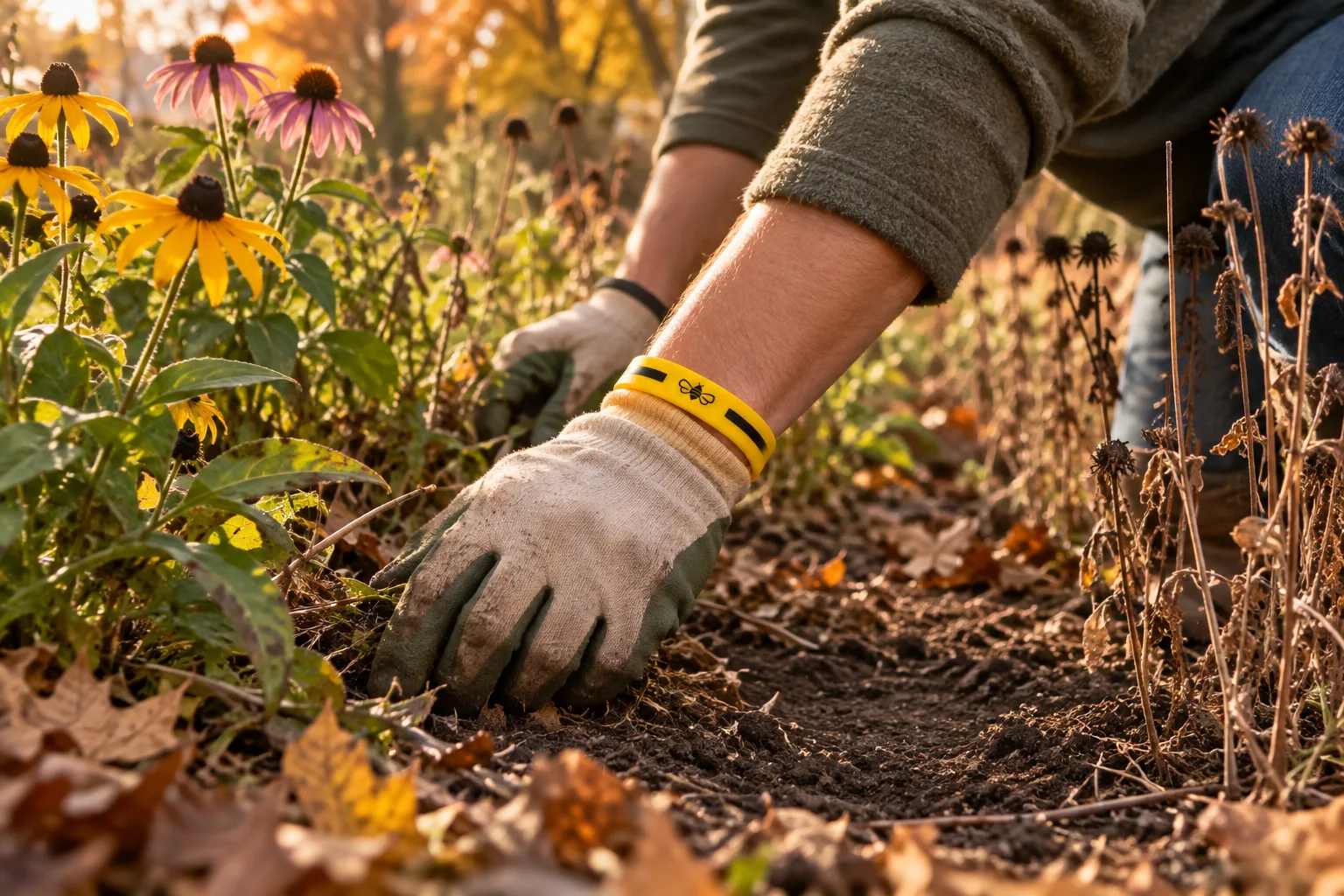
Protect pollinators by reducing pesticide exposure and preserving nesting and overwintering habitat alongside flowers.
According to the USDA Forest Service, different native bees use different nesting places, including soil and existing cavities. Honey bees live in colonies, but many native bee species do not. A garden that supports pollinators should therefore offer more than nectar and pollen.
- Keep some suitable soil uncovered: Avoid covering every available patch with mulch or landscape fabric where ground-nesting bees might nest.
- Retain some stems and leaf litter: Where practical, leave undisturbed habitat rather than clearing every part of the garden at once.
- Identify insects before treating: An insect on a leaf is not automatically a pest that requires control.
- Follow pesticide labels: The EPA emphasizes label directions and pollinator precautions. Avoid exposing visiting bees to insecticides.
- Maintain new plantings: Water during establishment as needed and manage competing weeds without disturbing the entire bed.
Leaving habitat does not mean abandoning the yard. A defined border, clear path, and intentionally maintained planting area can make a pollinator garden look cared for while preserving useful shelter.
What are frequently asked questions about Michigan pollinator gardens?
Common questions include how bees help flowers reproduce, where they spend winter, and which garden practices support them.
Why are bees important to flowers?
Bees transfer pollen between flowers as they forage, helping many flowering plants reproduce. According to the USDA, animal pollination supports seed and fruit production in many wild plants and crops, although not every plant depends on bees.
What do bees do in the winter?
Honey bees cluster inside their colony and use stored honey for energy. Native bees have varied overwintering strategies, which is one reason undisturbed soil, stems, and other suitable habitat matter in a Michigan garden.
How can you help the bees in your garden?
Grow suitable flowers across the growing season, reduce pesticide exposure, and preserve appropriate nesting habitat. Choose plants for your actual sunlight and soil rather than relying on a generic pollinator label.
Ready to pair your garden plans with a bee-inspired gift?
Explore Project Honey Bees for a bee-themed gift to accompany your garden plans.
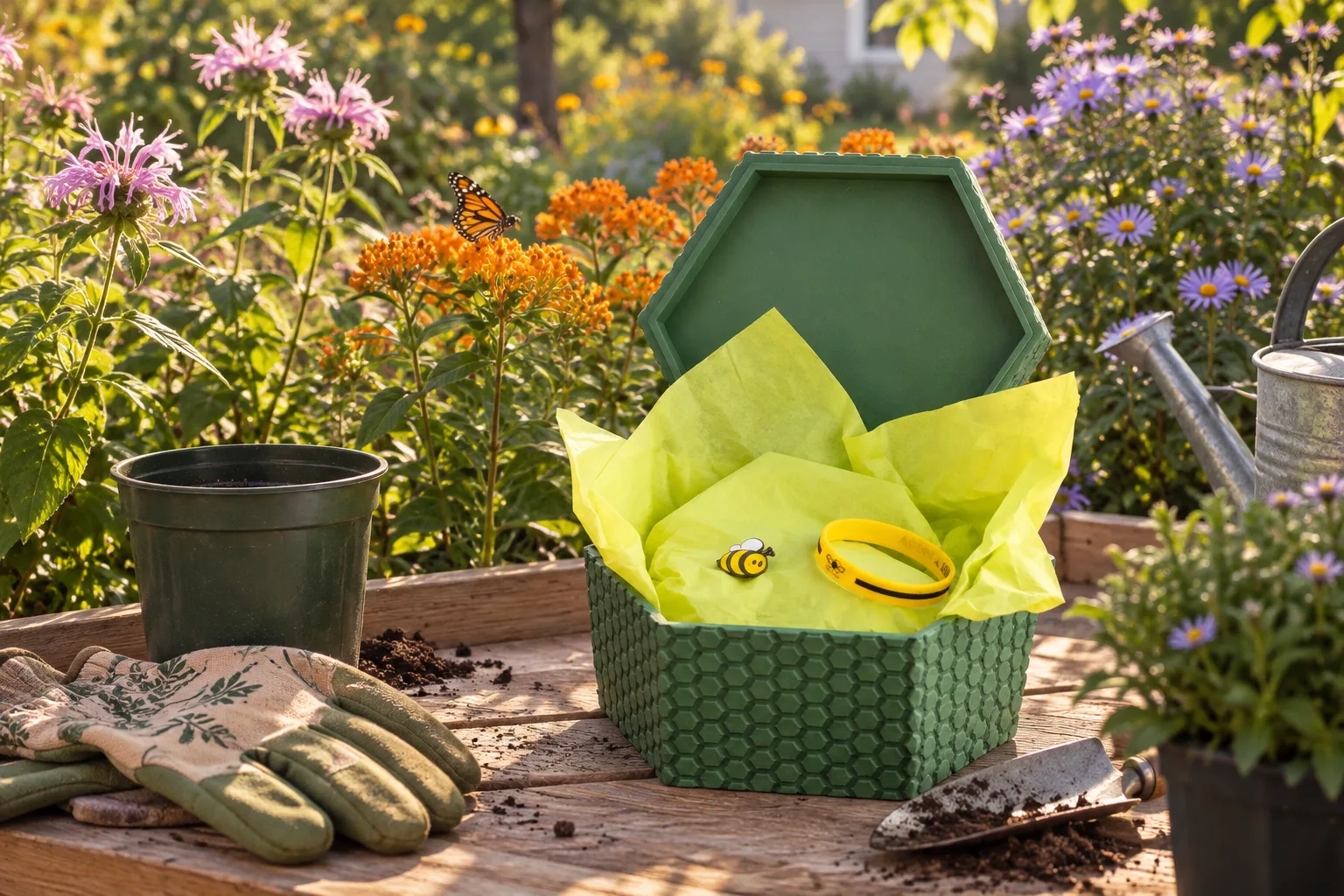
Consider the Adopt a Bee® Gift Set for someone planning a native garden or celebrating their first season of blooms. Review the product page for current contents and purchase details.
Shop all bee gifts to find a meaningful keepsake, or explore how adoption works before choosing. Pair your gift with locally suitable plants and practical habitat care to keep the garden itself at the heart of helping pollinators.