
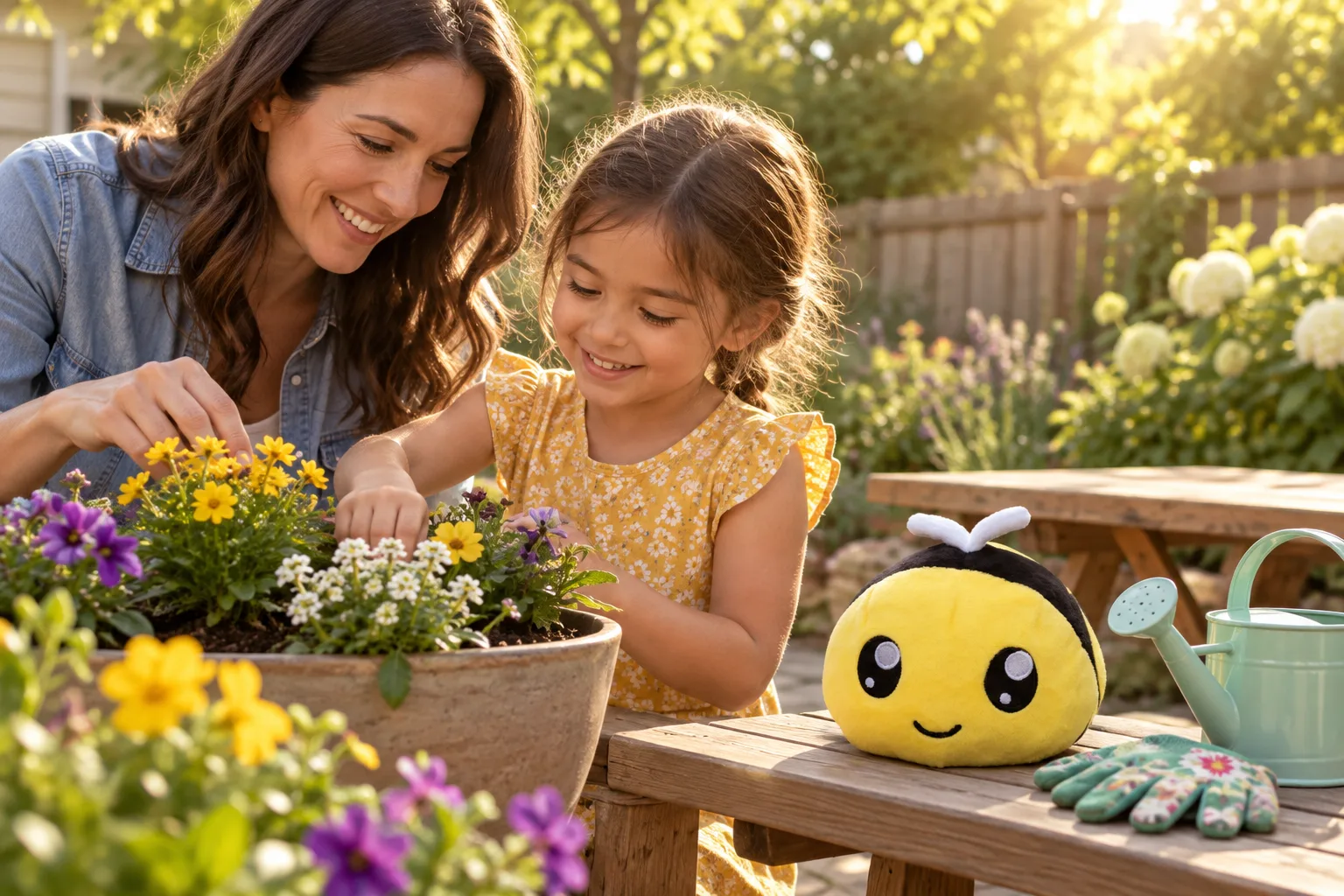
Looking for how to save the bees for kids? Start with small projects that help bees find flowers and safe habitat, without asking children to handle insects. A family can grow a flowering plant, watch visiting pollinators, or help adults make a yard more welcoming.
These six bee activities for kids turn concern into practical learning. They work best when adults handle tools and safety decisions while children choose, observe, draw, and ask questions.
How to save the bees for kids: what actually helps?
Kids can help bees by growing suitable flowers with an adult, protecting nesting habitat, observing bees without touching them, and asking adults to reduce pesticide risks. Choose locally appropriate plants and small, repeatable activities. Helping bees means improving their surroundings, not catching them, feeding them honey, or bringing them indoors.
According to the USDA Forest Service, pollinators help many flowering plants reproduce by transferring pollen between flowers. Honey bees are part of that story, but native bees and other pollinators need support too.
Keep the message hopeful: children do not have to solve every threat facing bees. Caring for one useful patch of flowers and learning to respect wildlife are worthwhile beginnings.
1. Can kids make a flower calendar for bees?
A flower calendar helps children spot times when their neighborhood has plenty of blooms and times when flowers are scarce.
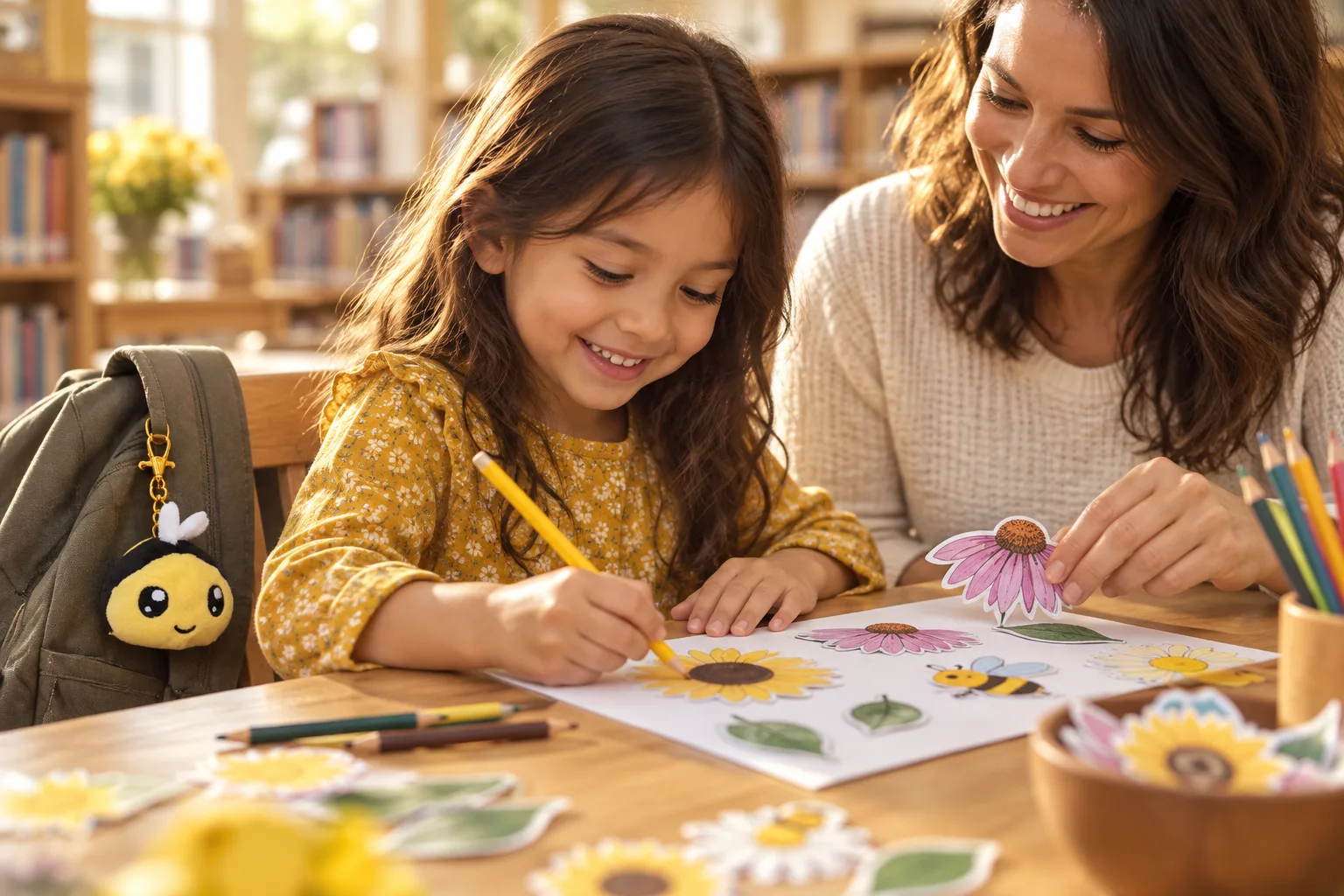
Walk the same short route with an adult every week or two during the growing season. Look at flower beds, trees, shrubs, and containers from public paths, without entering other people's gardens. Children can draw what is flowering instead of needing to identify every plant.
- Choose a route: a yard, school walkway, or nearby park.
- Record the flowers: note their color, shape, and location.
- Watch for visitors: record bees and other insects separately when possible.
- Look for gaps: notice when fewer flowers are available.
Planning for successive blooms helps provide flowers throughout the growing season rather than in a single burst. Your calendar gives a family a practical starting point for asking a local extension office which plants could fill those seasonal gaps.
2. How can children grow a small pollinator garden?
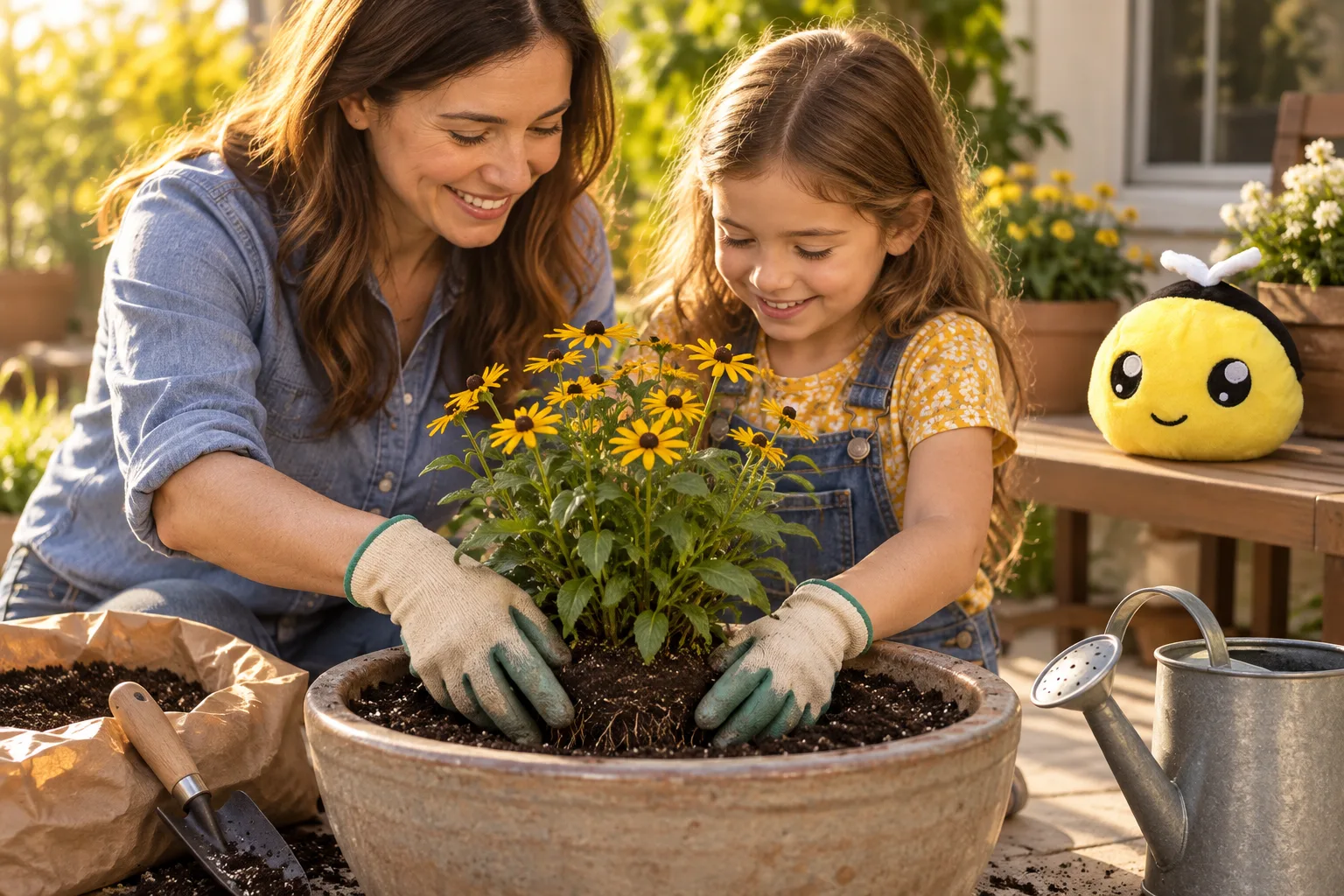
A pollinator garden for kids can begin with a few locally appropriate flowering plants in a small bed or suitable container.
Choose plants for your region, available sunlight, and growing space. Native plants for bees are a useful starting point because some native bees depend on particular native plants for pollen. A county extension office can help identify choices suited to local conditions.
Let children choose between two or three adult-approved plants rather than selecting solely by flower color. Discuss whether each plant will fit the space at maturity, when it blooms, and whether its care needs match the family's routine.
- Get permission before planting on school or shared property.
- Use containers with drainage and enough room for the selected plants.
- Have an adult handle heavy pots, sharp tools, and soil amendments.
- Give children a simple watering job based on the plant's needs.
- Leave open flowers available for visiting insects instead of picking every bloom.
Explain that a small planting offers a food resource, not a guaranteed home for a colony. Bees may discover the flowers gradually, and different visitors may appear as the season changes.
3. How can kids observe bees without disturbing them?
Children can practice bee observation by standing back from flowers and watching insects forage without touching, trapping, or following them.
Choose an open viewing spot away from hive entrances and known nests. An adult should supervise, and families should follow any existing allergy-management plan. If a bee comes close, give it space rather than swatting or trying to brush it away.
Invite children to answer one question during a short observation session: Which flower gets visited? Does the insect carry visible pollen? Does it move between similar flowers? A drawing is enough; identifying every bee species is unnecessary.
Honey bees often carry compact pollen loads on their hind legs, while other bees transport pollen differently. Not every striped visitor is a bee, so describe uncertain sightings as insects rather than guessing.
For a playful introduction before going outside, consider the Original Adopt a Bee® Plush Toy as an alternative to handling a real insect. Check the current product description and age suitability before choosing, and use the toy to start a conversation about bee conservation.
4. What nesting habitat should kids leave alone?
Kids can help protect bee nesting habitat by leaving occupied ground and plant cavities undisturbed and asking adults before tidying garden edges.
Not all bees live in hives. According to the USDA Forest Service, many native bees nest in the ground, while others use cavities such as hollow stems or holes in wood. A honey bee colony and a solitary native bee nest are different kinds of homes.
With adult guidance, identify a quiet garden area that can remain relatively undisturbed. Suitable bare soil and standing stems may provide nesting opportunities, depending on the bee species and site. Avoid digging into holes to investigate what lives inside.
Children can draw a habitat map showing flowers and areas the family has agreed not to disturb. Keep play areas and busy paths separate from known nests, and ask a qualified local professional for advice if insect activity creates a safety concern.
Buying a bee hotel is not a necessary first step. Nesting structures need appropriate design and maintenance; protecting existing habitat is often a simpler family project.
5. What can kids learn about pesticide safety?
Children can learn that pesticide safety is an adult responsibility and that protecting pollinators starts with careful decisions about pest control.
The U.S. Environmental Protection Agency explains that pesticides can pose risks to bees and provides guidance for reducing exposure. Adults must follow product labels, including any restrictions designed to protect pollinators.
Give children the role of garden detectives, not pest-control helpers. They can point out damaged leaves or unfamiliar insects and ask an adult to investigate. A chewed leaf does not automatically mean a plant needs treatment.
- Do not let children mix or apply pesticides.
- Avoid homemade insect-killing sprays as a children's activity.
- Ask adults to identify the problem before choosing a response.
- Follow label directions about keeping people and pets away from treated areas.
Families can ask a local extension office about integrated pest management, which emphasizes identifying problems, monitoring them, and choosing appropriate controls. The lesson for children is straightforward: observe first, and let a responsible adult decide what happens next.
6. How can kids help save bees without a garden?
Kids without a garden can help by sharing accurate information and supporting adult-led planting or habitat projects in their community.
Ask a teacher, librarian, or community garden coordinator whether there is an approved project children can join. Useful tasks might include drawing a seasonal flower guide, helping water an accessible planter, or recording flower visitors with an adult.
A small poster can teach one clear action, such as leaving foraging bees alone or choosing locally appropriate flowers. Avoid frightening claims that all bees are about to disappear, and explain that different bee species face different conservation challenges.
For children who enjoy choosing a cause to support, compare programs together. Ask who runs the work, what a contribution supports, and whether the program explains its activities clearly. An adoption should not be interpreted as receiving a live bee or permission to handle one.
Finish with a monthly check-in: What did we notice? Which task can we repeat? Consistent care and curiosity are more valuable learning goals than promising children that one purchase or planting project will save every bee.
FAQ: What should families know about helping bees?
Families can help bees by providing suitable flowers, protecting nesting habitat, and reducing pesticide risks. Children can participate through supervised planting and observation without handling bees.
How can kids help save the bees?
Help children grow suitable flowers, observe bees respectfully, and protect existing nesting habitat with adult guidance. Choose one manageable activity and repeat it rather than catching bees or attempting to care for wild insects indoors.
How can you help bees in your backyard?
Provide locally appropriate flowers that bloom at different times, preserve suitable undisturbed nesting areas, and reduce pesticide risks. Keep bee-friendly areas separate from busy play spaces when needed, and supervise children around insect activity.
How can you help bees at home?
Start with a suitable flowering plant in a bed or container and learn which pollinators visit it. If you cannot grow plants, help with an approved community project or share accurate, locally relevant gardening information.
How can you protect the bees?
Protect bees by maintaining food and nesting resources and avoiding unnecessary disturbance or pesticide exposure. Support both honey bees and native bees rather than assuming that adding a honey bee hive benefits every pollinator.
Ready to choose a gift that keeps the learning going?
Choose bee gifts for kids that you can pair with a practical learning activity. For an adult-led gift experience, explore the Adopt a Bee® Gift Set, checking the current contents and age suitability before choosing.
Review the current program details to understand what an adoption includes and whether any conservation contribution is specified. Pair your gift with one practical activity from this guide, then Shop all bee gifts or explore how adoption works.