How to help bees in hot weather: what matters most?
Help bees in hot weather by keeping flowering plants healthy, providing clean water with safe landing places, protecting existing nesting areas, and avoiding pesticide exposure. Focus on improving the habitat rather than handling individual bees. Never spray a nest to cool it, and do not put out honey or communal sugar-water feeders.
Learning how to help bees in hot weather starts with understanding that a heat wave affects more than thirsty insects. Dry soil, fading flowers, and disrupted nesting places can all make a backyard less useful to pollinators. The most helpful response is a steady supply of resources and less disturbance.
This guide focuses on heat-wave garden care, not emergency treatment for individual bees. You can make a difference with a few containers, a small flower bed, or an established yard—without opening a hive or buying specialized equipment.
Why can hot weather make life harder for bees?
Hot weather can stress bees directly and can reduce the food available when heat and drought affect flowering plants. Conditions vary by bee species, local climate, and the length of the hot spell, so there is no single outdoor temperature that tells you every bee needs help.
Honey bees use colony behaviors, including fanning and evaporating collected water, to regulate conditions inside their nest. A backyard visitor cannot tell whether a colony is in trouble simply by seeing bees outside its entrance.
Different bee species have different nesting arrangements and needs. Many species nest individually in soil or cavities, while bumble bees live in colonies. A garden that supports honey bees should also leave room for these other pollinators rather than treating every bee as a hive-dwelling insect.
The USDA Natural Resources Conservation Service identifies food and nesting habitat as central to pollinator conservation. During summer heat, protecting those everyday essentials is more useful than trying to invent a quick rescue treatment.
Which garden changes help bees during a heat wave?
Keep existing flowers growing, preserve a variety of sheltered places, and postpone disruptive yard work during a hot spell. Improving the garden's resilience gives bees more choices about where to forage and rest.
How can you keep summer flowers for bees blooming?
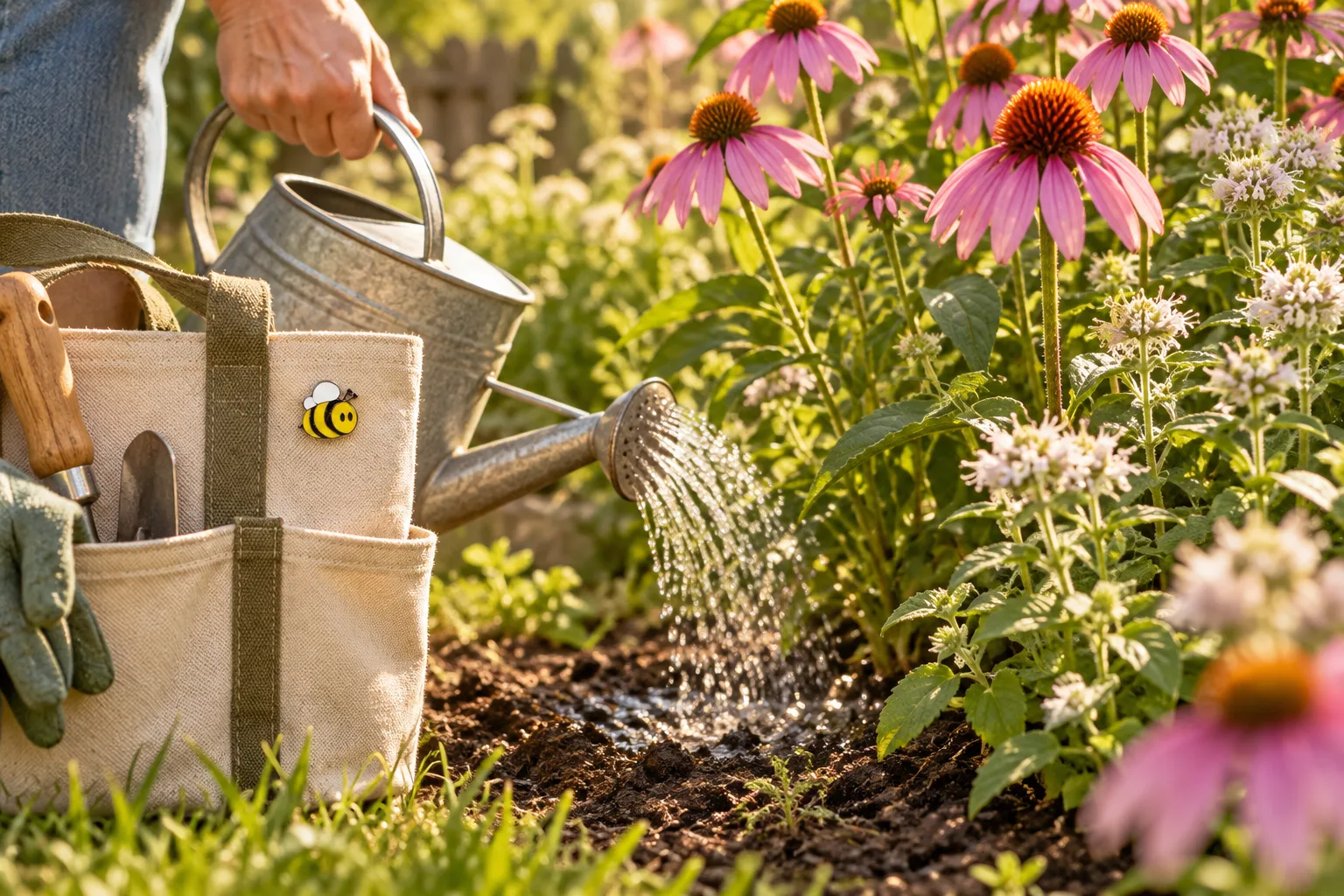
Water flowering plants according to their species, soil, and local watering restrictions so they are less likely to wilt or stop flowering prematurely. Direct water toward the soil rather than spraying visiting bees, and check containers frequently because they can dry faster than garden beds.
For future planting, choose regionally appropriate species with overlapping bloom periods. Depending on your location, native mountain mints, bee balms, coneflowers, or late-blooming asters may be useful candidates. Check your university extension's regional plant recommendations rather than assuming one national list fits every yard.
Drought-tolerant plants still need appropriate care while establishing roots. If an extreme heat wave is underway, maintaining existing plants may be more practical than transplanting a new bed. Plan additions for a suitable planting season in your region.
Should you add shade for bees?
Preserve a mix of sunny and sheltered garden spaces instead of shading the entire flower bed. Many flowering plants need substantial sunlight, while shrubs, vegetation, and other existing cover offer a range of local conditions.
If a container plant is suffering, move it only as appropriate for that plant's light requirements. Do not move an occupied bee nest or attach a cover directly over its entrance. For a managed hive, shade and ventilation decisions belong to the beekeeper.
- Check plants first: Look for dry soil and stressed flowering containers before buying new supplies.
- Keep useful blooms: Delay cutting back an entire flowering patch while bees are using it.
- Water thoughtfully: Follow local restrictions and avoid directing sprinklers onto known nesting areas.
- Preserve variety: Retain flowers, shrubs, stems, and appropriate undisturbed soil rather than making every surface identical.
- Plan ahead: Add locally suitable plants that flower when your garden currently has a seasonal gap.
Should you provide water for bees in hot weather?
A small, clean water source with secure landing places can help water-collecting bees, especially honey bees, access water without landing on the water's surface. It complements flowering habitat; it does not replace the nectar and pollen bees collect from plants.
Use a shallow container with stable stones that remain above the waterline, and keep it away from busy doors or play areas. Refresh the water daily and clean the container regularly. Avoid leaving dirty, stagnant water sitting in the garden.
Do not add honey, sugar, essential oils, or other ingredients. Honey from an unknown source can carry honey bee pathogens, and open sweet feeders can attract competing insects and encourage crowding. Plain water is the appropriate choice for a general backyard water station.
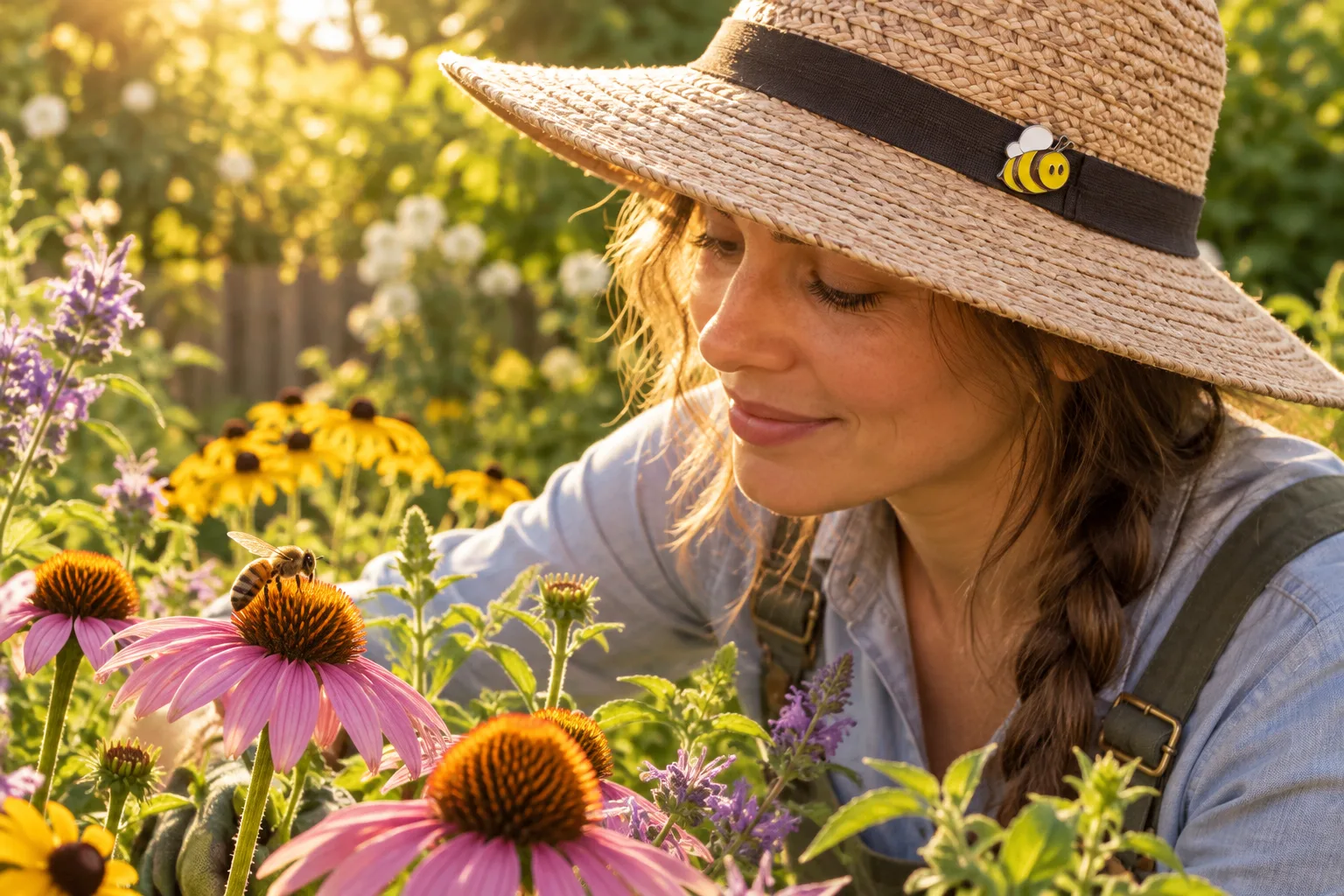
If you want a small reminder of your habitat-care routine, the Save The Bees® Pin from Project Honey Bees is an easy addition to a gardening hat or tote. It is a conversation starter, not a substitute for the practical work of keeping flowers and nesting habitat available.
How can you help bees in hot weather without disturbing nests?
Protect occupied nests by leaving their entrances clear and avoiding changes to their immediate surroundings. A well-intended attempt to cool a nest can cause more disturbance than simply stepping back.
Do not flood ground nests, spray water into cavities, or open a hive to release heat. Avoid mowing directly over known ground-nesting activity, and postpone digging or moving occupied stems and logs. If bees are nesting beside a frequently used path, temporarily redirect foot traffic where possible.
Honey bees sometimes gather on the outside of a hive in a behavior called bearding, which can occur during warm conditions. Bearding alone does not prove that a colony is dying or needs a passerby's intervention. Contact the hive's beekeeper if you have concerns about a managed colony.
For a nest that presents a practical safety problem, seek advice from a local extension office or qualified bee professional. Do not assume every ground nest belongs to honey bees, and do not attempt identification by getting close enough to disturb it.
What should you avoid when trying to cool down bees?
Avoid direct spraying, improvised feeding stations, and unnecessary handling of individual bees. Helping the surrounding habitat is usually the safer role for a gardener who cannot diagnose why an insect is inactive.
A bee sitting still may be resting, affected by weather, injured, or near the end of its life. Appearance alone cannot establish dehydration or heat stress. Leave it undisturbed when it is already in a safe place, and keep children and pets from touching it.
Pesticide decisions also matter. The US Environmental Protection Agency advises protecting pollinators from pesticide exposure and following product-label restrictions. Do not spray a flowering plant while bees are visiting it, and remember that a product described as natural is not automatically harmless to insects.
- Do not mist bees or nests: Provide water separately rather than soaking insects or their homes.
- Do not leave honey outside: It is not an appropriate general-purpose rescue food.
- Do not install communal sugar-water feeders: Grow suitable flowers instead.
- Do not relocate occupied bee houses: Preserve their position and seek species-specific advice if needed.
- Do not promise a guaranteed rescue: Habitat improvements support bees without claiming to save every individual.
What are the answers to frequently asked questions about helping bees in hot weather?
The essentials are healthy flowering plants, clean water with secure landing places, and undisturbed nesting habitat. These FAQ answers explain how to apply that advice without handling bees or attempting to cool their nests.
How can you help bees in the heat?
Maintain flowering plants, offer clean water with stable landing places, and leave nests undisturbed. Avoid spraying bees, putting out honey, or treating every resting bee as an emergency.
How can you help bees survive the heat?
Support bees through hot periods by preserving food, water access, and nesting habitat over time. There is no single backyard intervention that guarantees survival, and managed honey bee colonies may need assessment by their beekeeper.
How can you help bees drink water?
Provide a shallow dish with stable stones projecting above the water so bees can land beside it. Keep the water plain, refresh it daily, and clean the container rather than letting it become stagnant.
How can you help bees in your garden?
Grow locally suitable flowers with overlapping bloom times, retain appropriate undisturbed nesting areas, and reduce pesticide risks. During hot weather, prioritize caring for existing plants and avoid disruptive work around active nests.
Ready to turn your care for bees into a thoughtful gift?
Start with practical habitat care, then choose a bee-themed gift if you want a lasting reminder of that commitment. The Adopt a Bee® Gift Set from Project Honey Bees is an option for someone who enjoys gardening, wildlife, or thoughtful gifts.
A bee-themed gift can be a reminder of your interest in pollinators, but it does not replace the flowers, safer yard practices, and protected nesting places that help them locally. Review the product and adoption details before purchasing to understand what is included.
Shop all bee gifts to find a personal keepsake, or explore how adoption works before choosing your gift.