
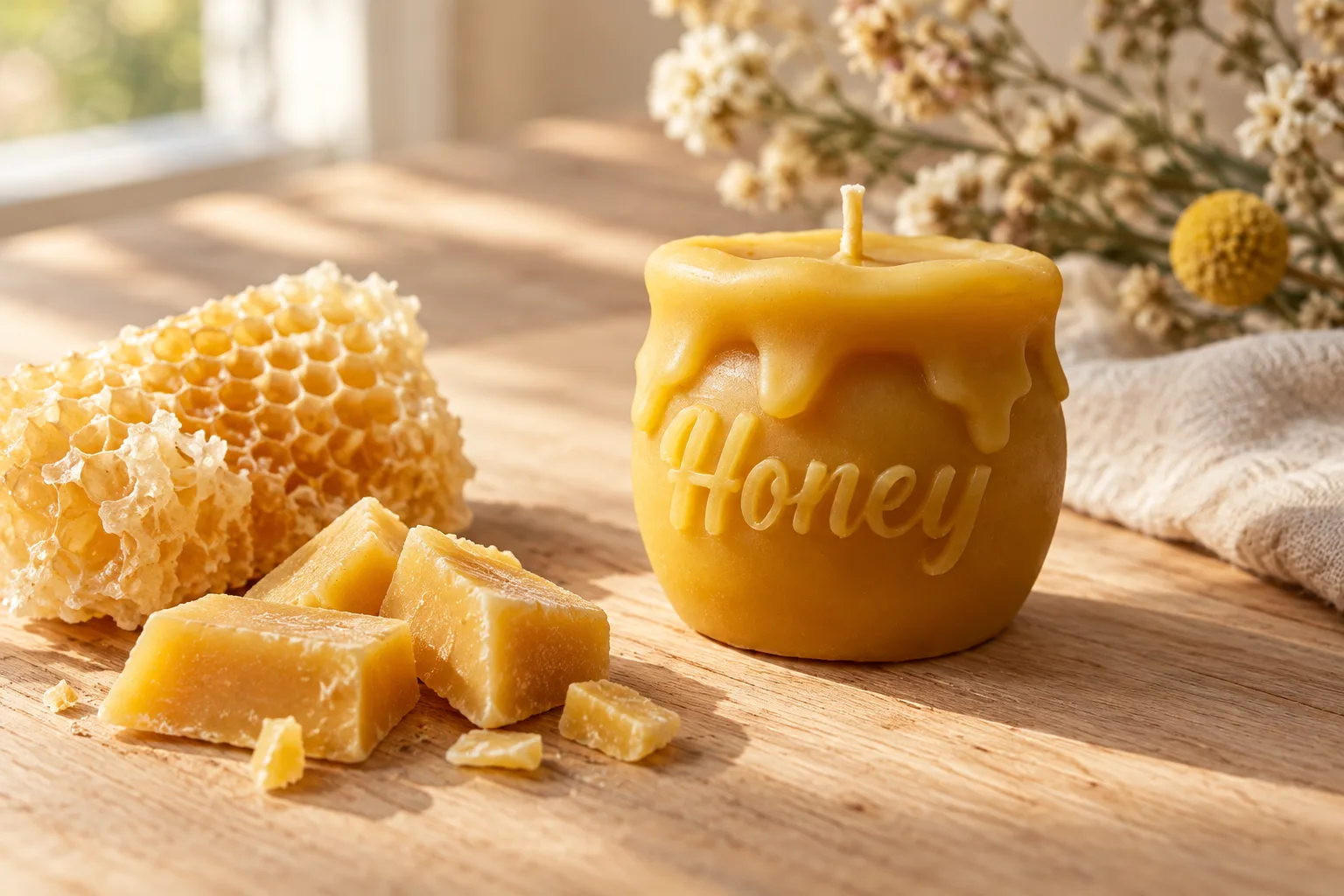
A honeycomb looks like a tiny architectural marvel, but its building material starts inside a bee. If you have ever wondered, how do bees make beeswax, the answer involves specialized glands, food energy, and many workers cooperating—not bees collecting ready-made wax from flowers.
Understanding that process also gives beeswax candles a richer story. Here is how honey bees produce wax, why the colony needs it, and how beekeepers collect some of it during honey harvesting.
How do bees make beeswax?
Worker honey bees make beeswax using specialized glands on the underside of their abdomens. Sugars from nectar or honey fuel the process. The glands release wax that hardens into tiny scales, which workers remove, manipulate with their mouthparts, and shape into honeycomb for raising young and storing food.
Worker honey bees have wax glands that produce the material used to build comb. These glands support their role as the colony’s builders; workers also gather food and tend young at different stages of their lives.
The process is biological, not simply mechanical. Honey does not turn into wax when it dries, and bees do not mix pollen with water to make the honeycomb walls. Their bodies manufacture a new material, then the colony shapes that material into a shared structure.
Which bees produce the wax inside a hive?
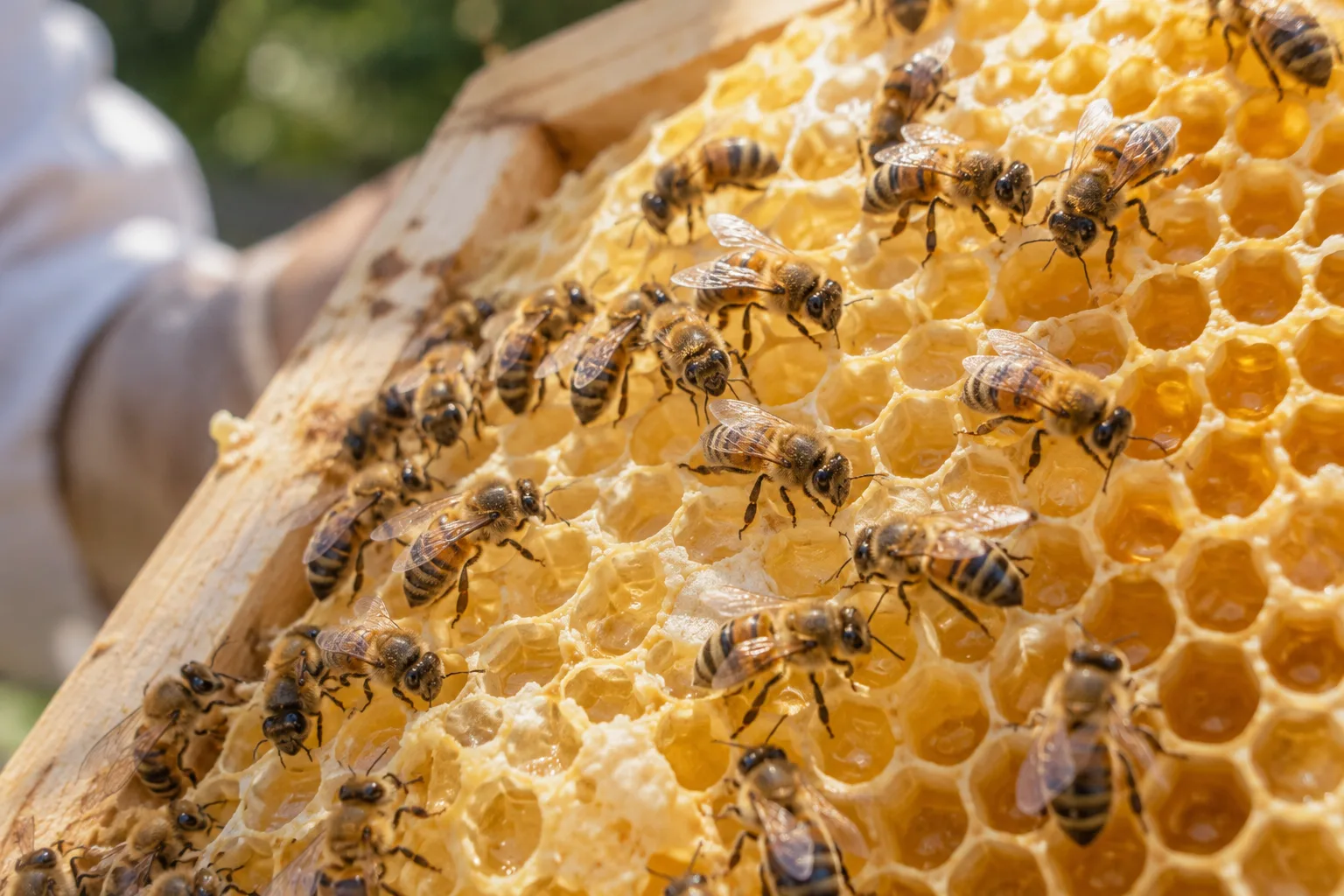
Worker honey bees produce the wax used to build the colony’s comb. A queen bee primarily lays eggs, while male honey bees, called drones, have a reproductive role rather than a comb-building one.
Workers are female honey bees whose jobs change with age and colony conditions. Wax production is typically associated with younger adult workers, although the division of labor is flexible rather than a strict schedule followed by every bee.
The University of Florida’s European honey bee profile describes the different colony members and their biology. A worker has four pairs of wax-producing glands on the underside of her abdomen.
Wax production also depends on the colony’s circumstances. Food availability, the need for more comb, and conditions inside the hive influence whether workers invest effort in building. A colony does not produce an unlimited supply of spare wax just because flowers are blooming nearby.
What is beeswax made of?
Beeswax is a complex mixture of compounds, including esters, hydrocarbons, and fatty acids. It is a material produced by the honey bee’s body, not a single ingredient gathered directly from plants.
Nectar and honey provide sugars that honey bees use for energy and wax production. Pollen supplies other important nutrients in the colony’s diet, but pollen grains are not the structural building blocks of newly secreted wax.
Freshly produced beeswax is pale, often described as white or nearly colorless in its thin-scale form. Contact with materials in the hive and repeated use can change the appearance of comb over time. The golden wax familiar from candles is therefore not necessarily the color of wax at the moment it leaves a worker’s body.
It also helps to distinguish wax from two other hive materials:
- Honey: a sugar-rich food made from nectar or honeydew and stored in comb. Honeydew is a sugary substance excreted by certain plant-feeding insects.
- Beeswax: a gland-produced building material used to construct and cap cells.
- Propolis: a resin-based material honey bees make from collected plant resins and use in tasks such as sealing gaps.
How do bees make beeswax into honeycomb?
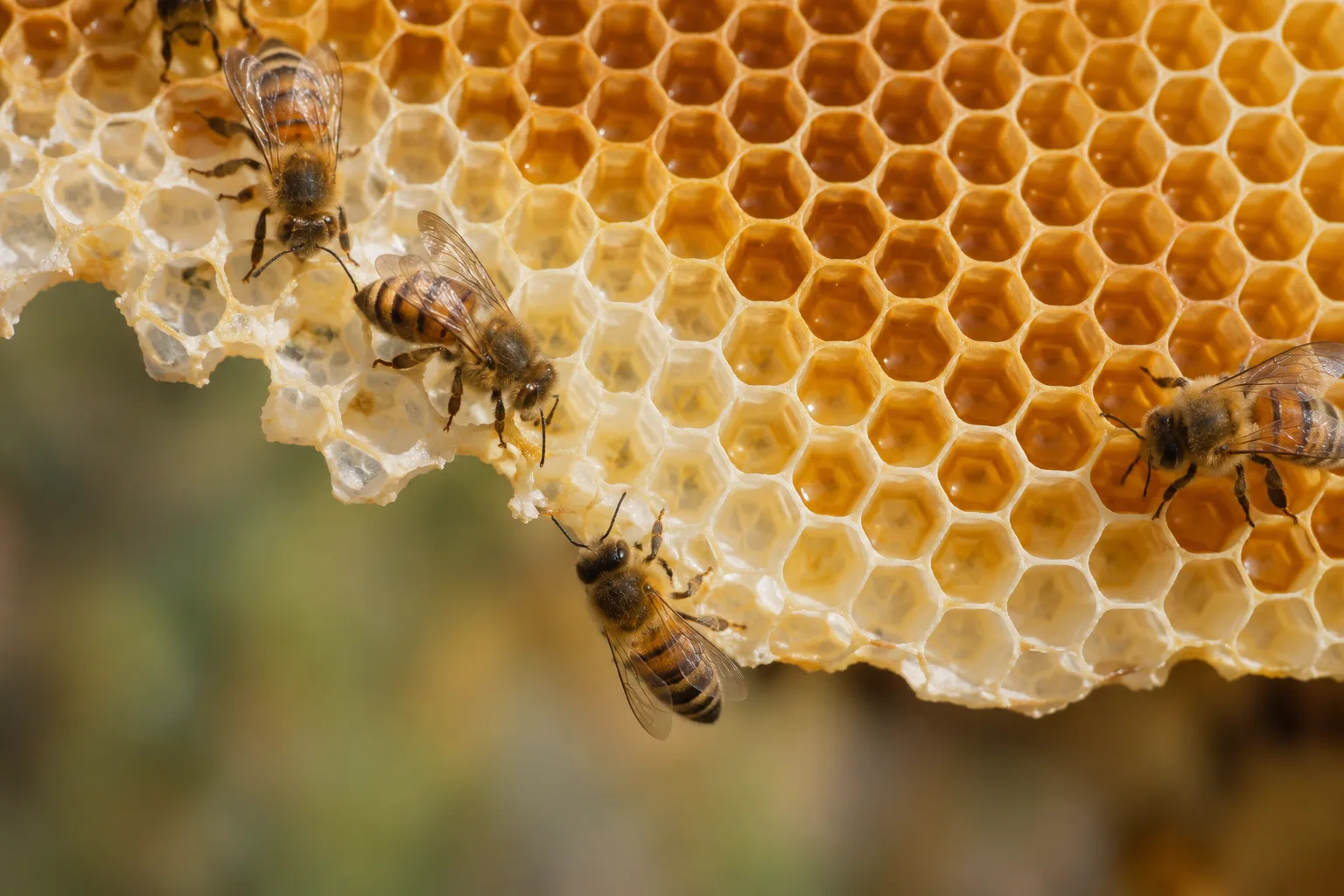
Honey bees turn small wax scales into honeycomb by removing, manipulating, and adding them to the growing structure. Many workers contribute to the same comb, rather than one bee completing an entire sheet alone.
The basic sequence explains how bees make honeycomb without tools or a blueprint:
- Produce the wax: glands release wax onto specialized areas beneath the worker’s abdomen, where it forms scales.
- Remove the scales: the worker uses her legs to transfer wax toward her mouthparts.
- Work the material: workers manipulate the wax with their mandibles so it can be incorporated into comb.
- Build the cells: workers add material to cell walls and extend the comb as the colony needs space.
- Maintain the structure: workers repair and reuse existing comb as well as build new sections.
The hive’s warmth helps make wax workable, but workers are actively involved in shaping the structure. Honeycomb is not simply melted wax poured into a natural mold.
Many managed hives include foundation: a sheet or surface that guides comb construction. That assistance does not eliminate the workers’ task. Honey bees still add wax and build out the cell walls.
Why do honey bees build hexagonal cells?
Hexagonal cells create a compact storage and nursery structure with shared walls and little wasted space. The repeating pattern lets a colony fit many cells together in a continuous comb.
Honeycomb serves several purposes, not just honey storage. Workers use cells to store honey and pollen, and the queen bee lays eggs in brood cells where developing honey bees are raised.
Workers also use wax when closing cells. Honey cells receive wax cappings when the stored honey is ready to be sealed, while developing brood is capped at the appropriate stage of growth.
Because comb takes food and effort to build, an existing structure is valuable to the colony. This is one reason beekeeping systems often allow usable comb to remain intact after honey extraction rather than destroying it with every harvest.
How do beekeepers collect beeswax for candles?
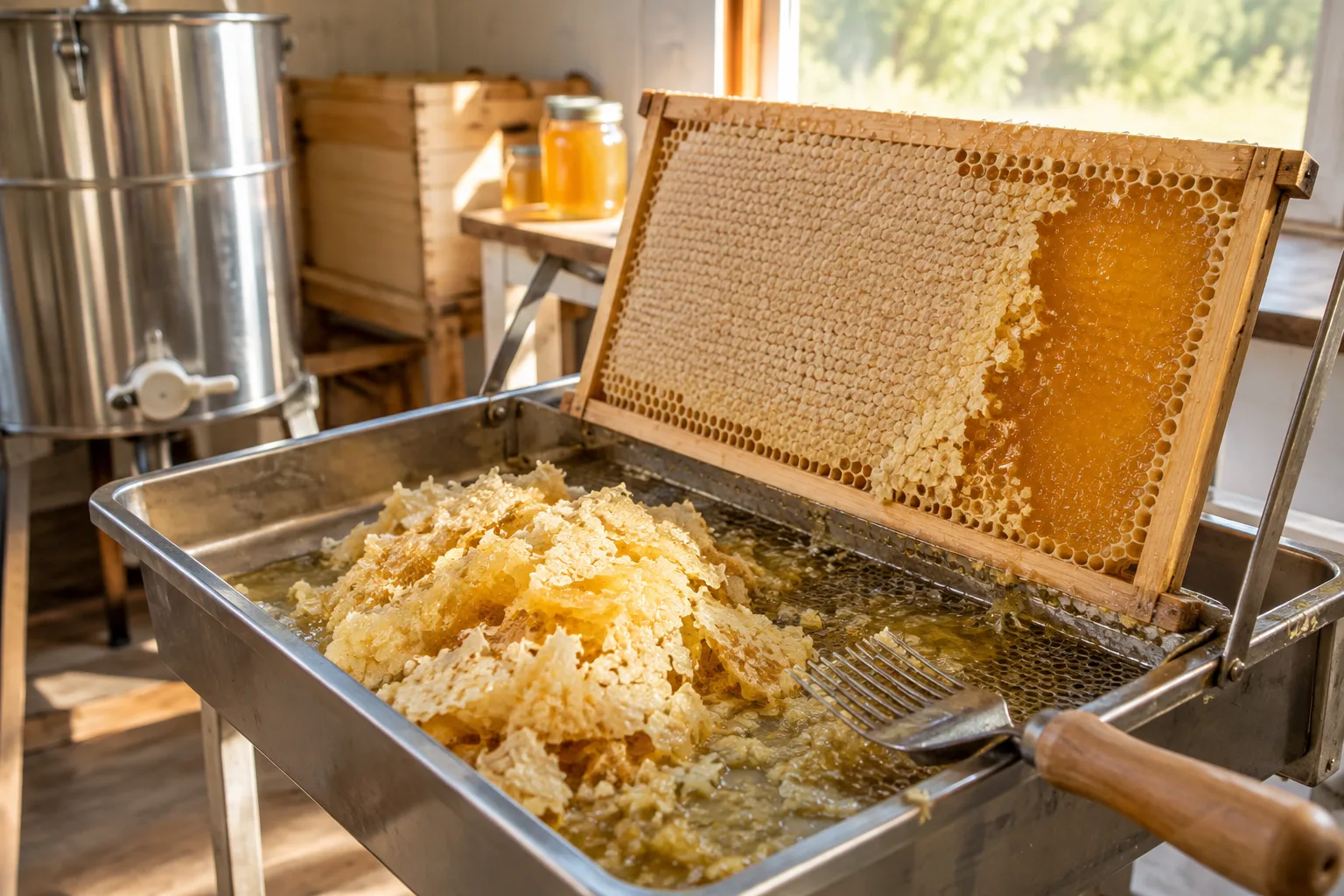
Beekeepers can recover beeswax from the cappings removed during honey extraction and from comb taken out of service. They do not squeeze wax from honey bees or collect it directly from their glands.
When harvesting honey with a centrifugal extractor, beekeepers uncap sealed honey cells before extraction. These beeswax cappings are separated from the honey and can be processed into usable wax.
Collected wax is typically rendered and filtered to separate it from honey residue and other hive debris. The resulting material can be used for candles and other products. Its appearance depends partly on the source material and processing, so color alone does not establish purity.
For a gift that connects this hive-building story with an everyday object, explore Project Honey Bees’ Save The Bees™ Beeswax Candle. Check the product page for its current size, wax composition, sourcing information, and any adoption-related terms.
When comparing pure beeswax candles, check the stated wax composition rather than relying on a yellow color or a honey-themed label. Follow the candle maker’s burning instructions and use ordinary candle precautions, including keeping a lit candle away from anything that can catch fire. Never leave a burning candle unattended.
Does buying beeswax automatically help pollinators?
Buying beeswax does not, by itself, establish a conservation benefit; sourcing and the seller’s specific commitments matter. A beeswax product tells you something about its material, but not everything about how the supplying colonies are managed.
Honey bees are also only one part of the pollinator community. Many other bee species are solitary and nest in places such as soil or plant cavities rather than living in honey bee-style colonies.
Supporting pollinators therefore involves more than supporting honey production. Suitable flowering plants, nesting habitat, and careful pesticide practices matter for different bee species. A symbolic queen bee adoption should not be confused with creating habitat or personally managing a hive.
Before treating a purchase or adoption as conservation support, look for clear information about who receives funding, what activities it supports, and whether outcomes are reported. A bee-themed product or adoption label alone does not establish a conservation benefit.
What are common questions about how bees make beeswax?
Common questions concern where beeswax comes from, whether all bees make it, and whether it is vegan. The short answers are that beeswax comes from wax glands, not all bees produce wax, and beeswax is generally not considered vegan.
Is beeswax bee poop?
No, beeswax is a secretion from specialized wax glands on a worker honey bee’s abdomen. It is not digestive waste, and it is not produced through the bee’s digestive tract.
Is beeswax made from honey?
Honey can supply the sugars that fuel beeswax production, but honey and beeswax are different substances. Worker honey bees use their bodies to manufacture wax rather than simply drying or thickening honey.
Do all bees make wax?
No, not all bees make wax or build wax honeycomb. Honey bees produce beeswax, and bumble bees also make wax for nest structures, while many solitary bees use other nesting materials or excavate nest spaces.
Is beeswax vegan?
Beeswax is generally not considered vegan because it is produced by animals—honey bees. If you are choosing a gift for someone who avoids animal-derived materials, check the product’s full material description and the recipient’s preferences.
Ready to choose a bee-inspired gift?
Start with a gift that suits the recipient, whether that is a beeswax candle or another bee-inspired keepsake. You can also explore the Save The Bees™ XL Beeswax Candle; check its product page for current specifications.
Shop all bee gifts to find your favorite, or learn how adoption works and review the current program terms before choosing.