The best honey bee facts for preschoolers are short, concrete, and easy to connect to something children can see. Start with six legs, visiting flowers, and living together in a colony—not complicated vocabulary or scary warnings.
This guide gives parents and teachers child-friendly explanations, simple activities, and gentle safety rules. The goal is curiosity: children can learn to appreciate honey bees without touching them, feeding them, or approaching a hive.
What are easy honey bee facts for preschoolers?
Honey bees are insects with six legs, two antennae, and four wings. They visit flowers to collect nectar and pollen, live together in colonies, and make honey from nectar. A queen bee lays eggs, while worker bees do many colony jobs. Children can watch bees from a respectful distance with adult supervision.
For a first conversation, share only two or three facts. Preschoolers do not need to remember every detail; noticing a bee on a flower and asking a question is a useful start.
What does a honey bee look like?
A honey bee has three main body sections: a head, a thorax, and an abdomen. Its six legs and four wings attach to the middle section, called the thorax.
For children, say, “A bee has a head, a middle, and a back end.” Honey bees also have fuzzy hairs that can catch pollen, and their coloring varies rather than always matching the bright yellow-and-black bees in cartoons.
Do honey bees live alone?
Honey bees live together in a group called a colony. A colony usually includes a queen bee, female worker bees, and, at certain times, male bees called drones.
Honey bees are social insects with different roles in the colony. Tell children, “Honey bees share a home, and different bees do different jobs.” Avoid suggesting that every kind of bee lives this way; many wild bee species are solitary.
What do honey bees collect from flowers?
Honey bees collect nectar for energy and pollen as a source of protein and other nutrients. A useful preschool explanation is, “Flowers are places where bees find food.”
Nectar is a sugary liquid produced by flowers. Pollen is the powdery material flowers produce for reproduction; honey bees often carry collected pollen in packed loads on their hind legs.
According to the USDA Forest Service, bees visit flowers for nectar and pollen, and their hairy bodies help them carry pollen between flowers. You can compare visible pollen loads to little grocery bags, while explaining that they are packed pollen rather than actual bags.
How do honey bees make honey?
Honey bees turn collected nectar into honey by processing it and reducing its water content. They store honey in wax comb as food for the colony.
Say, “Bees collect sweet nectar and turn it into food they can save for later.” This is more accurate than saying that bees make honey for people or that pollen becomes honey.
How do bees help flowers?
Bees can help flowers reproduce by moving pollen from anthers, the pollen-producing parts, to stigmas, the pollen-receiving parts. This transfer is called pollination and can happen within a flower or between flowers.
Pollination helps many flowering plants produce seeds and fruits. For young children, try, “When a bee visits flowers, some pollen can come along for the ride.”
Honey bees are not the only pollinators. Native bees, butterflies, moths, flies, beetles, and some birds also pollinate plants, so avoid teaching that every flower depends on honey bees alone.
How can you teach honey bee facts for preschoolers?
Teach one fact at a time, then pair it with movement, a picture, or a pretend-play activity. Short, repeatable explanations are easier to revisit than a long lecture.
These preschool bee activities work at home or in a classroom and do not require handling live insects. Choose materials appropriate for the children’s ages and supervise craft activities.
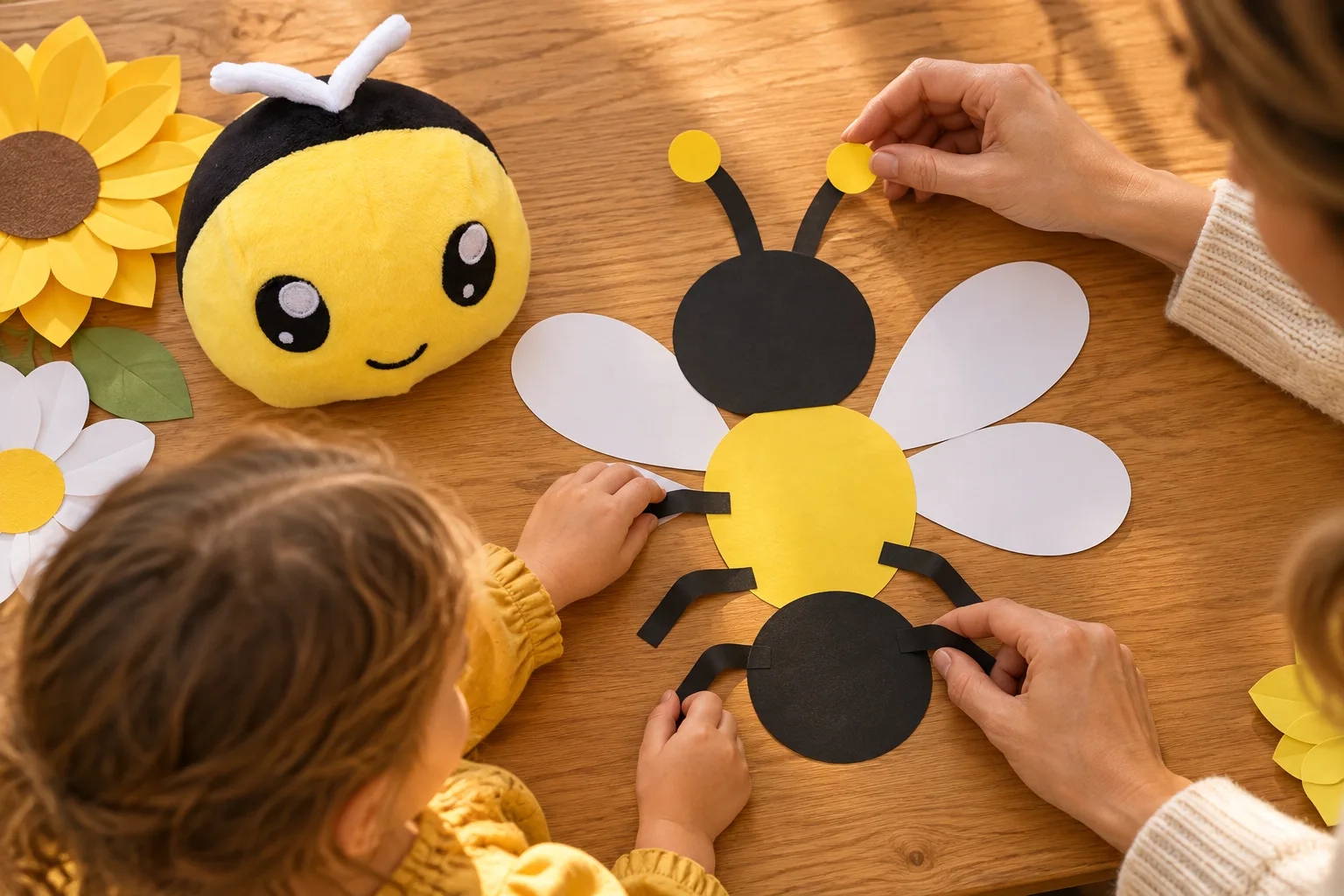
- Count six legs: Draw a simple bee and add three legs on each side. Explain that real honey bees have six legs, even when a picture or toy simplifies their bodies.
- Point to body sections: Use three large paper shapes to build a head, thorax, and abdomen. Let children arrange the shapes before adding wings.
- Pretend to visit flowers: Place large paper flowers around a room. Children can walk from flower to flower while pretending to collect nectar.
- Model moving pollen: Move large yellow paper circles between paper flowers. Explain that real pollen is much smaller and can cling to a bee’s body.
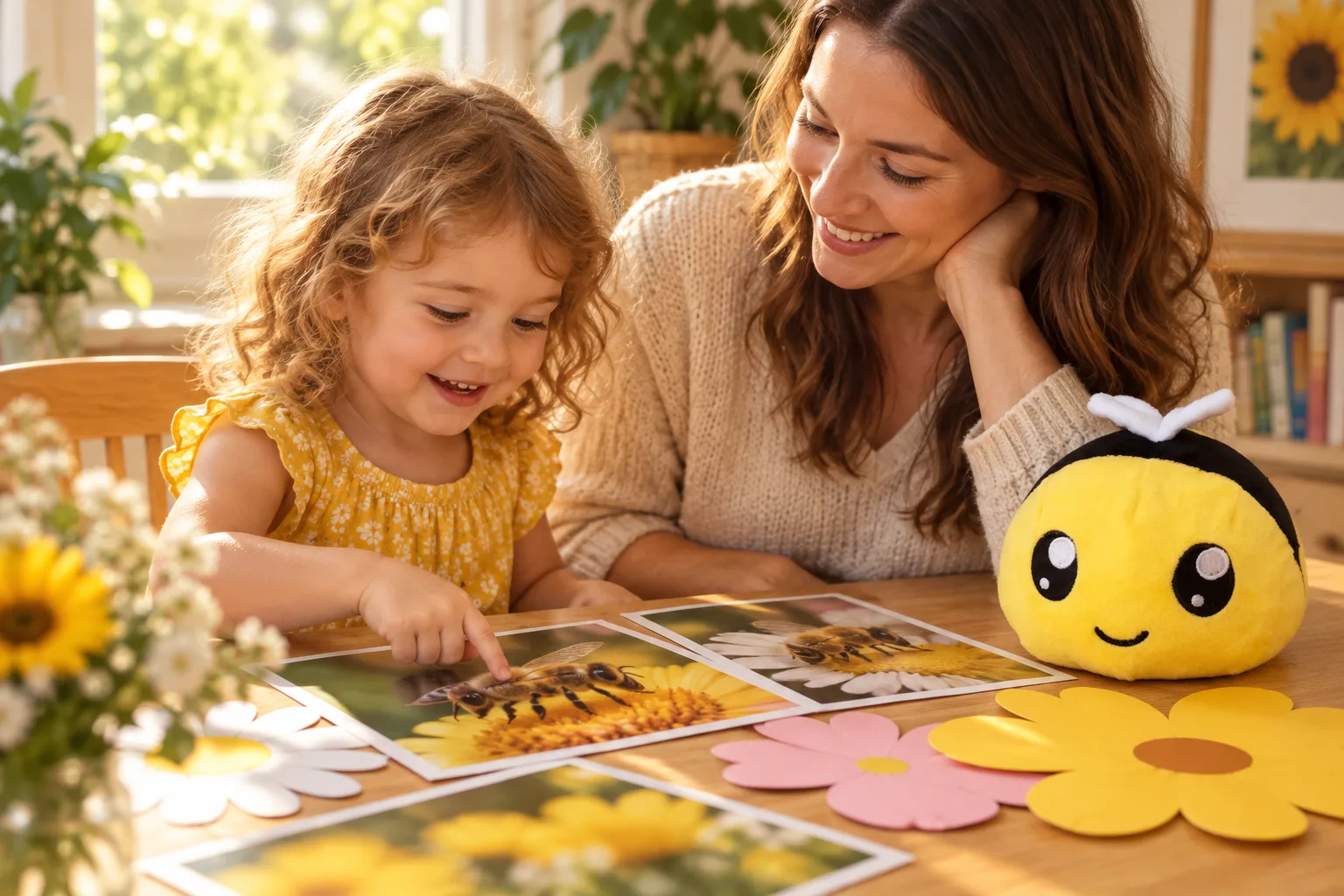
- Practice observation: Look at a clear photograph and ask, “What do you notice?” Accept observations before introducing new facts.
A bee-themed toy can make the lesson feel friendly. Consider the Original Adopt a Bee® Plush Toy from Project Honey Bees as a storytelling character, checking its age guidance before use with children. Use real bee photographs alongside it when teaching anatomy.
Keep pretend play clearly separate from outdoor behavior. Children can pretend to collect nectar indoors, but outside they should leave flowers with visiting bees undisturbed.
What is a simple way to explain the honey bee life cycle?
The honey bee life cycle has four stages: egg, larva, pupa, and adult. These stages provide a clear picture sequence without requiring preschoolers to memorize technical details.
Honey bees undergo complete metamorphosis. For children, explain that a growing bee changes shape before becoming the winged adult they recognize.
- Egg: The queen bee lays an egg in a wax cell.
- Larva: The egg hatches into a small, wormlike young bee that workers feed.
- Pupa: The developing bee changes inside a capped cell.
- Adult: The adult bee emerges from its cell.
Use four large picture cards and ask children to arrange them in order. Explain that a larva is a young bee, not a separate kind of worm.
Is the queen bee in charge of everything?
The queen bee’s main role is laying eggs, not giving orders like a human queen. Chemical signals from the queen help organize colony life, while workers respond to the colony’s needs.
For preschoolers, “The queen lays eggs, and workers look after the colony” is enough. Worker bees clean cells, care for young bees, build comb, and perform other jobs as they mature.
How can preschoolers watch honey bees safely?
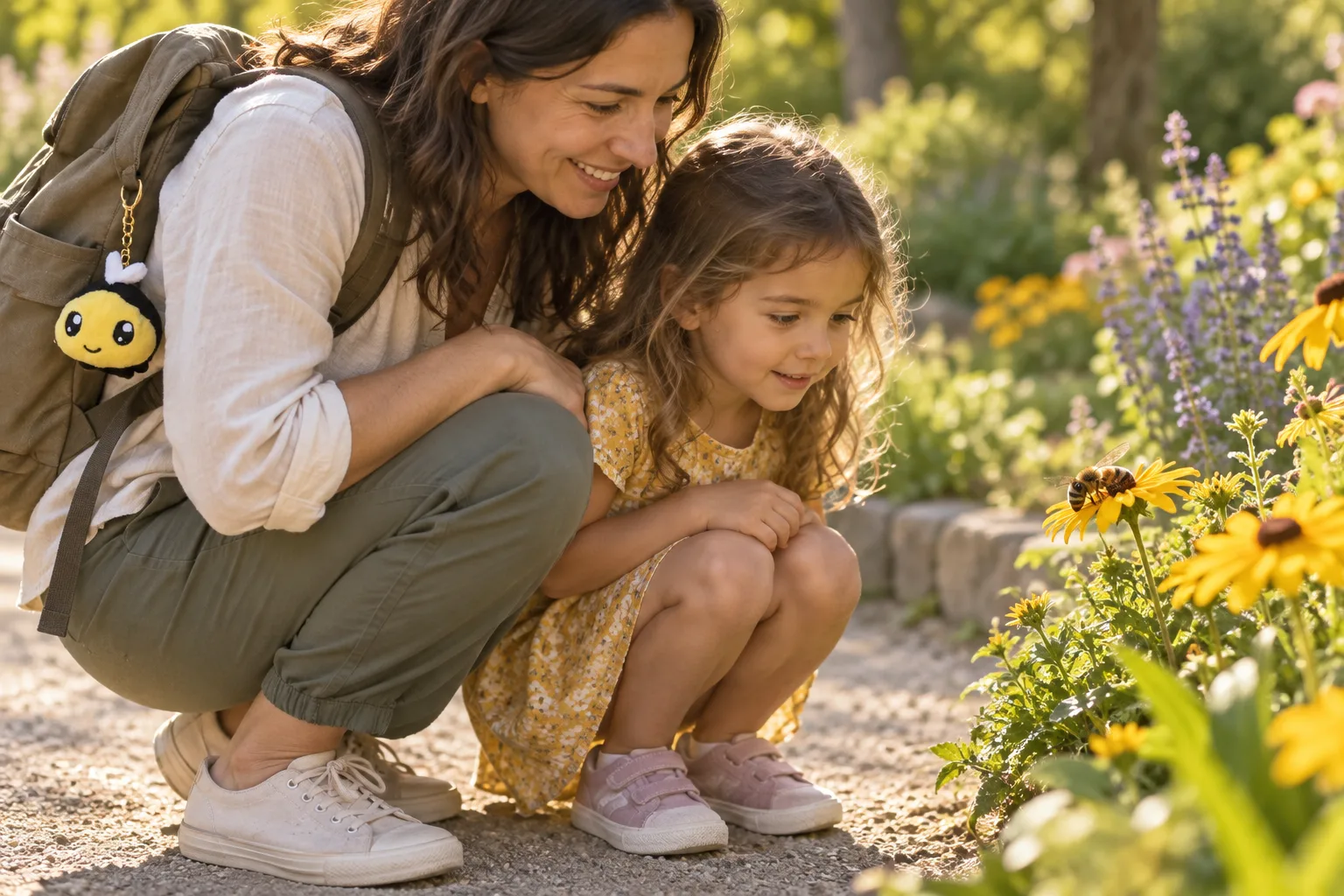
Preschoolers should watch honey bees with an adult, keep their hands to themselves, and stay away from nests and hive entrances. Observing a bee on a flower is different from approaching a colony.
Choose an open spot where everyone can stand comfortably without blocking the bee’s flight path. If a bee comes close, calmly make space rather than swatting or trying to catch it.
- Watch, do not touch: Never pick up a bee, including one that seems tired or still.
- Leave feeding to flowers: Do not offer honey, sugary snacks, or drinks during the activity.
- Wear shoes outdoors: Bees may visit low flowers in lawns and paths.
- Respect boundaries: Do not open hives, poke holes, or disturb possible nesting places.
- Follow individual safety plans: If a child has a known sting allergy, follow their established care plan and school or caregiver guidance.
End with a simple question: “What did the bee do?” A child’s answer might be “It landed,” “It crawled,” or “It flew away”—all useful observations without needing to identify every behavior.
What bee misconceptions should adults avoid?
Teach that honey bees are one kind of bee, that they make honey for their colony, and that wildlife deserves space. These distinctions prevent common misunderstandings while keeping the lesson positive.
Not all bees make stored honey like honey bees, and not every buzzing insect is a bee. Use clear photographs rather than asking children to identify unfamiliar insects up close.
Likewise, avoid saying that bees never sting or that every bee wants to sting. A balanced message is, “We can enjoy watching bees, and we give them room.”
What are frequently asked questions about honey bees?
Common questions include what honey bees do, how they help flowers, and why bees matter. The short answers below offer simple explanations for preschool conversations.
What do bees do?
Honey bees collect food, care for developing bees, maintain their nest, and store honey. Different members of the colony perform different roles, and worker bees take on different tasks during their lives.
What do bees do to flowers?
Bees visit flowers to collect nectar and pollen. As they move, they can transfer pollen and help many flowering plants produce seeds.
Why are bees important?
Bees pollinate many crops and wild plants, helping those plants reproduce. Pollinators contribute to food production and support ecosystems; honey bees share this role with many other animals.
Want to turn bee curiosity into a thoughtful gift?
A bee-themed gift can give families a friendly starting point for conversations about pollinators. For an adult’s bag or keys, the Original Adopt a Bee® Plush Toy Keychain is a playful reminder of those shared discoveries.
Before purchasing, review Project Honey Bees’ current adoption information and product details to understand what is included and any stated conservation support.
Shop all bee gifts to find a meaningful option, or explore how adoption works before choosing.