
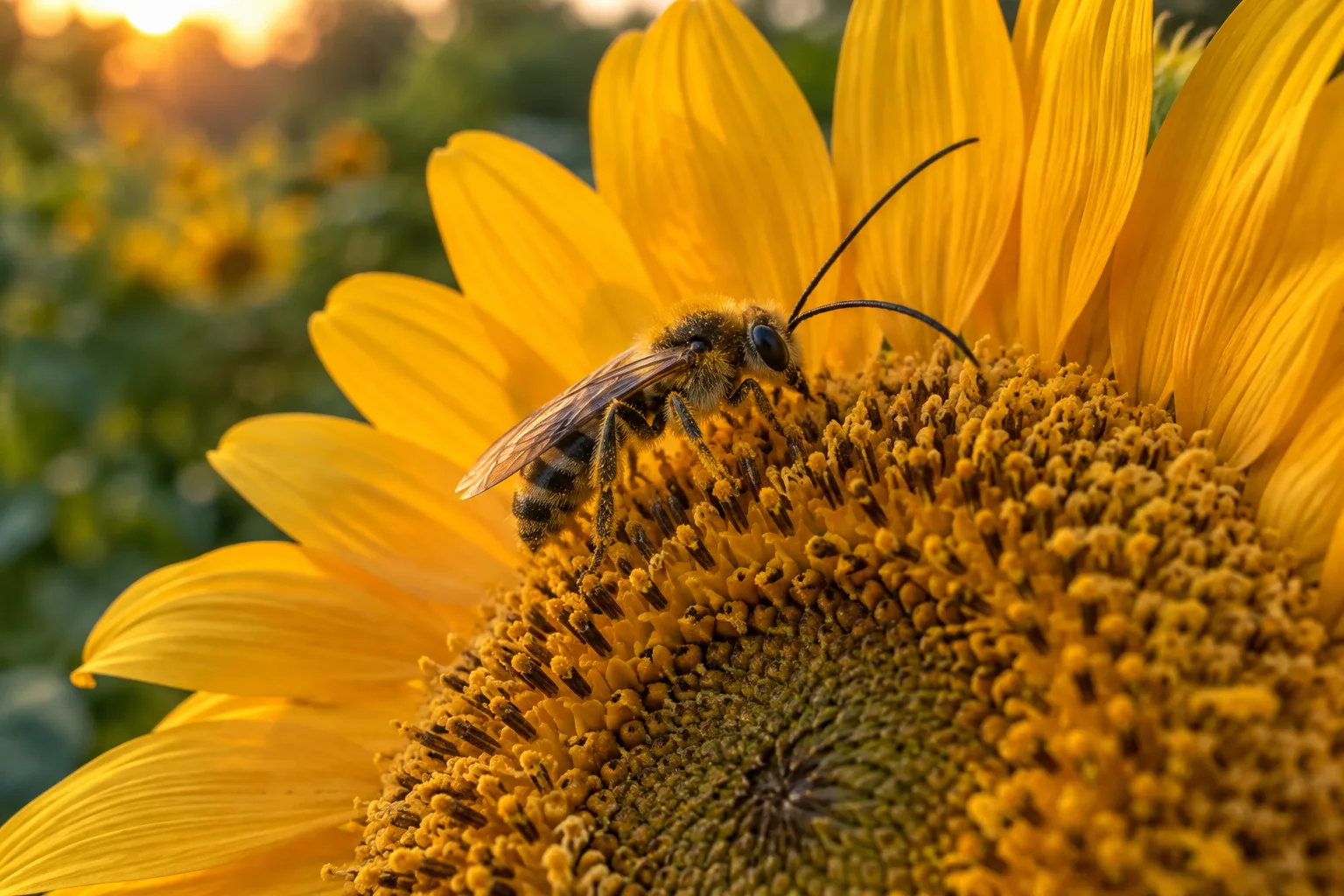
A bee tucked between flower petals at dusk can look as though it has chosen a tiny bed. But do bees sleep in flowers, or is something wrong? Some bees really do spend the night in blooms. Knowing which bees do this—and when a motionless bee is simply resting—can help you enjoy the discovery without disturbing a pollinator.
Do bees sleep in flowers?
Yes, some bees sleep in flowers, especially male solitary bees that do not have a nest to return to. Other bees may rest in blooms between foraging trips. Honey bees generally rest inside their hive, so a bee staying overnight in a flower is usually not a honey bee.
However, a still bee is not automatically asleep. Cool temperatures, wet weather, and other circumstances can also make bees inactive. You can recognize a possible resting place without trying to diagnose the bee's condition or waking it for a closer look.
Which bees are most likely to sleep in flowers?
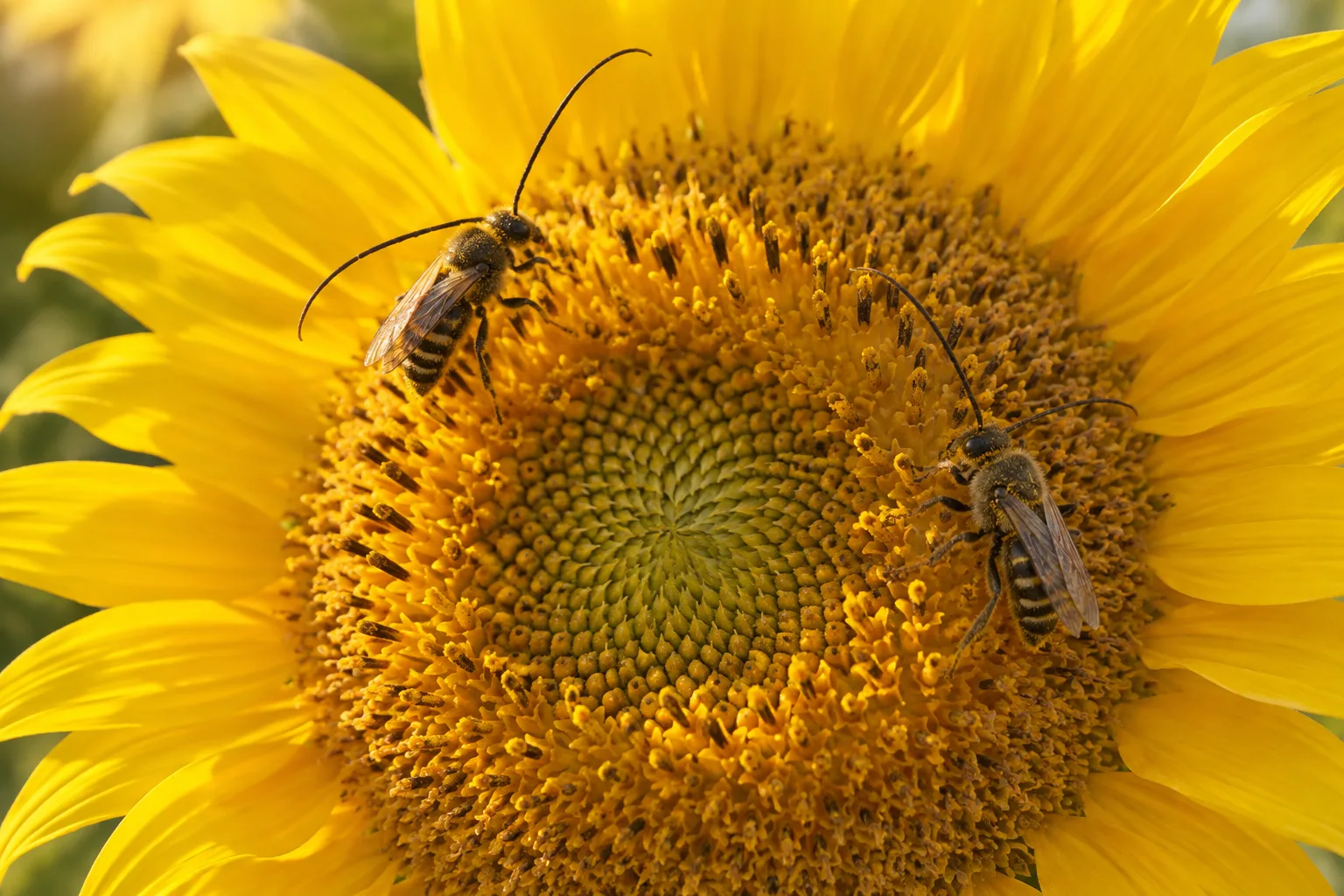
Male solitary bees are among the bees commonly found spending the night in flowers.
According to the USDA Forest Service's guide to bees, bee nesting habits vary widely, and many bee species are solitary. Unlike honey bees, solitary bees do not live in colonies with a queen bee and a worker population sharing a hive.
- Male solitary bees: Males of some species rest in blossoms, cling to stems, or gather at shared sleeping sites. Male long-horned bees are a familiar example of bees found resting on flowers.
- Female solitary bees: Females typically build and provision their own nests. Depending on the species and circumstances, they may rest in their nests or elsewhere.
- Male bumblebees: After leaving their natal nest, males generally live outside it and may spend the night on vegetation or in flowers.
- Honey bees: Workers normally return to their colony, where they can rest rather than routinely sleeping in garden flowers.
A photograph alone may not reveal a bee's species or sex. Treat these patterns as helpful context, not an identification shortcut.
Why do bees sleep in flowers instead of returning home?
Some bees sleep in flowers because they do not have a colony or an occupied nest to return to at night.
A male solitary bee does not build and stock brood cells the way a nesting female does. For species that roost outdoors, a flower can become a convenient resting place within the habitat where the bee feeds and searches for mates.
Flower shape matters, too. Petals and the spaces between flower parts can offer some shelter, although an open bloom is not necessarily a warm, weatherproof refuge. Different bees choose different resting sites; some use stems or other vegetation instead.
A flower serving as an overnight resting place is not necessarily a nest. Unless the bee is actually nesting there, you should not expect eggs, developing young, honey stores, or a queen bee hidden inside the bloom.
How can you tell whether a bee is sleeping or cold?
You usually cannot distinguish sleep from cold-related inactivity just by looking at a motionless bee.
Sleep has been documented in bees, but identifying it scientifically involves more than observing stillness. Researchers consider features such as posture, reduced movement, and changes in responsiveness. A garden visitor does not need to test any of those responses.
Temperature also affects bee activity. Different species tolerate different conditions, and cool mornings can keep a bee inactive even after daylight arrives. There is no single outdoor temperature at which every bee should be flying.
- Consider the time: A bee settled in a flower at dusk may be preparing to spend the night.
- Consider the weather: Cool, rainy, or windy conditions can interrupt normal foraging.
- Watch without touching: Observe from a distance rather than poking the bee or opening its wings.
- Avoid instant conclusions: Stillness alone does not prove that a bee is asleep, dying, or in need of food.
If you return later and the flower is empty, the bee may simply have resumed its activities.
What should you do if you find a bee sleeping in a flower?

The best response is usually to leave the bee and its flower undisturbed.
A bee resting outdoors is not automatically stranded. Bringing it indoors or moving it to an unfamiliar place can interrupt normal behavior without solving a real problem. Give it space and let changing light and weather conditions take their course.
- Leave the bloom attached: Delay cutting that flower for a bouquet or removing it during deadheading.
- Pause nearby watering: Avoid directing a hose or sprinkler onto the resting bee.
- Keep hands away: Do not pick up a bee to check whether it is alive.
- Avoid spraying occupied flowers: Never apply a pesticide in a way that conflicts with its label or pollinator precautions.
- Share the discovery carefully: Let children observe without shaking the stem or touching the insect.
The EPA's pollinator protection guidance emphasizes reducing pesticide exposure and following label directions. Spotting sleeping bees is a useful reminder that pollinators may be present even when flowers look quiet.
For someone who loves these small garden discoveries, Project Honey Bees' Spinning Sunflower Necklace offers a wearable reminder of the connection between flowers and pollinators. It is a garden-inspired gift that does not require picking an occupied bloom.
What flowers and habitat help bees beyond bedtime?

A pollinator-friendly garden should provide food and suitable nesting habitat, not just potential places to rest.
Many native bees nest in the ground, while others use cavities or plant stems. Leaving a sleeping bee on a flower helps keep that individual undisturbed, but protecting both floral and nesting resources supports more of its life cycle.
Which flowers for bees should you plant?
Choose locally appropriate flowers that provide accessible pollen and nectar across the growing season.
Regional native plants are a useful starting point, and your state extension service can recommend species suited to your conditions. Include different flower shapes and overlapping bloom periods instead of relying on a single plant. Where possible, select varieties with accessible flower centers rather than densely doubled blooms.
Should you leave stems and bare soil?
Yes, some undisturbed stems and suitable patches of bare soil can provide nesting opportunities for different native bees.
Not every bee uses these features, and not every patch will become a nest. Still, retaining some standing stems and avoiding blanket disturbance of all exposed soil gives nesting bees more options. Flowers, nesting places, and careful maintenance work together.
How can you observe sleeping bees without disturbing them?
Look at flowers in the evening or early morning, keep your distance, and avoid handling the bee or its resting place.
Scan flower centers and the sheltered spaces beneath petals before moving closer. A phone camera's zoom can help you record the scene without bending the stem toward your face. Avoid rearranging petals, collecting the bee, or staging a photograph.
If you want help with identification, photograph the whole flower and take additional views only when you can do so without disturbance. Your local extension office or a regional naturalist group may be able to help. Recording the location, date, and flower species can make the observation more useful.
What are frequently asked questions about sleeping bees?
Common questions concern where bees sleep, whether honey bees and bumblebees sleep, and what a motionless bee might be doing. The answers depend on the bee's species, sex, role, and surroundings.
Where do bees sleep at night?
Bees sleep or rest in different places depending on their species and role. Honey bees generally rest inside their hive, while other bees may use nests, flowers, stems, or sheltered vegetation.
Do honey bees sleep?
Yes, honey bees sleep, although their rest patterns vary with age and colony duties. Worker honey bees normally rest within the hive rather than choosing flowers as regular overnight sleeping places.
Do bumblebees sleep in flowers?
Yes, bumblebees can rest or spend the night in flowers, particularly males living outside their natal nest. Bumblebee workers generally return to the nest, so not every bumblebee follows the same overnight routine.
Do sleeping bees sting?
A resting female bee can potentially sting if handled or trapped. Male bees cannot sting, but because identification is not always easy, the safest approach is to leave every sleeping bee untouched.
Why is a bee not moving on a flower?
A bee may be resting, sleeping, or inactive because conditions are too cool or wet for normal activity. Stillness can have other causes, so appearance alone cannot establish whether the bee needs help.
How can you turn a love of bees into a thoughtful gift?
Choose a bee-inspired gift that reflects the recipient's interest in flowers and pollinators.
Explore Project Honey Bees' bee-inspired gifts for people who notice the small wonders in a garden. The Original Adopt A Bee® Plush Toy is a playful option for someone who would rather admire real bees without handling them.
Before choosing a gift, review how adoption works for the brand's current program details. Ready to explore? Shop all bee gifts.