What are the best bee gifts for kids?
The best bee gifts for kids match the child’s age and interests: an age-appropriate bee plush toy for pretend play, a pollinator book for curious readers, or a symbolic bee adoption gift for budding nature enthusiasts. Check age labels and small parts, then add a simple activity that connects the present to real pollinators.
A thoughtful bee-themed present does not need to be complicated. A child who loves make-believe may enjoy a soft character, while an enthusiastic outdoor explorer might prefer a flower-observation notebook. Start with what the child already enjoys rather than assuming every young bee lover wants the same thing.
This guide focuses on choosing useful, engaging presents and explaining their conservation connection without overstating what a purchase accomplishes.
How do you choose bee gifts for kids by age?
Choose gifts using the manufacturer’s age guidance, the child’s abilities, and the level of adult supervision available.
An item’s bee design does not establish that it is suitable for children. According to the U.S. Consumer Product Safety Commission’s toy safety guidance, shoppers should follow age recommendations and keep small parts away from children younger than three. Check the actual product information rather than relying on a photograph.
What should you look for when buying for younger children?
Look for a clearly age-rated item that supports simple, supervised play. For a plush toy, check the recommended age, care instructions, and any attached or detachable components; do not assume that every stuffed animal is suitable for babies or toddlers.
A bee picture book can also work well as a shared gift. An adult can read aloud, point out flowers, and explain that real bees should be watched rather than picked up.
What works well for school-age children and older kids?
Match the present to a growing interest, such as drawing, reading, gardening, or collecting animal-themed accessories. A notebook for observing flower visitors may suit a patient explorer, while a symbolic adoption gift may appeal to a child who enjoys learning about animals.
For wearable gifts, verify fit, materials, care instructions, and age suitability. Jewelry should not automatically be treated as a children’s product simply because it features an animal.
Which bee-themed gifts fit different interests?
The most useful bee-themed gifts build on a child’s existing hobbies rather than introducing a project they may not enjoy.
Think about how the recipient will use the present after opening it. These ideas also help relatives choose gifts for bee lovers when they know the child’s interests but are unsure about specific products.
- For the storyteller: An age-appropriate bee plush toy paired with a made-up adventure about finding flowers.
- For the curious reader: A children’s book that distinguishes honey bees from other bees and explains pollination clearly.
- For the artist: A sketchbook and age-appropriate art supplies for drawing flowers and their visitors.
- For the outdoor observer: A notebook for recording flower colors, weather, and insects seen from a respectful distance.
- For the budding gardener: A locally appropriate flowering plant chosen with an adult, plus a simple care plan.
- For the animal enthusiast: A symbolic bee adoption gift with an adult’s explanation of what the program includes.
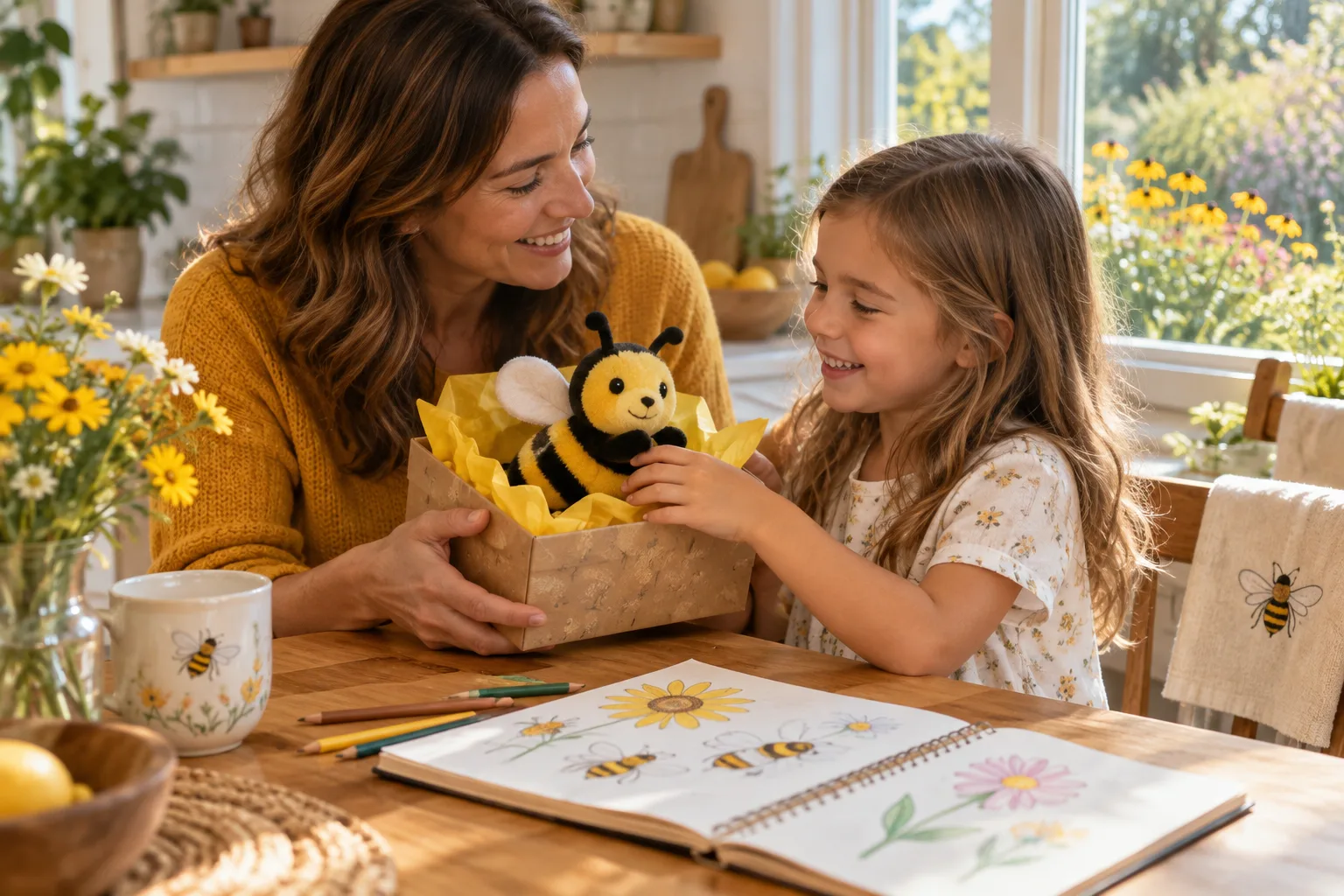
For a plush-centered present, consider Project Honey Bees’ Original Adopt A Bee® Plush Toy. Review the current listing for adoption terms, age guidance, and safety information before choosing it for a child.
What does it mean for a child to adopt a bee?
A symbolic bee adoption is a gift-program experience, not a request for the child to care for a live bee. Its benefits and any conservation contribution depend on the program’s published terms.
Before buying from Project Honey Bees, check the current adoption details to confirm which purchases qualify, whether naming is included, who runs the program, and how any conservation support is provided. Explain the documented arrangement in everyday language so the child understands that a symbolic adoption does not mean a pet will arrive at home.
Keep expectations specific to the published program details. Do not promise honey deliveries, hive visits, regular photographs, or live tracking unless the program explicitly includes them.
The adoption theme also creates a useful science question: what does a queen honey bee do? According to Penn State Extension’s honey bee biology guidance, a queen honey bee is the colony’s primary egg-layer. She is not a human-style ruler giving orders, so distinguish the fun gift story from how honey bees actually live.
What pollinator activities for kids can accompany a gift?
Pair the present with a short, supervised activity that helps children observe flowers and pollinators without handling bees.
According to the USDA Forest Service, bees visit flowers for resources such as nectar and pollen and help transfer pollen between flowers. That gives children something meaningful to notice, even during a brief walk.
How can kids watch bees safely?
Children can observe bees by standing back from flowering plants and letting insects move freely. Choose an adult-supervised location away from nests, hive entrances, and busy pathways, and never ask a child to catch or touch a bee.
Invite the child to draw one flower visitor or describe what it did. If the family has concerns about stings or insect allergies, use books or nature videos instead of arranging close observation.
How can a flower gift become a learning activity?
A flowering plant becomes a learning gift when an adult helps select, plant, and care for it. Ask a local university extension office or knowledgeable nursery about plants suited to your region, available sunlight, and growing space.
Give the child a manageable role, such as checking soil moisture with an adult or drawing the first bloom. Choose seeds and plants with household safety in mind, including younger siblings and pets.
How can children learn that not all bees are honey bees?
Children can compare bee pictures to discover that honey bees are only one part of the pollinator community. The USDA Forest Service describes a wide variety of bees, including species with different nesting habits and appearances.
Make a simple observation page with spaces for color, size, and behavior. Leave room for “not sure”: identifying every insect is less important than learning to watch carefully and avoid disturbing it.
What should you check before ordering a bee gift?
Check suitability, product details, delivery timing, and conservation claims before making a purchase.
This is especially helpful when choosing bee gifts for birthdays or ordering a present for a child you do not see often. A quick conversation with a parent or caregiver can prevent problems with sizing, small components, or an activity that needs more supervision than expected.
- Age guidance: Confirm that the product is appropriate for the recipient; ask the seller if information is missing.
- Practical details: Review dimensions, materials, cleaning instructions, and any assembly requirements.
- Family preferences: Check whether the household welcomes jewelry, plush toys, plants, or craft supplies.
- Timing: Verify current availability and shipping estimates instead of assuming arrival by a particular date.
- Adoption terms: Read what adoption includes, whether naming is available, and how the gift recipient participates.
- Conservation wording: Look for an identifiable conservation recipient or project and a clear explanation of the contribution, not unsupported claims that one purchase will prevent bee extinction.
A gift can start a conversation about conservation, but it does not replace habitat protection or responsible land management. Describe any conservation contribution only as specifically as the published evidence supports.
What are common questions about bee gifts for kids?
Common questions cover age suitability, symbolic adoption, birthdays, and practical ways children can help pollinators. This FAQ offers a starting point; check individual product and program details before buying.
What are the best gifts for bee lovers who are kids?
The best options match the child’s interests and carry appropriate age guidance, such as a bee plush toy, illustrated nature book, or supervised flower-growing activity. Add a short explanation of real bees so the theme becomes more than decoration.
Can kids adopt a bee?
Kids can participate in a symbolic adoption with an adult’s help, subject to the program’s terms. Review the current adoption details together, including any naming option, so the child understands what is included and that no live bee will arrive.
How can kids help save the bees?
Children can help care for suitable flowering plants, learn about local pollinators, and observe insects without disturbing nests. The EPA’s pollinator protection guidance emphasizes protecting pollinators from pesticide risks; pesticide decisions and handling should remain with adults.
Are bee gifts for kids suitable for birthdays?
Bee gifts can make thoughtful birthday presents when they suit the recipient’s age and interests. Pair the gift with a shared activity, such as drawing bees or reading a pollinator book, rather than adding unnecessary extras.
Ready to shop for a bee gift with a purpose?
Start with a gift the child will enjoy, then use its bee connection to encourage curiosity about pollinators.
For an accessory-loving recipient, consider the Adopt A Bee® Silicone Bracelet, checking fit and suitability first. If you prefer a bundled present, explore the Adopt A Bee® Gift Set and review its current contents before ordering.
Check the current program terms for adoption benefits and any documented conservation contribution. Shop all bee gifts to find your starting point, or read how adoption works before choosing a meaningful present.