

Looking for bee conservation jobs? Start by searching beyond the word “bee.” Work that benefits bees often appears under ecology, habitat restoration, entomology, horticulture, or environmental education. Understanding those job titles can help you find opportunities that a narrow search misses.
This guide focuses on US career paths, places to look, and ways to build relevant experience. It also distinguishes protecting wild pollinators from managing honey bees—related interests that do not always lead to the same work.
What are bee conservation jobs?
Bee conservation jobs are paid roles that help protect bees through habitat restoration, research, land management, or public education. Employers include government agencies, universities, nonprofits, and native plant businesses. Search for pollinator, ecology, restoration, and entomology positions as well as bee-specific titles, because many relevant jobs cover multiple species.
According to the US Department of Agriculture, pollinators contribute to agriculture and functioning ecosystems. That makes bee conservation relevant to farms, public lands, research programs, and community landscapes—not just apiaries.
Not every position involves handling bees. Some workers establish flowering habitat, analyze field data, grow native plants, or help landowners improve management practices. Decide whether you prefer outdoor work, scientific investigation, teaching, or coordinating projects before narrowing your search.
Which career paths help protect bees?
The main career paths include habitat restoration, research, landowner assistance, native plant production, and conservation education.
What does a habitat restoration worker do?
A restoration worker helps establish and maintain habitat that supports wildlife, including pollinators. Depending on the project, tasks may include planting, invasive plant removal, vegetation monitoring, and maintaining equipment.
The USDA Natural Resources Conservation Service identifies food resources and nesting habitat as important parts of pollinator habitat. Relevant listings may use titles such as restoration technician, natural resources technician, or habitat specialist rather than mentioning bees.
What do bee research jobs involve?
Bee research jobs investigate questions about bee diversity, behavior, health, or relationships with plants and landscapes. A seasonal field technician might conduct surveys, record flower visits, organize samples, or enter data under a research protocol.
University laboratories and research organizations may also hire laboratory assistants and data staff. Read each description carefully: research can involve specimen collection and identification, not simply observing live bees outdoors.
How do plant and education careers fit in?
Plant and education careers support bee conservation by improving habitat resources and helping people make informed decisions. A native plant nursery may need propagation staff, growers, or customer educators, while a nature center may hire program instructors.
Conservation education can involve school programs, volunteer training, interpretive materials, or public events. These roles suit people who enjoy translating ecological information into useful, understandable actions.
Where can you find bee conservation jobs in the US?

Look on official employer career pages, federal hiring websites, university job boards, and regional conservation networks.
Use broad searches to discover employers, then verify the opening on the organization’s own website. Listings can expire or be copied elsewhere, so check the application deadline, work location, and employment terms before preparing an application.
- Federal agencies: Search USAJOBS for terms such as biological science technician, ecology, entomology, and natural resources. Read the duties to identify pollinator-related work.
- Universities: Check employment pages for entomology, ecology, horticulture, and agricultural research departments.
- State and local agencies: Explore wildlife departments, park systems, conservation districts, and municipal natural resources teams.
- Conservation nonprofits: Review the careers pages of organizations working on invertebrates, grasslands, sustainable agriculture, or habitat restoration.
- Plant and restoration businesses: Look at native plant nurseries, ecological restoration contractors, and environmental consulting firms.
- Nature centers and botanical gardens: Search for horticulture, interpretation, outreach, and education positions.
Useful search combinations include “pollinator conservation jobs,” “restoration technician” plus your state, and “bee research jobs” plus “university.” Set alerts for several terms rather than relying on one search.
Do you need a degree to work in bee conservation?
Some positions require a relevant degree, while others prioritize practical experience, communication skills, or the ability to perform field tasks.
Research and specialist positions may request coursework or degrees in biology, ecology, entomology, or a related discipline. Independent research careers commonly require advanced training, but support roles have their own qualifications.
Nursery, restoration, and outreach positions can offer different entry points. Never assume that a job is degree-free—or inaccessible without graduate school—until you read its actual requirements.
- Field skills: Plant identification, careful observations, navigation, and accurate data recording.
- Technical skills: Spreadsheets, mapping software, data management, or laboratory procedures where requested.
- People skills: Clear writing, public speaking, teamwork, and communication with landowners or volunteers.
- Practical readiness: Following safety procedures and meeting the specific travel, driving, or physical requirements listed.
A short course can help fill a defined skill gap, but it does not guarantee employment. Choose training based on recurring requirements in jobs you genuinely want.
How can you gain experience before applying?
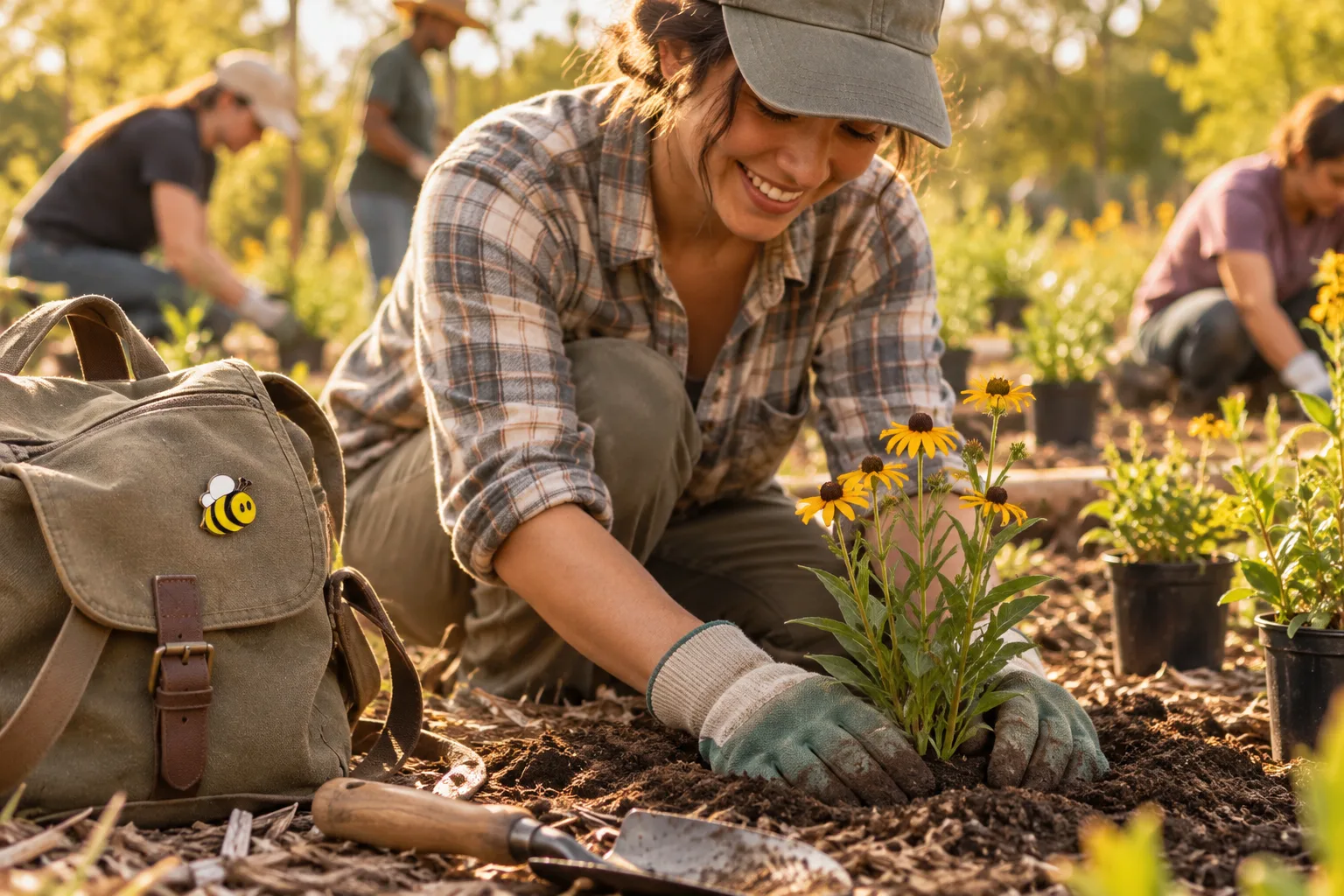
Build experience through a focused local project, relevant paid work, or well-supervised conservation internships.
You do not need to start a nonprofit or keep a hive to demonstrate interest. A small, documented contribution can show reliability and practical learning more clearly than a broad statement that you love bees.
- Choose a direction: Select habitat work, research, plant production, or education as your initial focus.
- Find structured experience: Ask parks, university programs, conservation districts, or botanical gardens about suitable opportunities.
- Learn the protocol: Follow the organization’s methods for observations, planting, data entry, or public programs.
- Record your contribution: Keep a simple log of tasks, tools used, training completed, and work products.
- Request feedback: Ask a supervisor which skills to strengthen and whether they can serve as a reference.
Volunteering is optional, not a requirement you must afford. Paid nursery work, landscaping, customer service, and administrative experience can build transferable skills; explain the connection honestly in your application.
For someone celebrating a first field role or internship, Project Honey Bees’ Save The Bees® Pin offers a small, wearable way to express that interest. It is a personal keepsake, not a professional credential or substitute for conservation experience.
Are beekeeping jobs the same as conservation jobs?
Beekeeping jobs manage honey bee colonies, while conservation jobs may focus on wild bees, their habitats, and broader ecological goals.
Commercial apiary work can involve inspecting colonies, maintaining equipment, managing colony health, and harvesting honey. Those responsibilities build useful knowledge of honey bees, but they do not automatically provide experience with native bee identification or habitat restoration.
The US Geological Survey explains that honey bees are not native to North America. US bee conservation therefore extends beyond managed honey bee colonies to the many native bee species with different nesting habits and habitat needs.
Both interests can inform a career, but choose opportunities that match your goal. For wild pollinator work, look for explicit responsibilities involving native species, ecological monitoring, or habitat management rather than assuming every apiary position is a conservation role.
What should you check before accepting an offer?
Check compensation, employment duration, supervision, safety arrangements, and the actual conservation responsibilities before accepting.
A job title alone cannot tell you whether a position is a good fit. Seasonal work may provide valuable experience, but you need to understand its costs and limitations alongside its learning opportunities.
- Is the role permanent, seasonal, temporary, or an internship?
- What are the pay, expected hours, and benefits?
- Are travel expenses, housing, equipment, or mileage covered?
- Who provides training and supervises field activities?
- What procedures address heat, remote work, stings, and other relevant hazards?
- Will the work build skills that match your next career step?
Ask what a typical week looks like and how the organization measures project outcomes. Clear answers help distinguish substantive conservation work from a position whose environmental connection is mostly promotional.
What are some frequently asked questions about bee conservation?
Common questions concern what bees do for ecosystems, why plants depend on pollination, and how people can help. The answers below explain these basics for anyone exploring bee conservation jobs or local habitat projects.
What do bees do for the environment?
Bees transfer pollen between flowers as they forage, helping many flowering plants reproduce. According to the USDA, pollination supports plant communities and agricultural production, which is why habitat and research careers can benefit both wildlife and people.
Why are bees important to plants?
Bees help pollinate many plants, enabling them to produce seeds and, in many cases, fruit. Plants differ in their pollination needs, so bee conservation work benefits from understanding local plant–pollinator relationships rather than treating every flower alike.
How can you help the bees?
Provide suitable flowering plants, protect nesting habitat, and reduce unnecessary pesticide use while following all pesticide label directions. USDA Natural Resources Conservation Service guidance emphasizes habitat resources; a local extension office can help you choose practices appropriate to your region.
How can you celebrate a commitment to bee conservation?
A thoughtful bee-themed gift can recognize a new job, graduation, or personal commitment to pollinators without replacing practical habitat action.
The Adopt a Bee® Gift Set from Project Honey Bees is an option for marking that milestone. Review the product page and adoption information for current details about what is included.
Ready to choose a meaningful keepsake? Shop all bee gifts or explore how adoption works before selecting your gift.