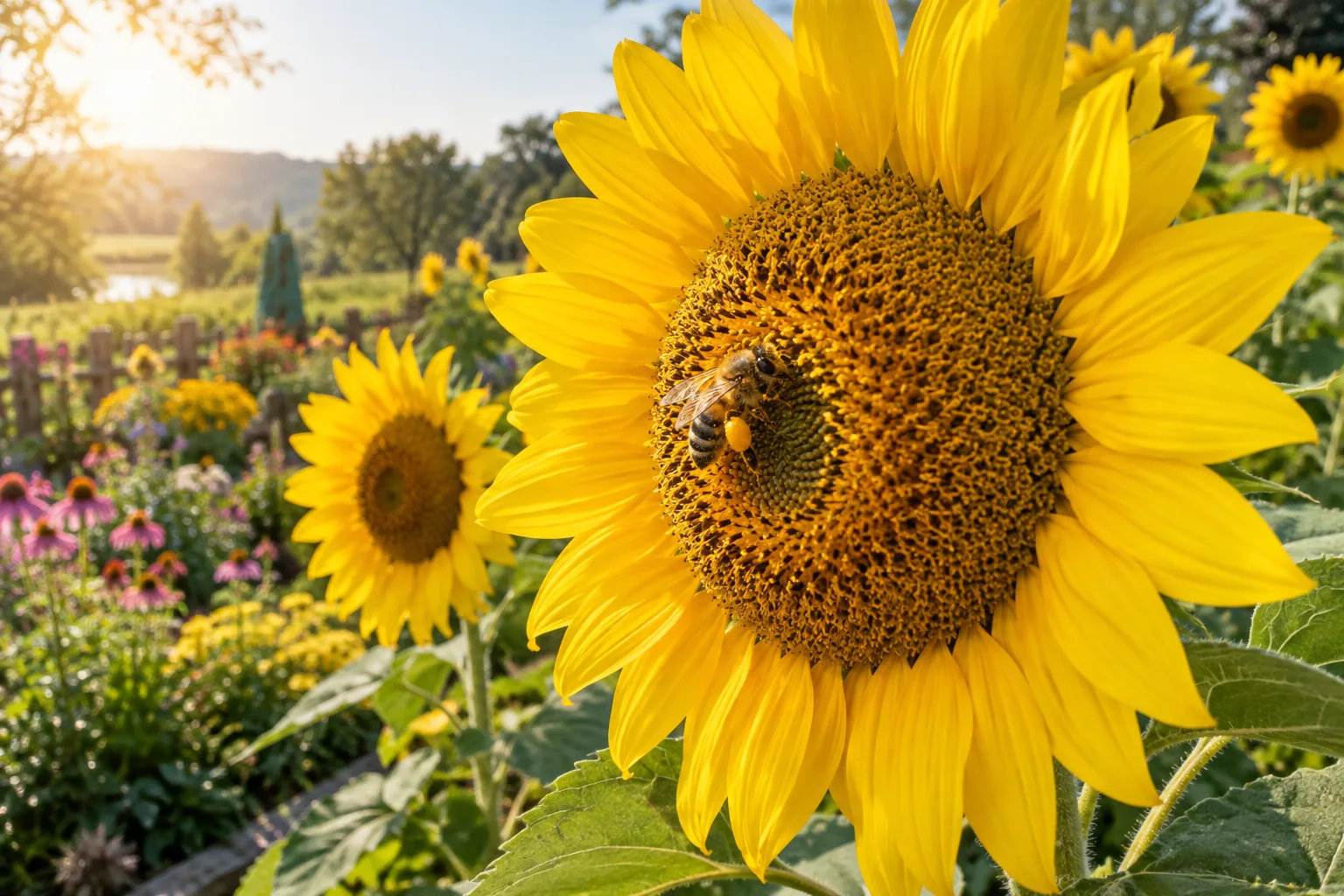
Are sunflowers good for bees?
Yes, sunflowers are good for bees when their flowers provide accessible pollen and nectar. Choose pollen-producing varieties with open, visible centers rather than relying on pollenless or densely double flowers. Sunflowers work best alongside other flowering plants that feed honey bees and native bees before and after sunflower season.
A sunflower patch can turn a sunny corner into a feeding stop for pollinators. However, not every sunflower sold for bouquets offers the same resources, and a tall plant with a spectacular bloom is not automatically the best choice for bees.
The useful question is not simply whether to plant sunflowers, but which ones to choose and what to grow beside them. Here is how to make that decision without needing a large yard or specialist gardening knowledge.
Why do bees visit sunflowers?
Bees visit sunflowers to collect nectar, pollen, or both, depending on the plant and the bee.
What looks like one large sunflower is actually a flower head containing many small flowers. The central disk contains individual florets that open progressively, creating a feeding surface that bees can revisit as new florets become available.
According to the USDA Forest Service, nectar supplies energy to visiting pollinators, while pollen provides protein and other nutrients. Pollen-collecting female bees gather it to provision their young; honey bee workers bring it back to support the colony.
Honey bees are only part of the picture. Bumble bees and other wild bees also visit sunflowers, and some bees native to North America specialize in collecting pollen from sunflowers or related plants. A sunflower patch can therefore serve more than the familiar honey bee.
Still, sunflowers are not a complete feeding plan. Different bees use different flowers, and a mix of plants helps provide resources across more of the growing season.
Which sunflower varieties are best for bees?
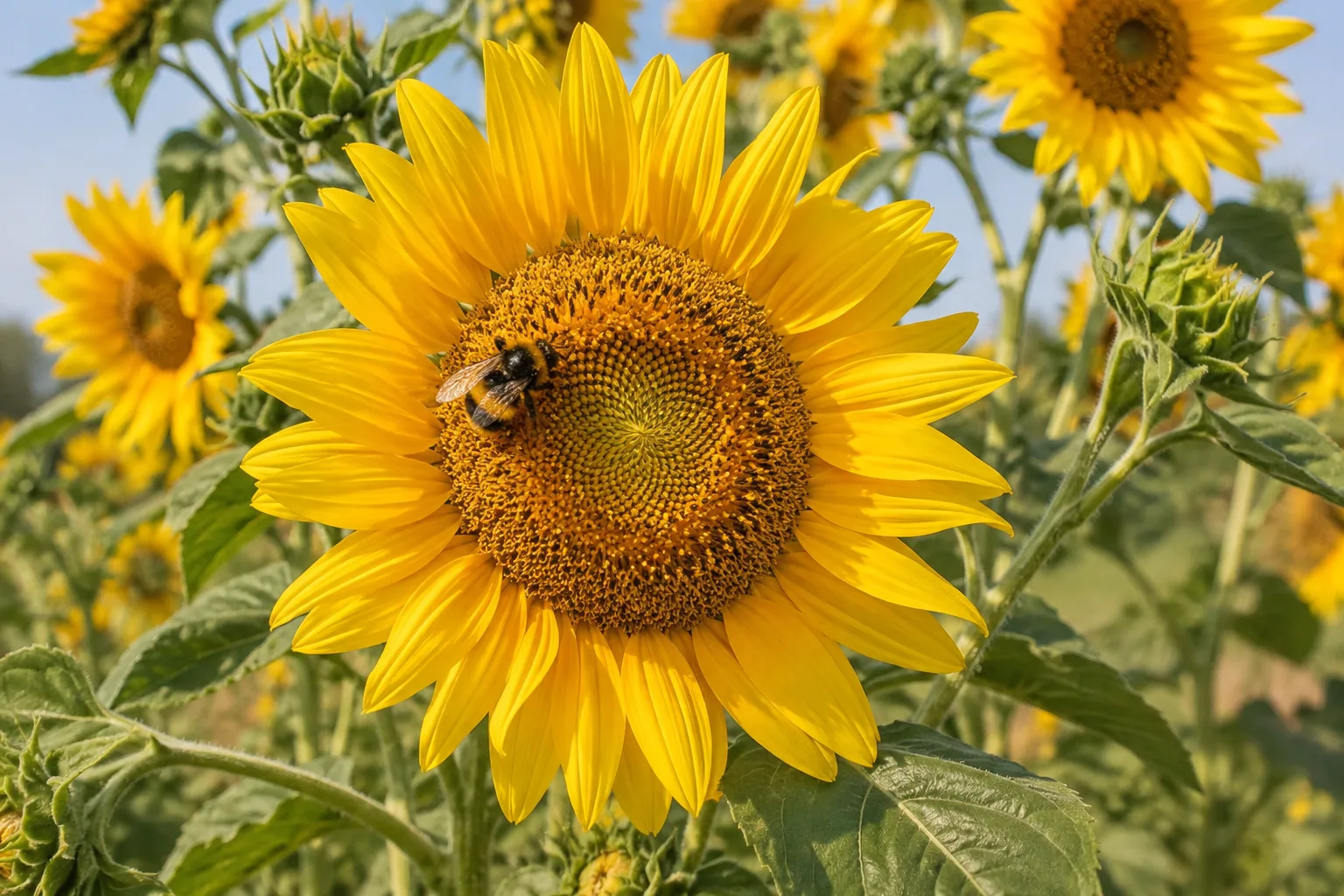
Good sunflower choices for bees have accessible central florets and produce pollen as well as nectar, although their value varies with the cultivar, growing conditions, and visiting bee species.
Start with the common annual sunflower, Helianthus annuus, and look for seed descriptions that clearly identify pollen-producing plants. Open-faced varieties make a practical starting point because their feeding surfaces are easy to see and reach.
Use this checklist when choosing bee-friendly sunflowers:
- Check for pollen production. Avoid assuming that every sunflower seed packet offers the same benefits to pollen-collecting bees.
- Look for a visible center. Favor exposed disk florets over heavily doubled blooms with dense layers of petals.
- Consider branching plants. Multiple flower heads can help extend the flowering display, although bloom timing varies by cultivar and conditions.
- Match the plant to the space. Choose a variety suited to your available sunlight and root space, especially when growing in a container.
- Investigate local native sunflowers. Regional native Helianthus species may suit a pollinator planting, but check their size and spreading habits first.
Do not rely on flower color or words such as “natural” to establish pollinator value. If a packet is unclear, ask the seed supplier whether the variety produces pollen and whether its central florets remain accessible.
Are pollenless sunflowers bad for bees?
Pollenless sunflowers are not inherently harmful to bees, but they do not provide the sunflower pollen that pollen-producing varieties offer.
These varieties are often grown for cut flowers because they do not shed pollen onto indoor surfaces. Some still provide nectar, so a bee visiting a pollenless sunflower is not necessarily finding an empty food source.
The important distinction is between providing some food and providing both pollen and nectar. Nectar availability varies with the cultivar and growing conditions, so the label “pollenless” cannot tell you everything about a flower's value.
If you already planted pollenless sunflowers, there is no need to pull them out simply because of that label. Add pollen-producing flowers nearby and choose a broader mix next season. For a new planting focused on bees, pollen-producing sunflowers are the more straightforward choice.
How do you grow sunflowers for pollinators?
Grow sunflowers for pollinators in a sunny location, choose suitable varieties, and avoid practices that expose visiting bees to pesticides.
Annual sunflowers generally perform best in full sun and well-drained soil. Follow the seed packet for local planting timing, spacing, and expected height, since compact container varieties and giant garden sunflowers have different needs.
- Choose the location first. Look for a sunny patch with enough room for mature plants, away from frequently used narrow walkways.
- Sow at the appropriate time. Use your local frost guidance and the variety's planting instructions rather than a nationwide calendar date.
- Water during establishment. Help seedlings develop roots, then adjust watering to the soil, rainfall, and plant condition.
- Plan for continued bloom. Where the growing season allows, stagger sowings or combine varieties with different flowering times.
- Leave flowers available. If growing sunflowers for bouquets too, reserve some flower heads for visiting insects.
The EPA's pollinator protection guidance emphasizes reducing pesticide exposure and following product labels. Avoid spraying visiting bees or open blooms, and remember that an “organic” product is not automatically harmless to pollinators.
If the garden is a gift for someone, pairing seeds with a keepsake can make the idea more personal. Consider the Spinning Sunflower Necklace as a wearable reminder of a favorite flower, and check the product page for current details.
Are sunflowers good for bees in pots?
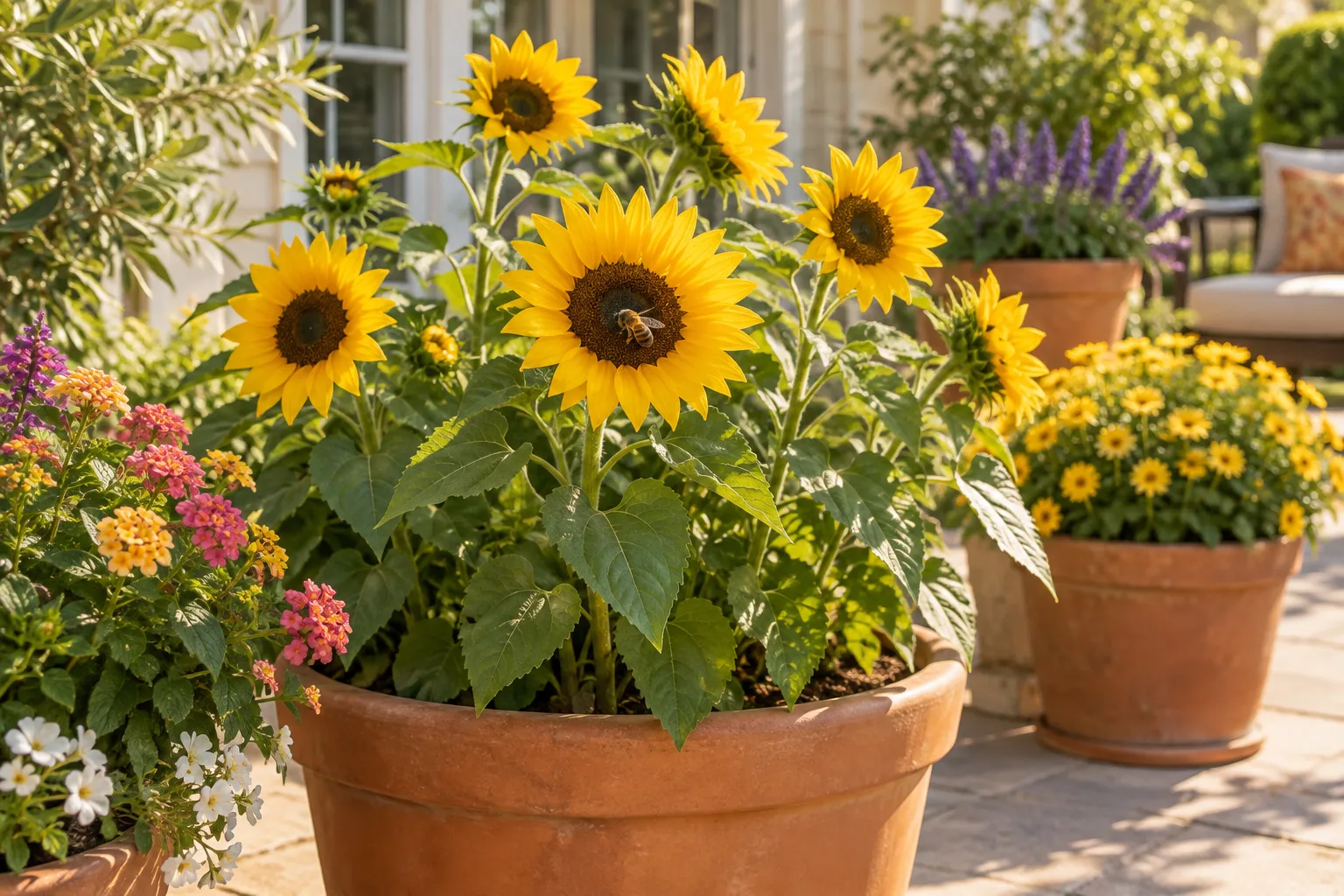
Yes, sunflowers in pots can feed bees when they receive enough sunlight and produce accessible pollen or nectar.
Growing sunflowers in pots works best with compact varieties selected for containers. Choose a sturdy pot with drainage holes and enough root space for the variety; a shallow decorative container may dry out quickly or tip as the plant grows.
Container soil often needs more frequent attention than garden soil. Check moisture regularly, water as needed, and follow appropriate feeding guidance rather than assuming more fertilizer will create better flowers for bees.
Place the pot where bees can reach it without flowers leaning into a doorway or seating area. On an exposed balcony, consider wind and building rules before choosing a tall plant. One well-grown sunflower can offer food, but several different flowering plants will provide a more varied small-space garden.
What should you plant alongside sunflowers for bees?
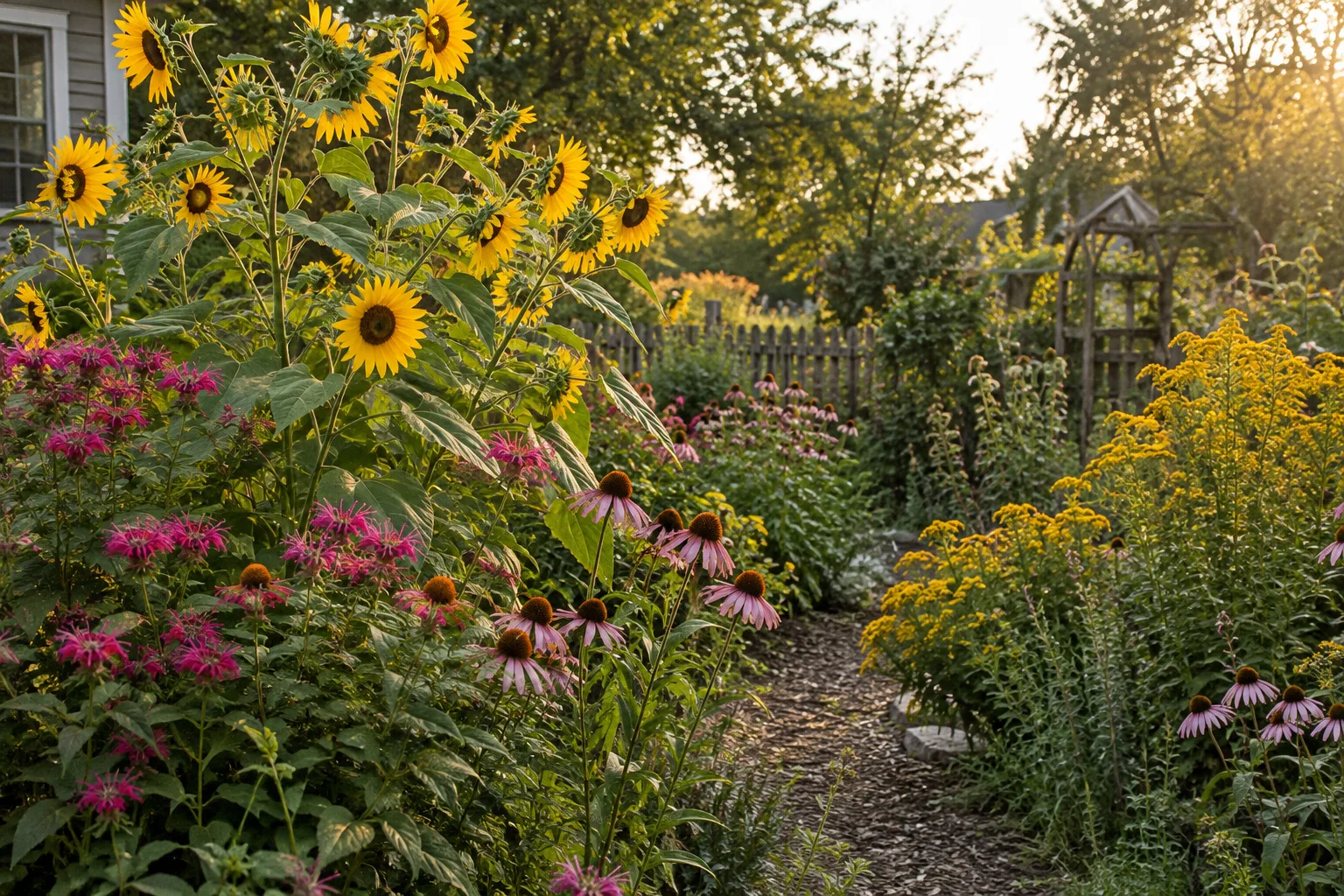
Plant locally suitable flowers that bloom before, during, and after sunflowers to make your bee-friendly garden more useful across the season.
University of Minnesota Extension recommends providing a sequence of flowering plants to support pollinators through the growing season. The same principle applies beyond Minnesota, although the right plants and bloom times depend on your region.
Ask a local extension office or native plant nursery for options suited to your climate, soil, and sunlight. Depending on location, suitable choices may include native penstemons, bee balm, coneflowers, asters, and goldenrods.
Flower diversity matters as well as timing. Bees differ in body size, tongue length, and foraging behavior, so a garden with several flower shapes can accommodate more visitors than a single type of bloom.
Habitat also includes nesting places. Many native bees nest in the ground or in cavities such as hollow stems. Most native bee species are solitary, while some, including bumble bees, form colonies. Where practical, retain appropriate undisturbed soil and plant stems rather than treating every bare patch or standing stem as something to remove.
What are frequently asked questions about sunflowers and bees?
Common questions concern whether sunflowers attract bees, whether pollenless and dwarf varieties provide food, and how bee visits affect seed production. The answers depend partly on the sunflower variety and the resources its flowers offer.
Do sunflowers attract bees?
Yes, sunflowers can attract honey bees, bumble bees, and other wild bees with nectar and pollen. The visitors you see depend on the sunflower variety, nearby bee populations, weather, and other flowers available.
Do pollenless sunflowers attract bees?
Yes, pollenless sunflowers may attract bees if they provide nectar. They do not supply pollen, so include pollen-producing flowers elsewhere in the planting rather than relying on them alone.
Do bees like dwarf sunflowers?
Bees can visit dwarf sunflowers just as they visit taller varieties when useful floral resources are available. Check pollen production and flower structure rather than assuming plant height determines pollinator value.
Do sunflowers need bees to pollinate?
Many sunflower varieties can self-pollinate, but bee visits can improve pollination and seed production. The degree of dependence on insect pollination varies among sunflower types and cultivars.
Are sunflowers good for honey bees?
Yes, pollen-producing sunflowers can offer honey bees both pollen and nectar. They are best treated as one part of a diverse forage landscape, not the colony's only food source.
How can you turn a love of sunflowers into a meaningful gift?
Pair a thoughtful bee-themed gift with practical planting choices to celebrate pollinators beyond a single flowering season.
For someone who enjoys gardening or nature, consider the Adopt A Bee® Gift Set as a personal present. Review the product and adoption pages for current contents and terms before purchasing.
A bee-themed gift does not replace habitat-friendly gardening. Start with a gift that suits your recipient, then keep the inspiration growing with a diverse patch of flowers: Shop all bee gifts or learn how adoption works.